Lighting basics: lighting for shops, hotels, restaurants and officesYour place.
Your light.
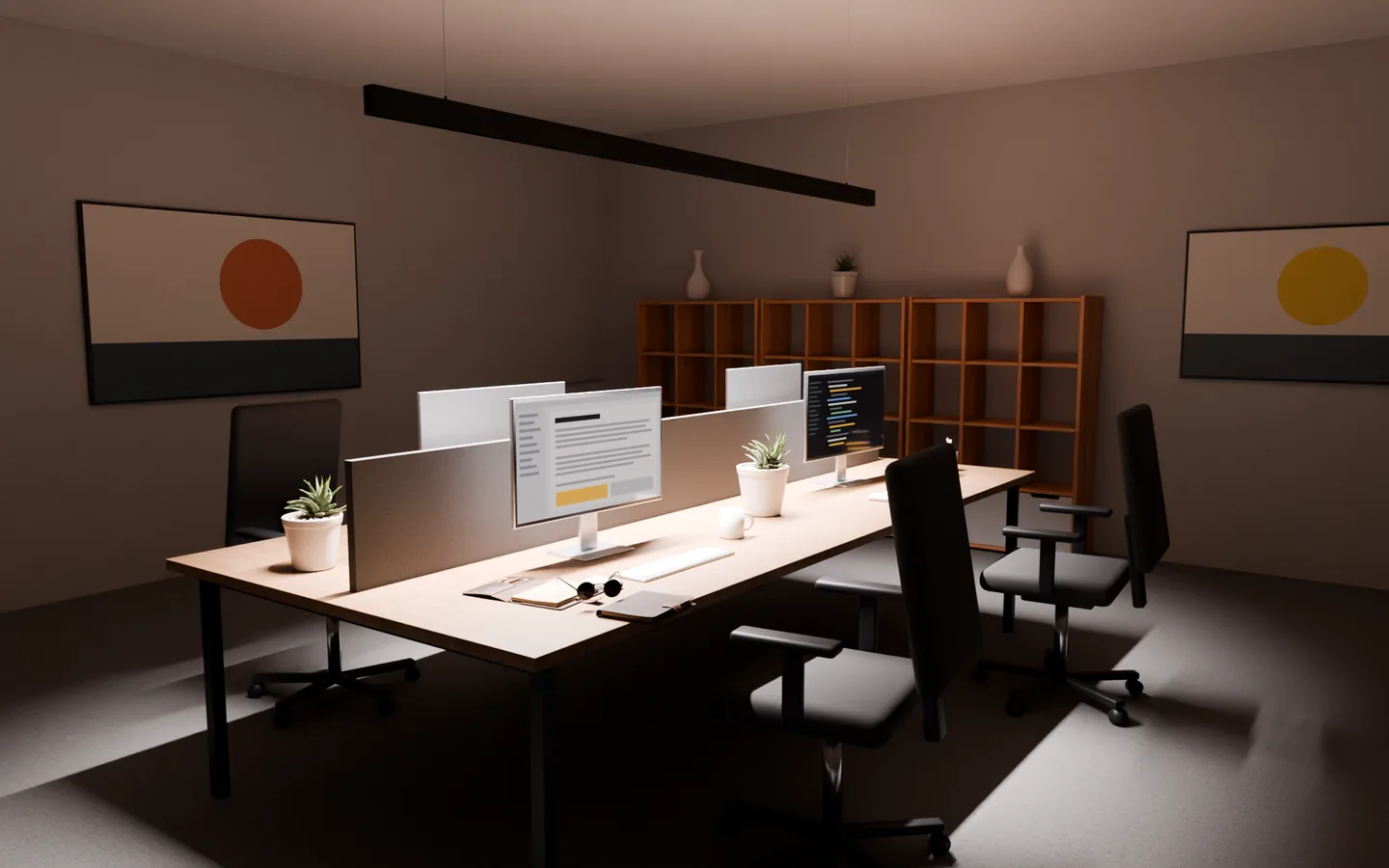
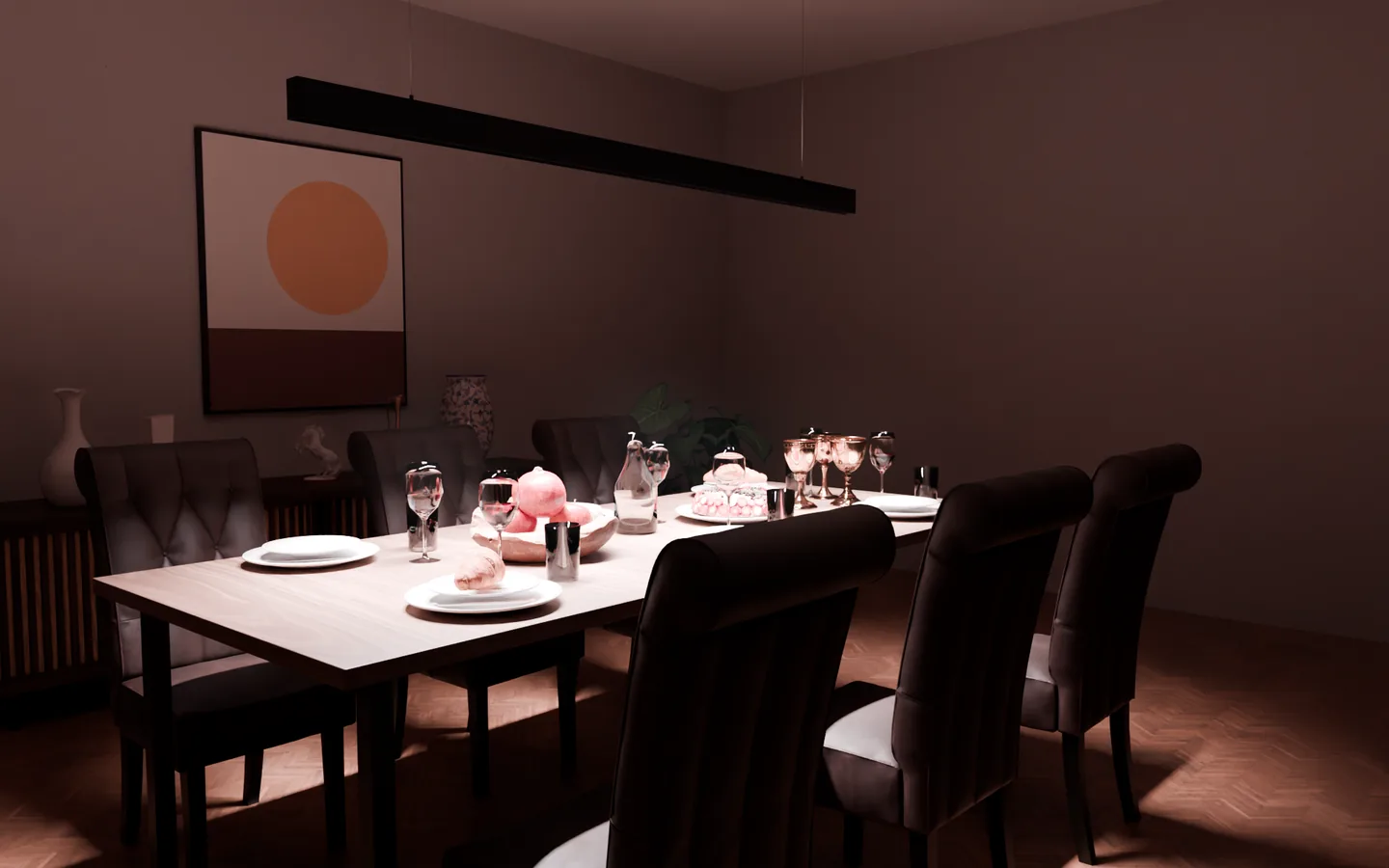
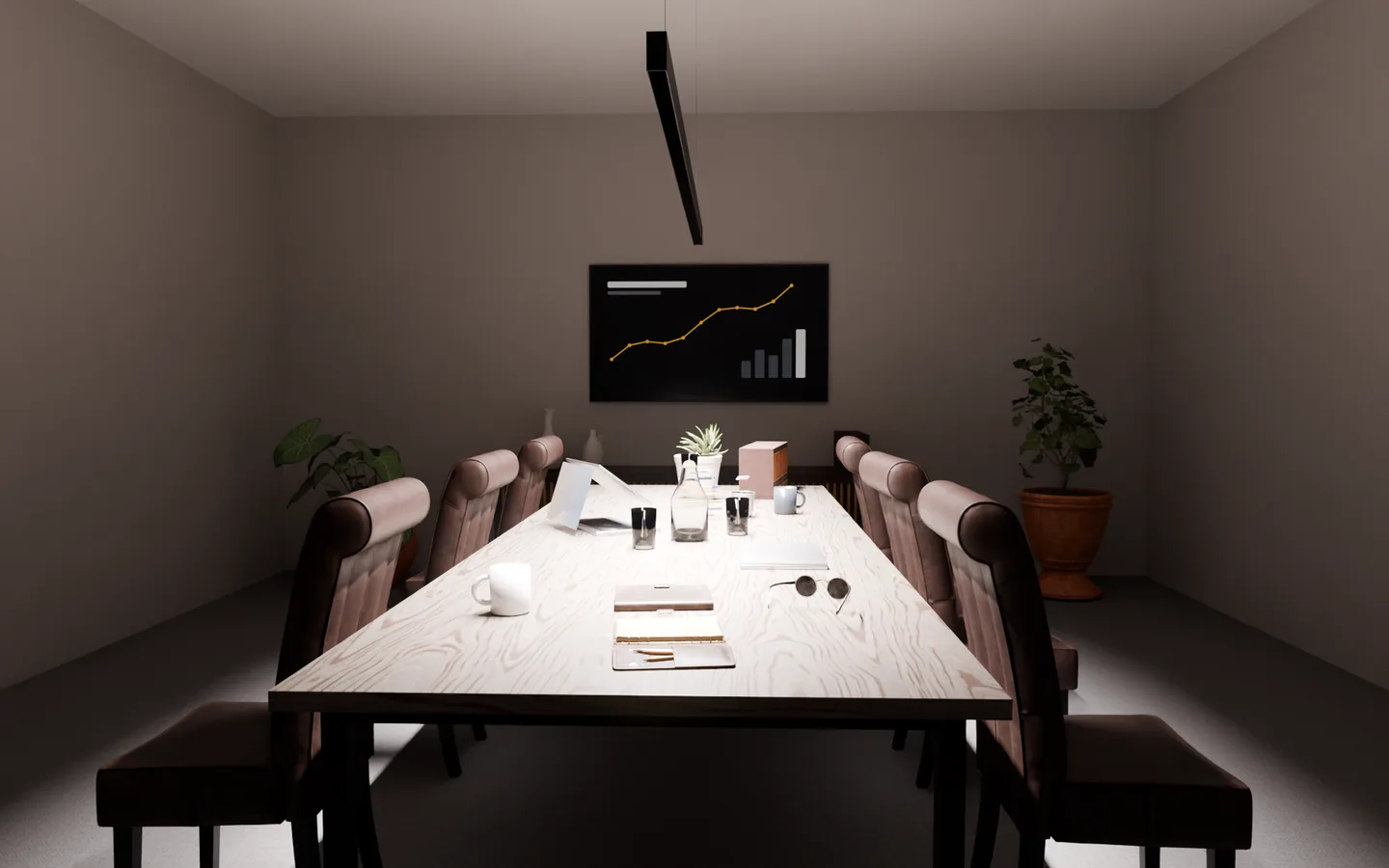
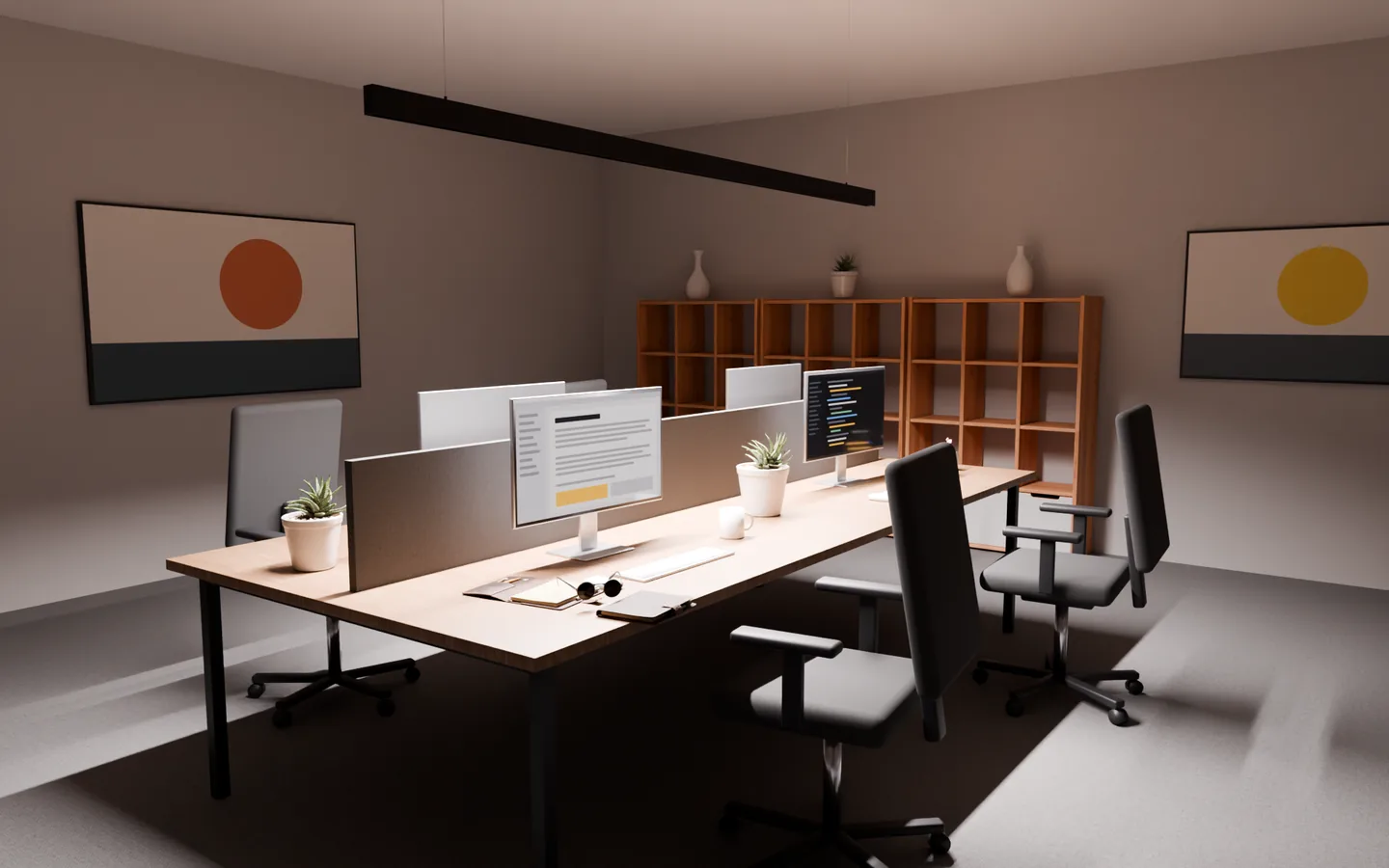
The same place in different light: shop, hotel, restaurant and office. Glare with each optic and the standards for each place.
The same place.
Different light.
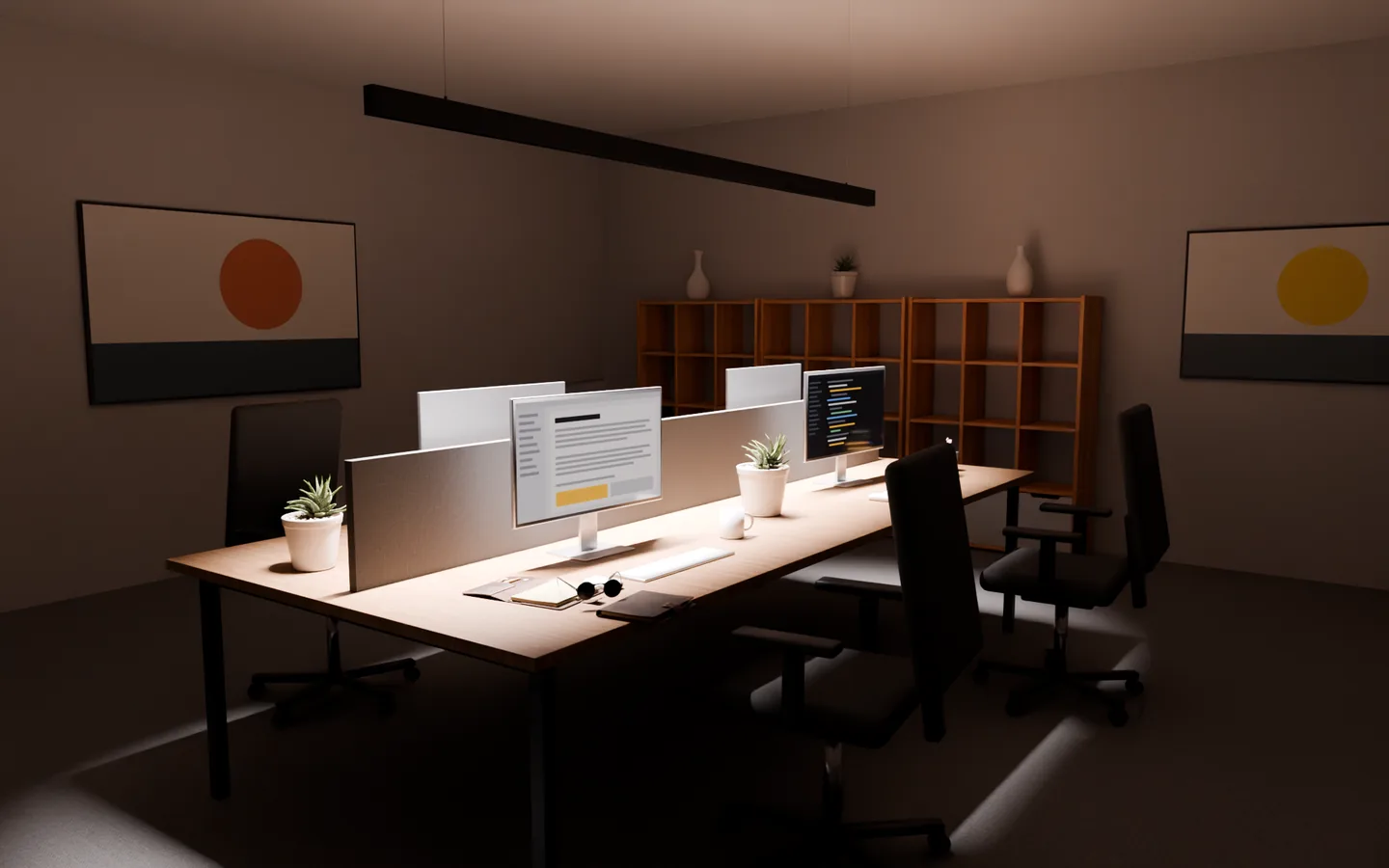
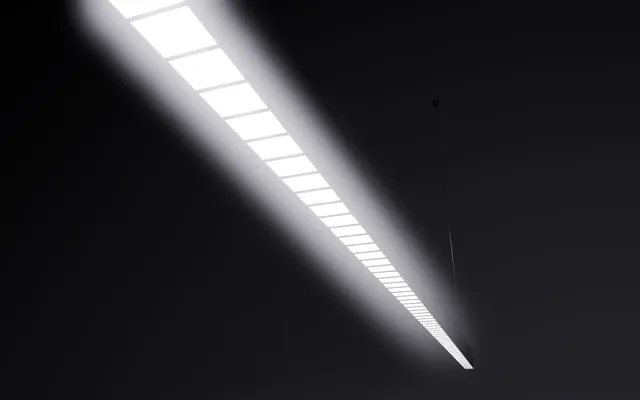
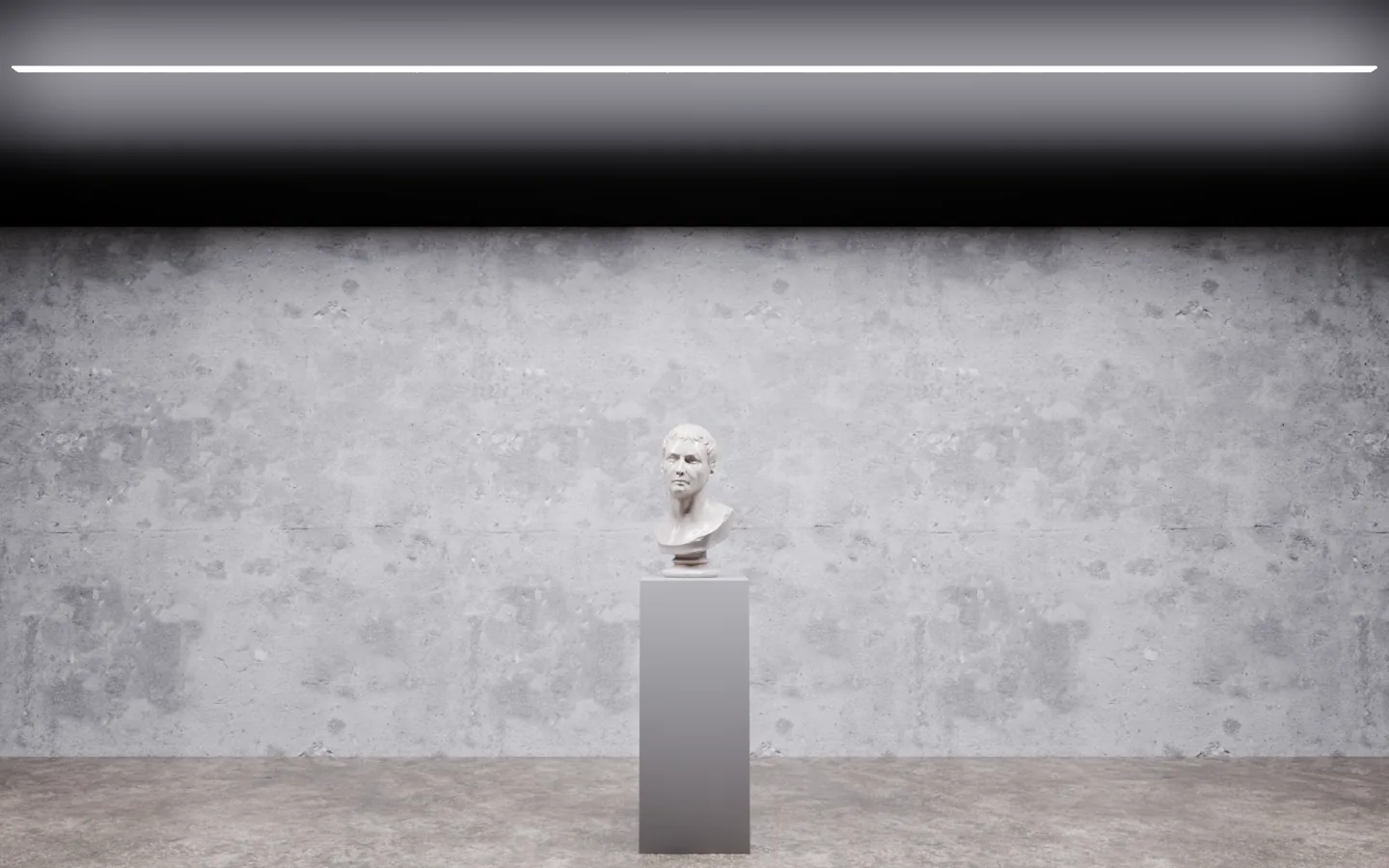
Whether a luminaire dazzles depends not on its power but on where the source sits and where it shines. Three ways: an opal line, a line with a set-back source and a spot.
Move the source back.
Choose the optic.
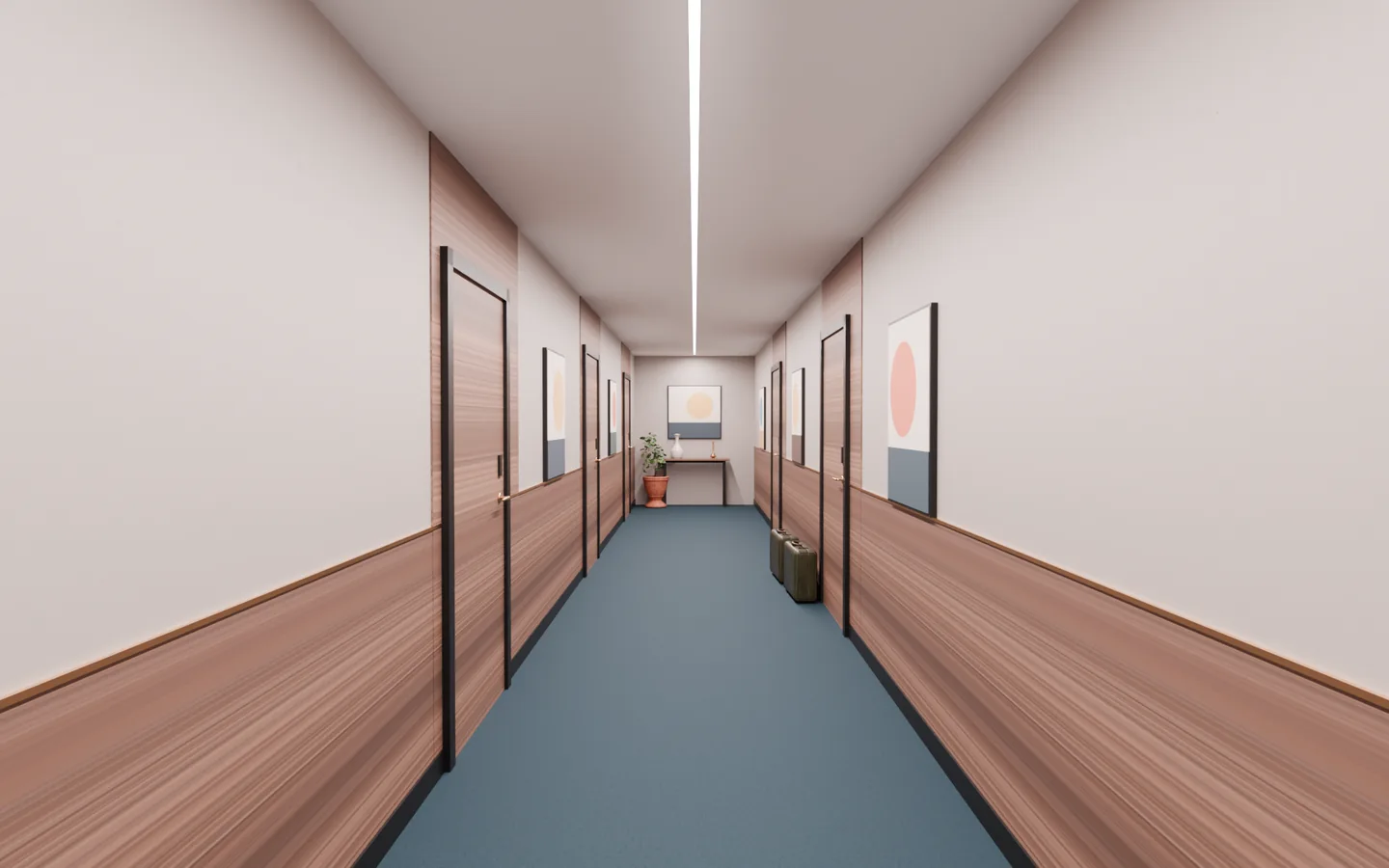
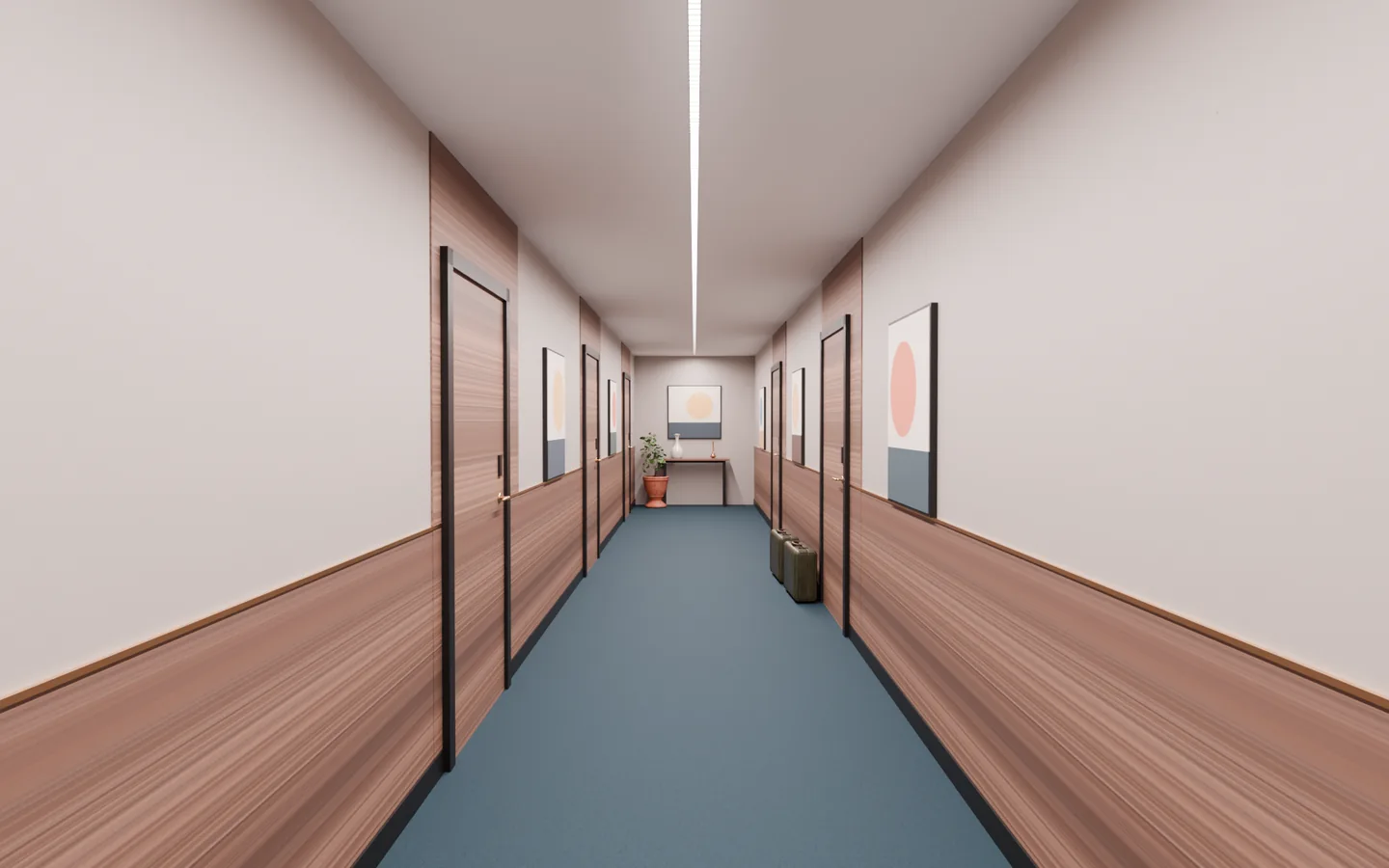
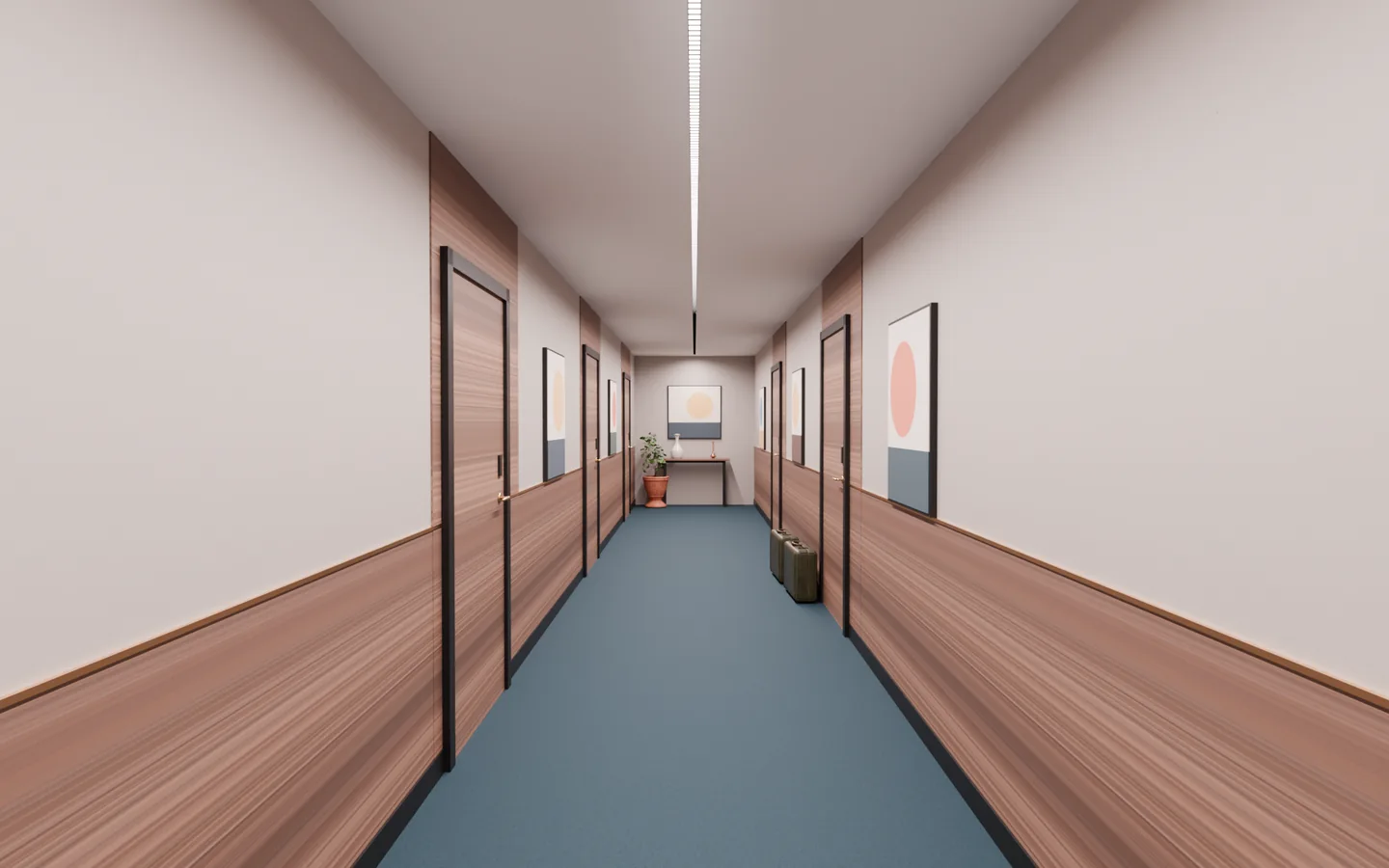
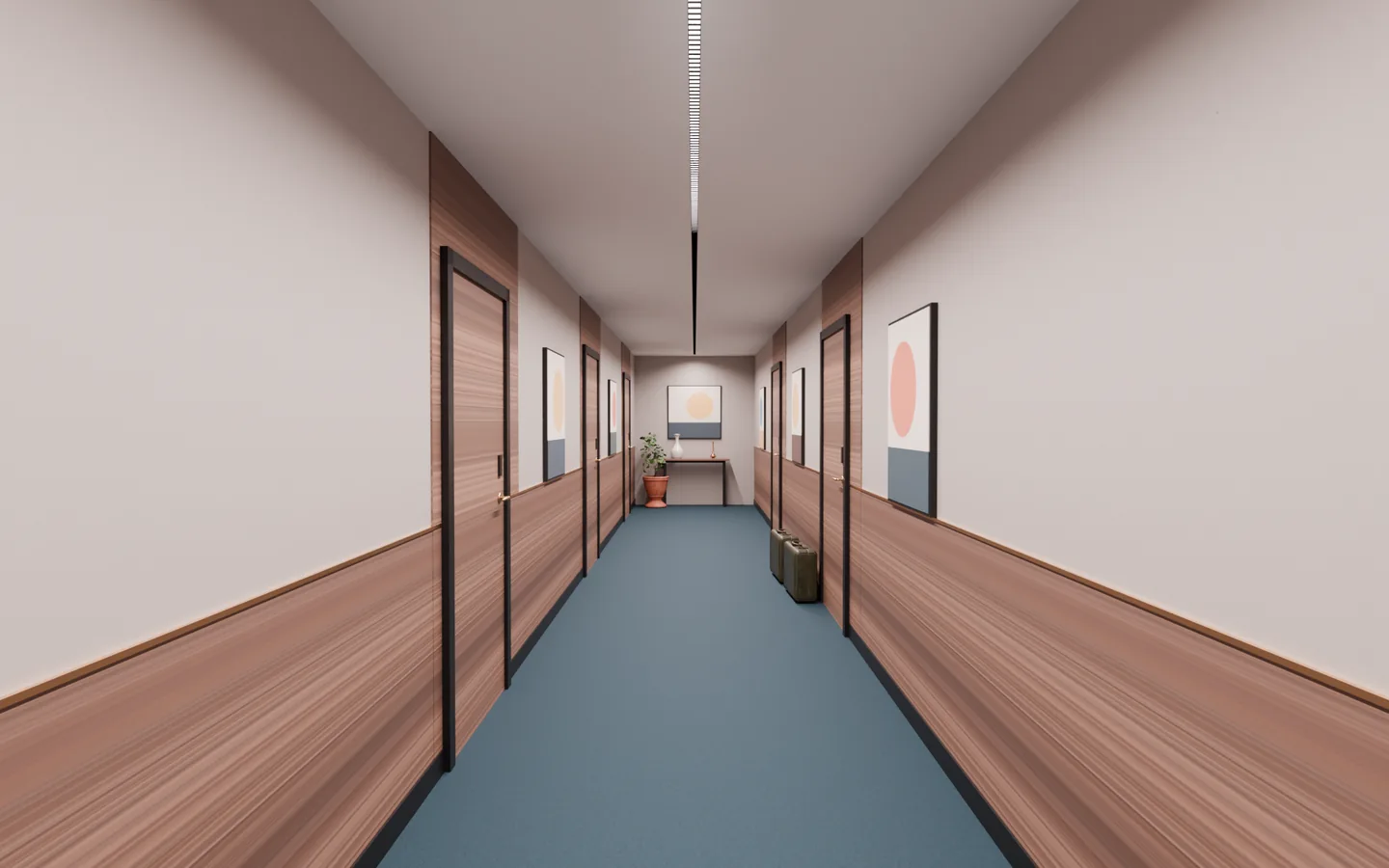
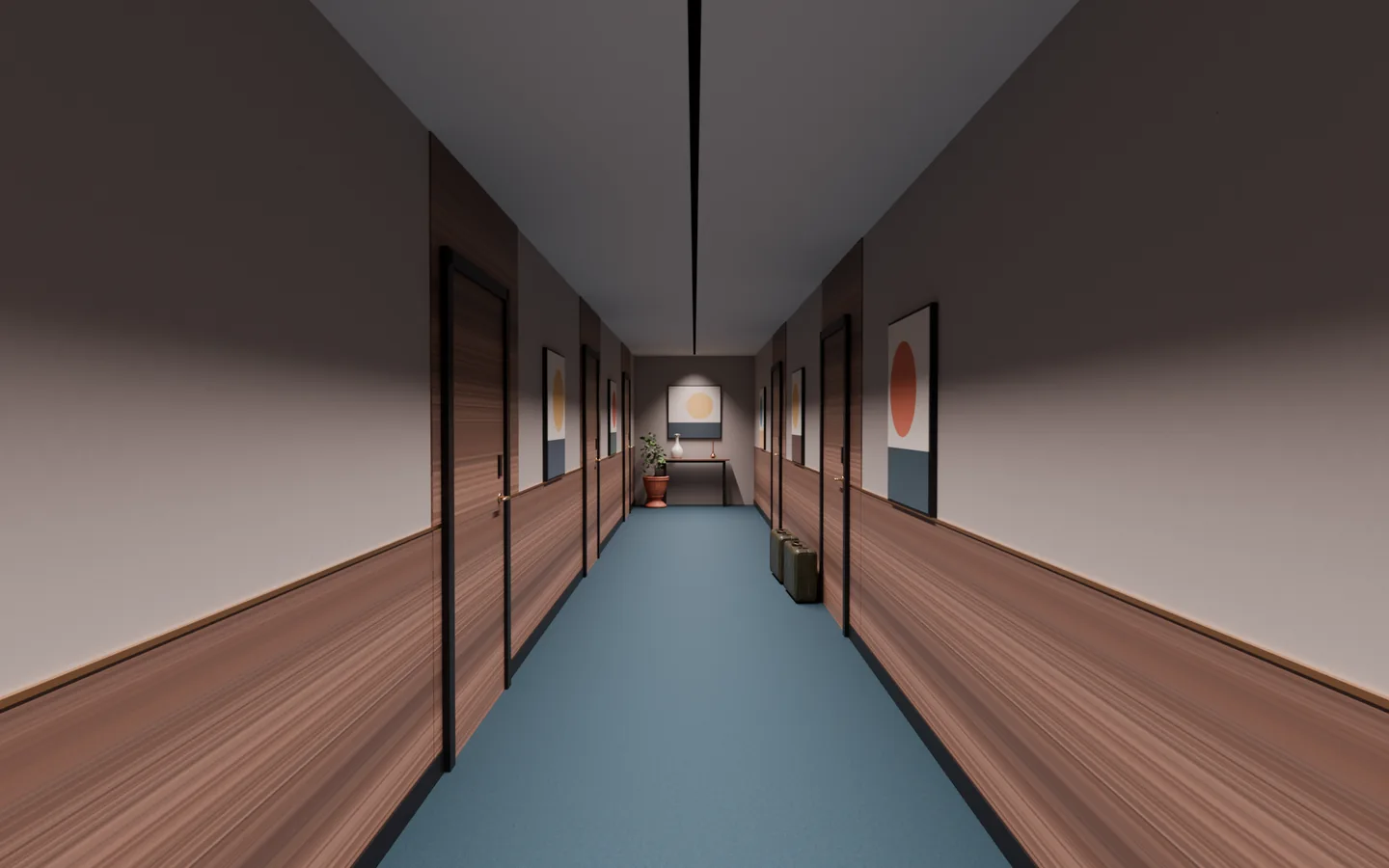
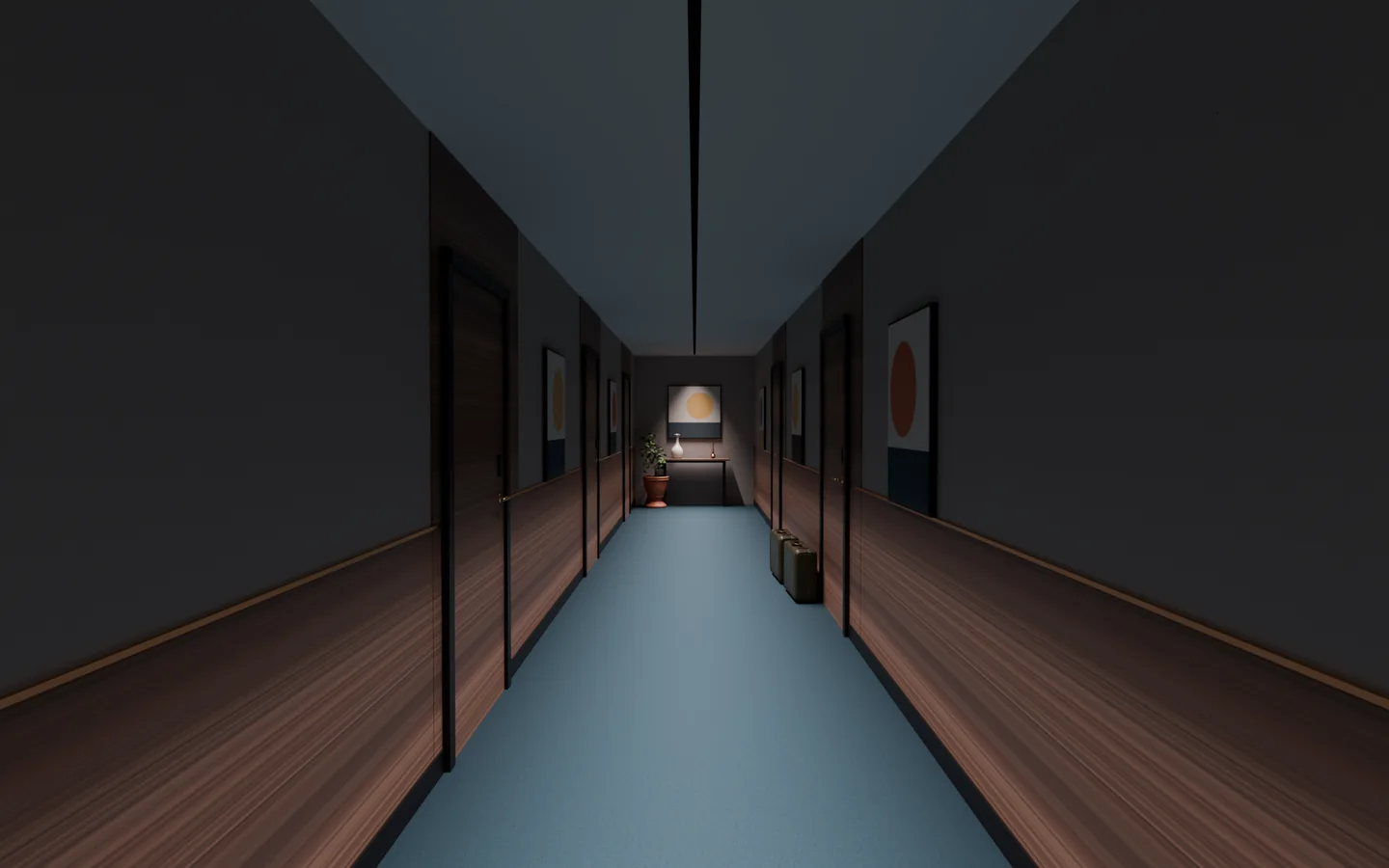
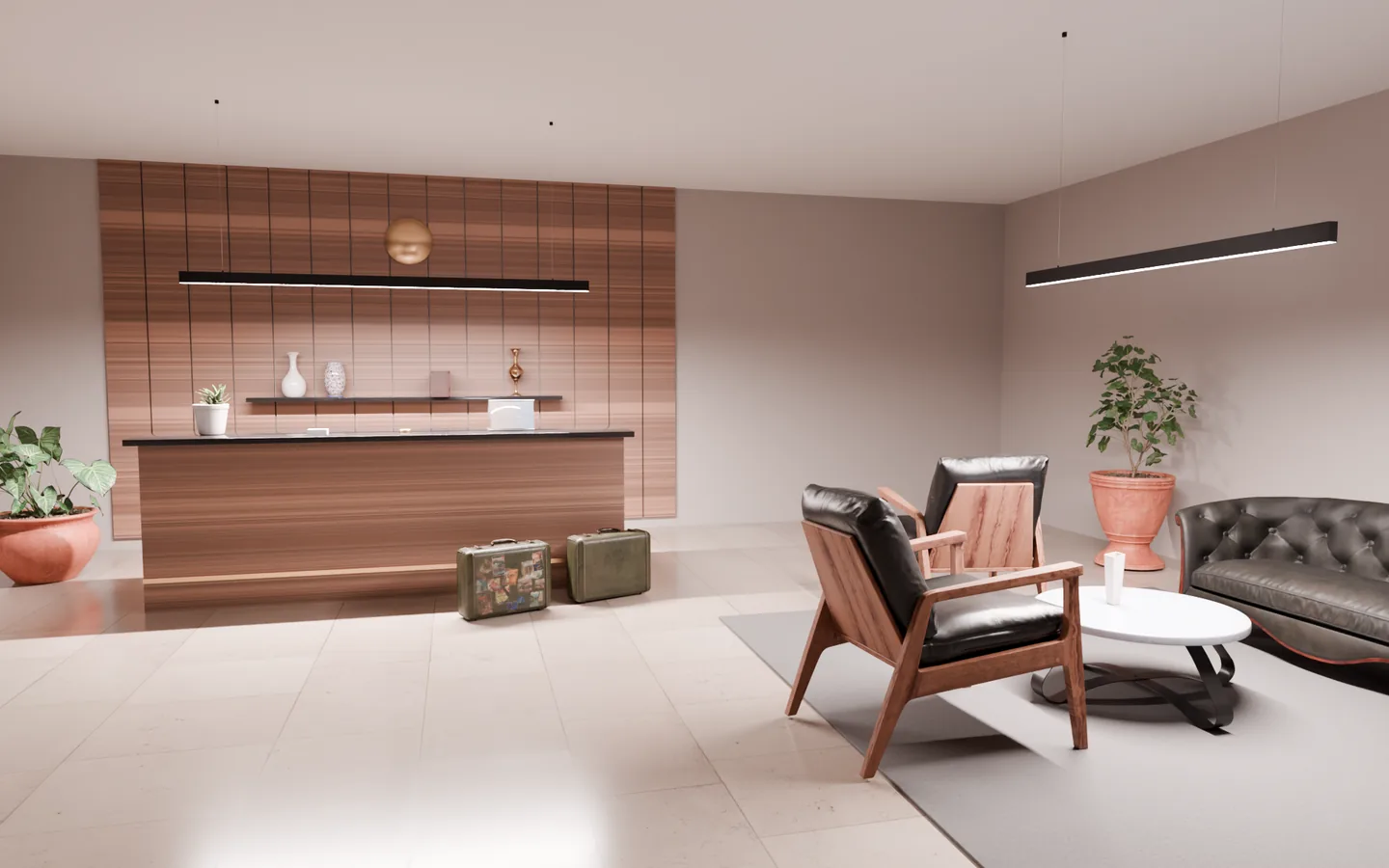
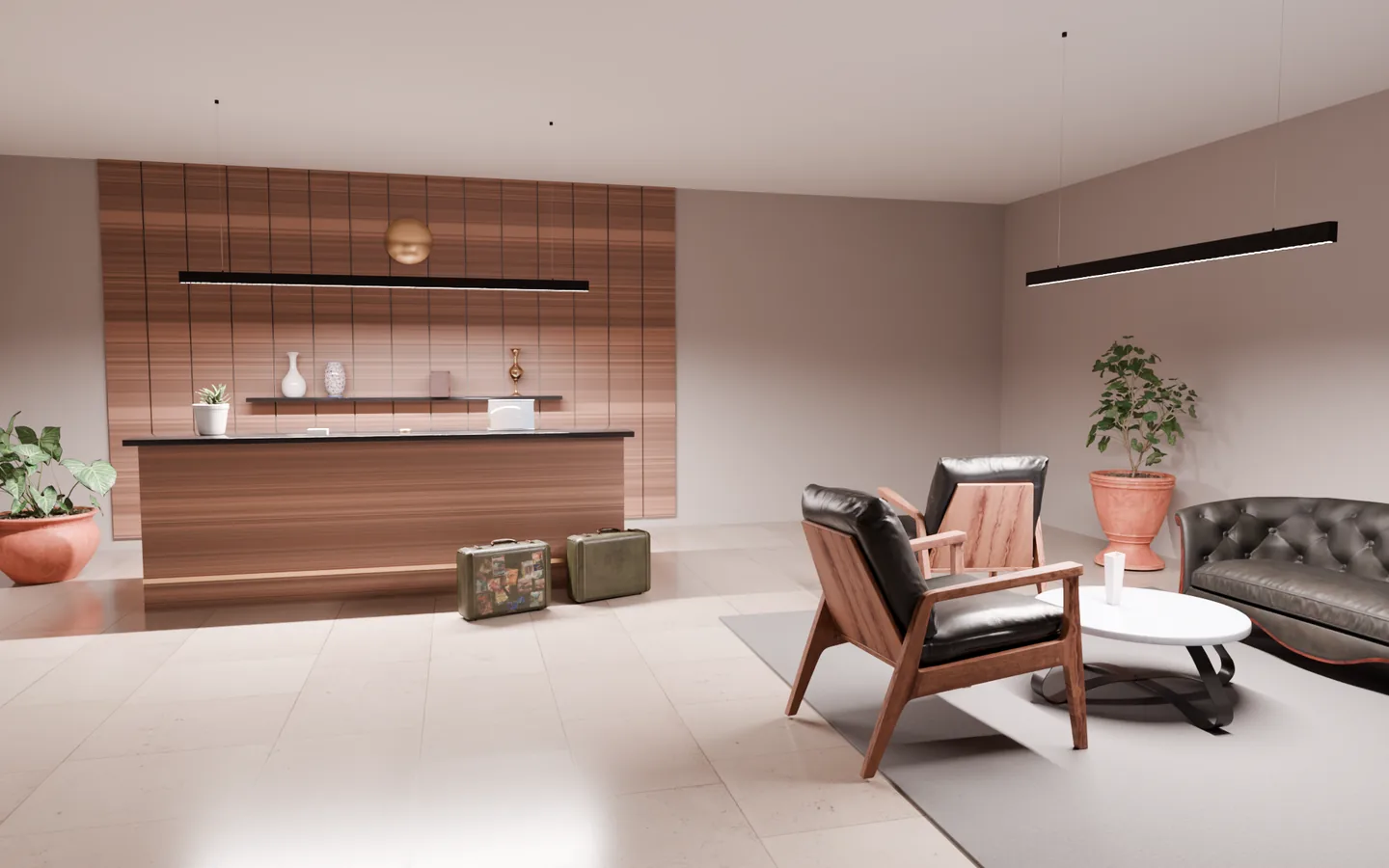
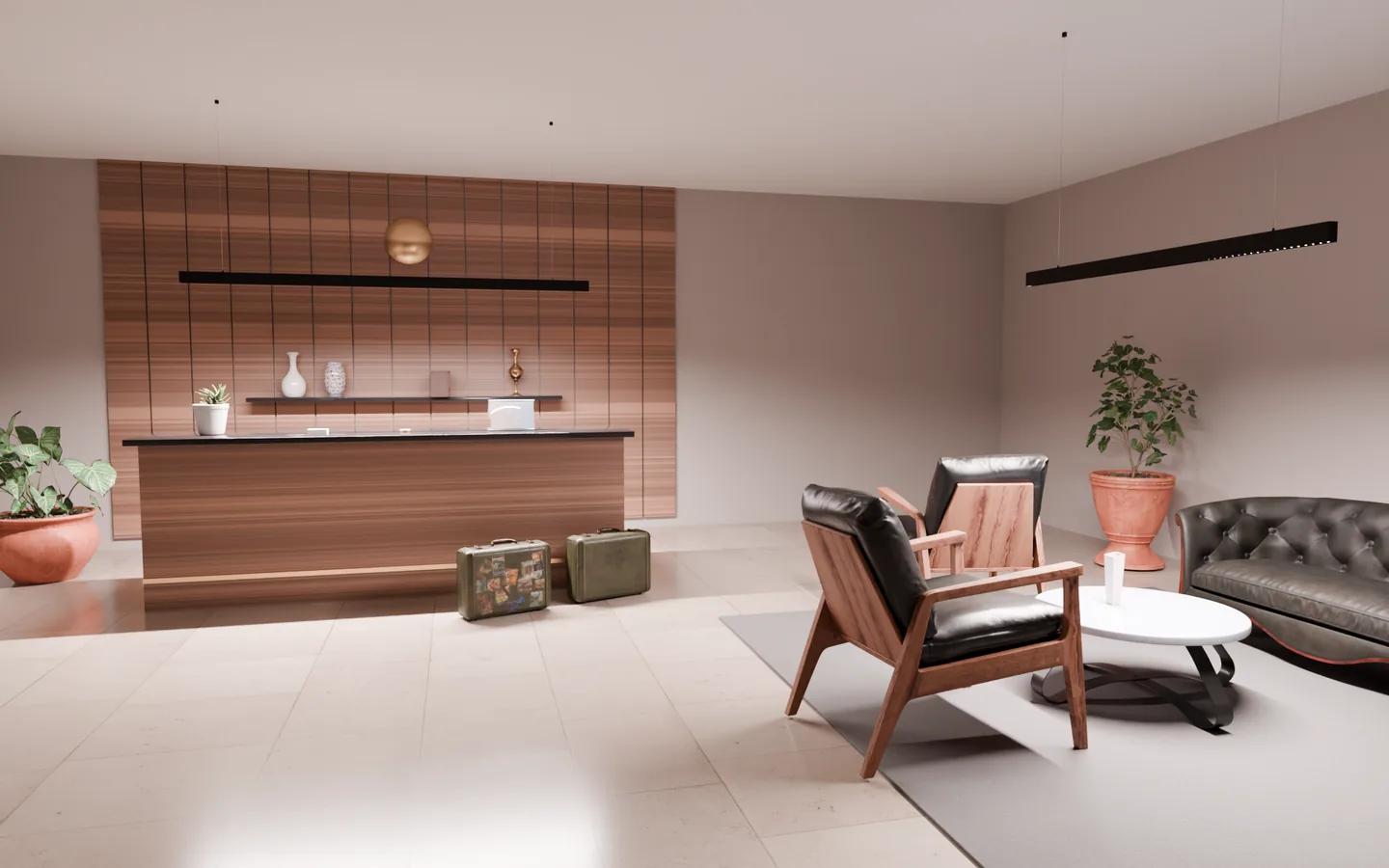
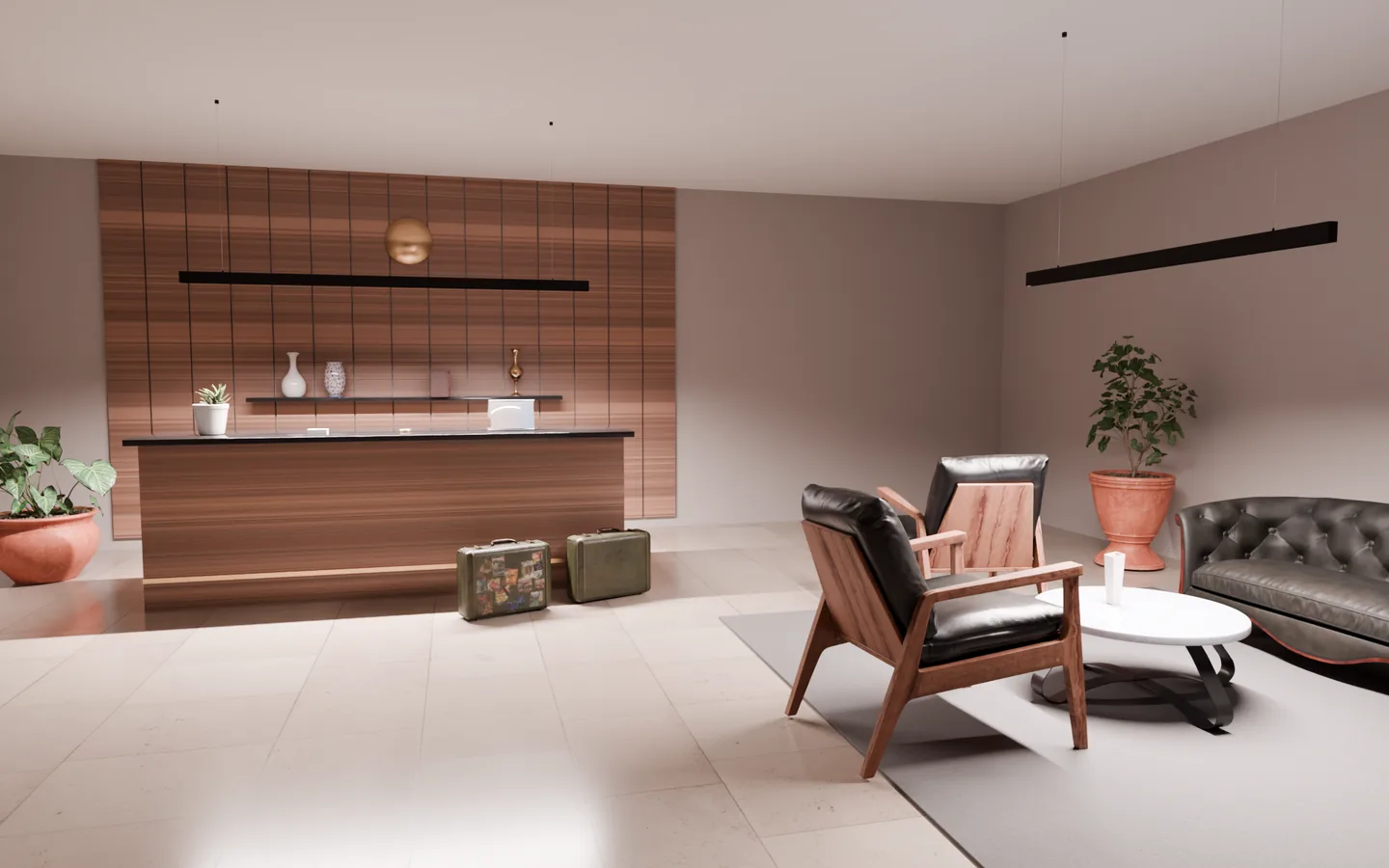
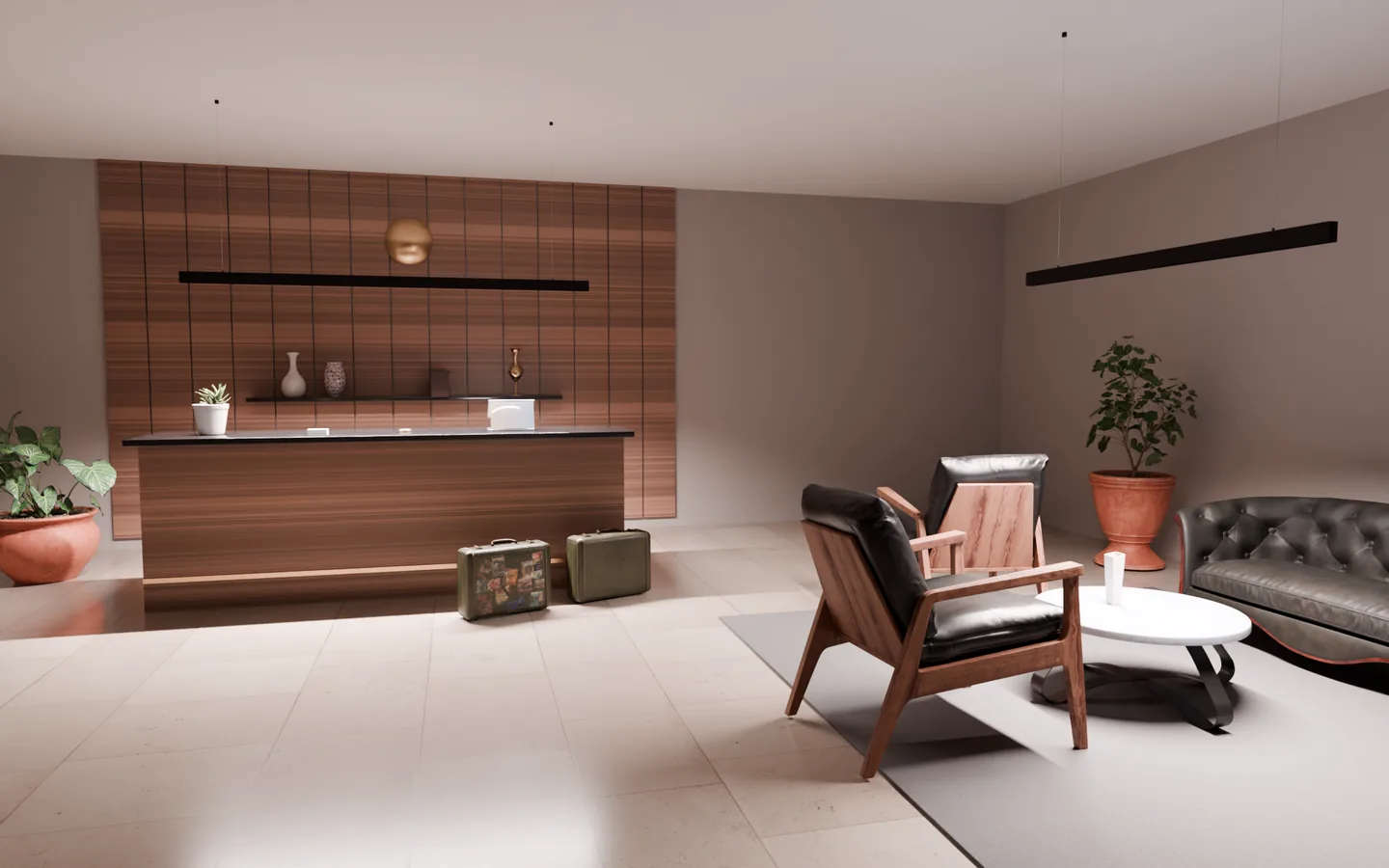
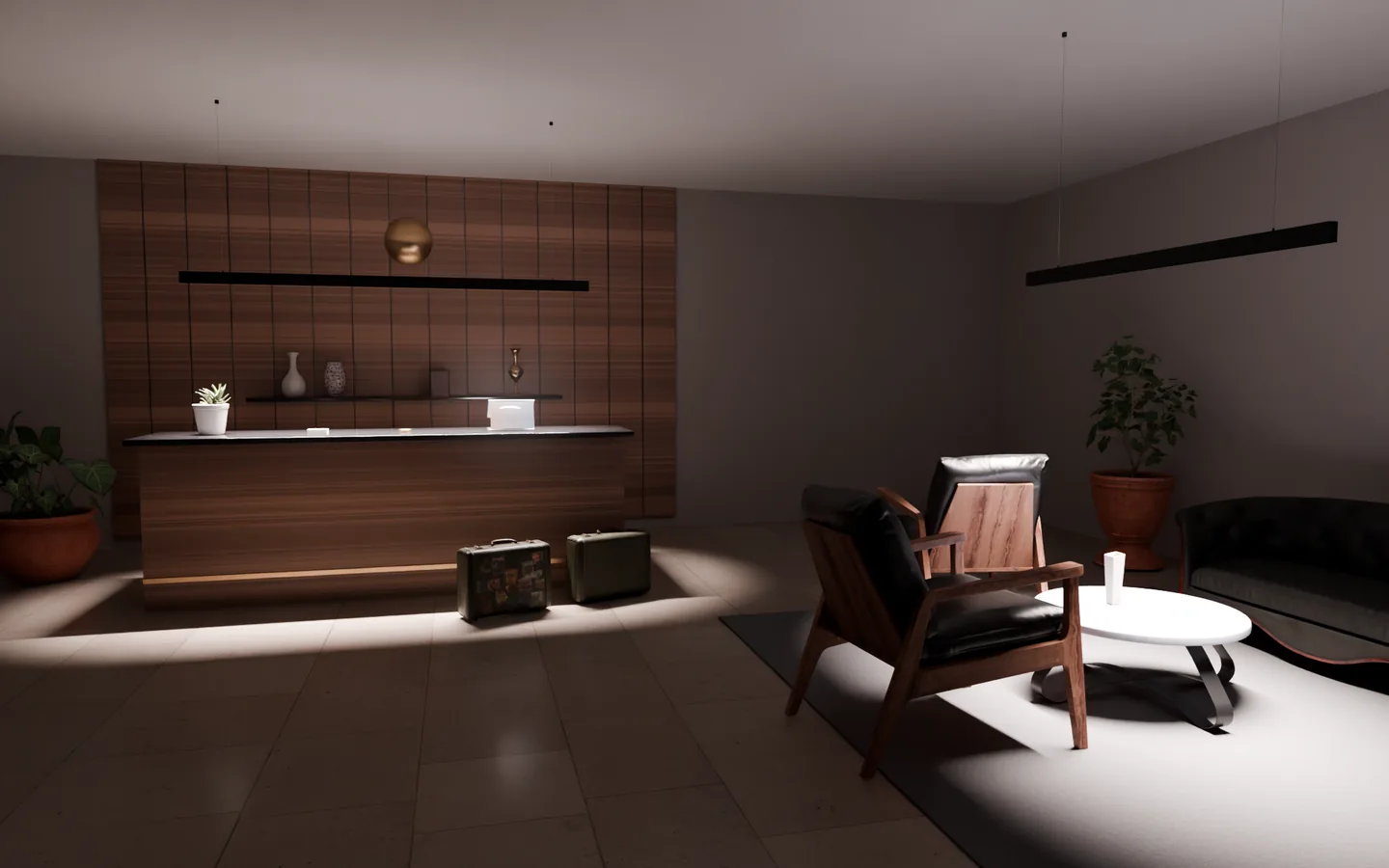
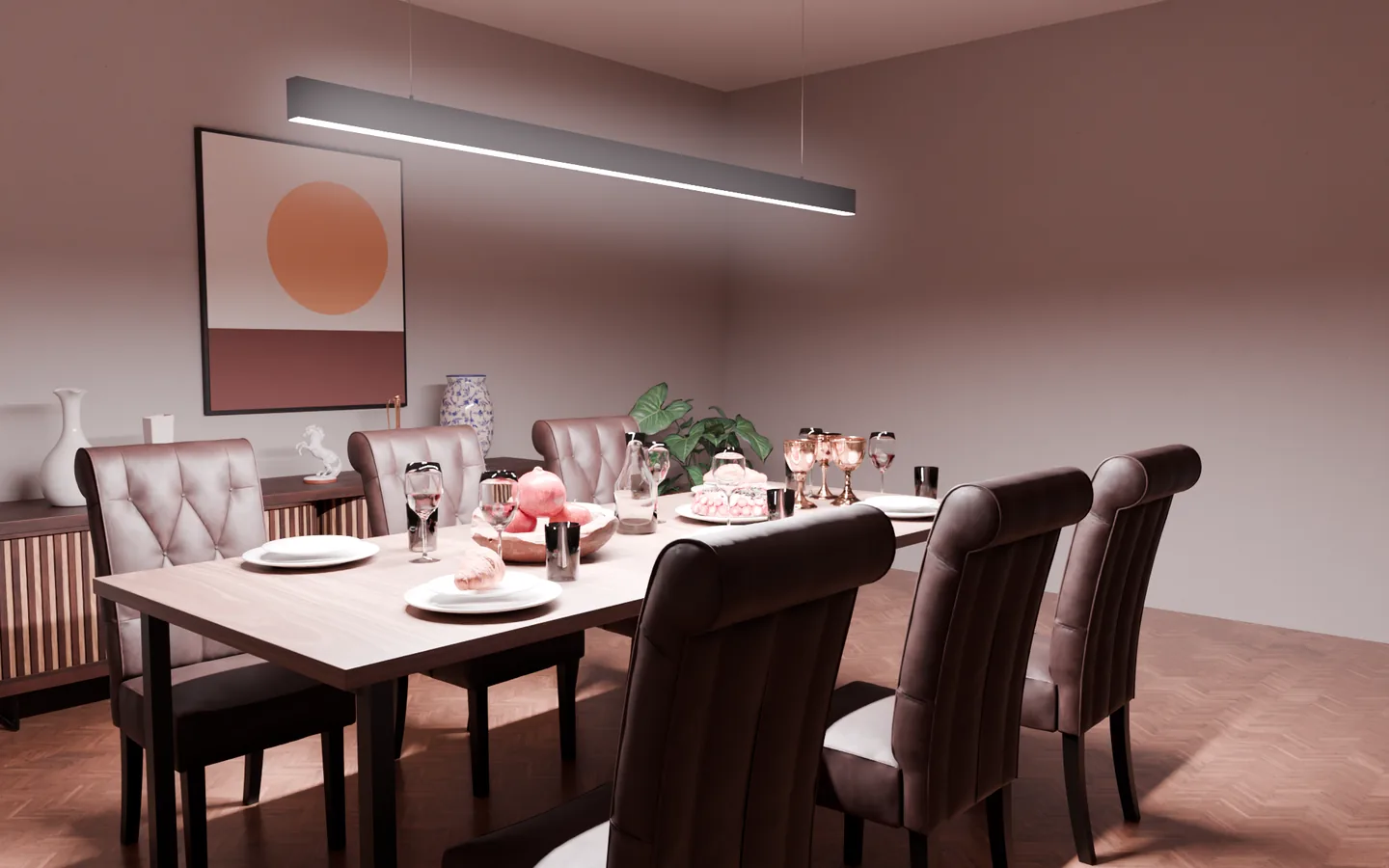
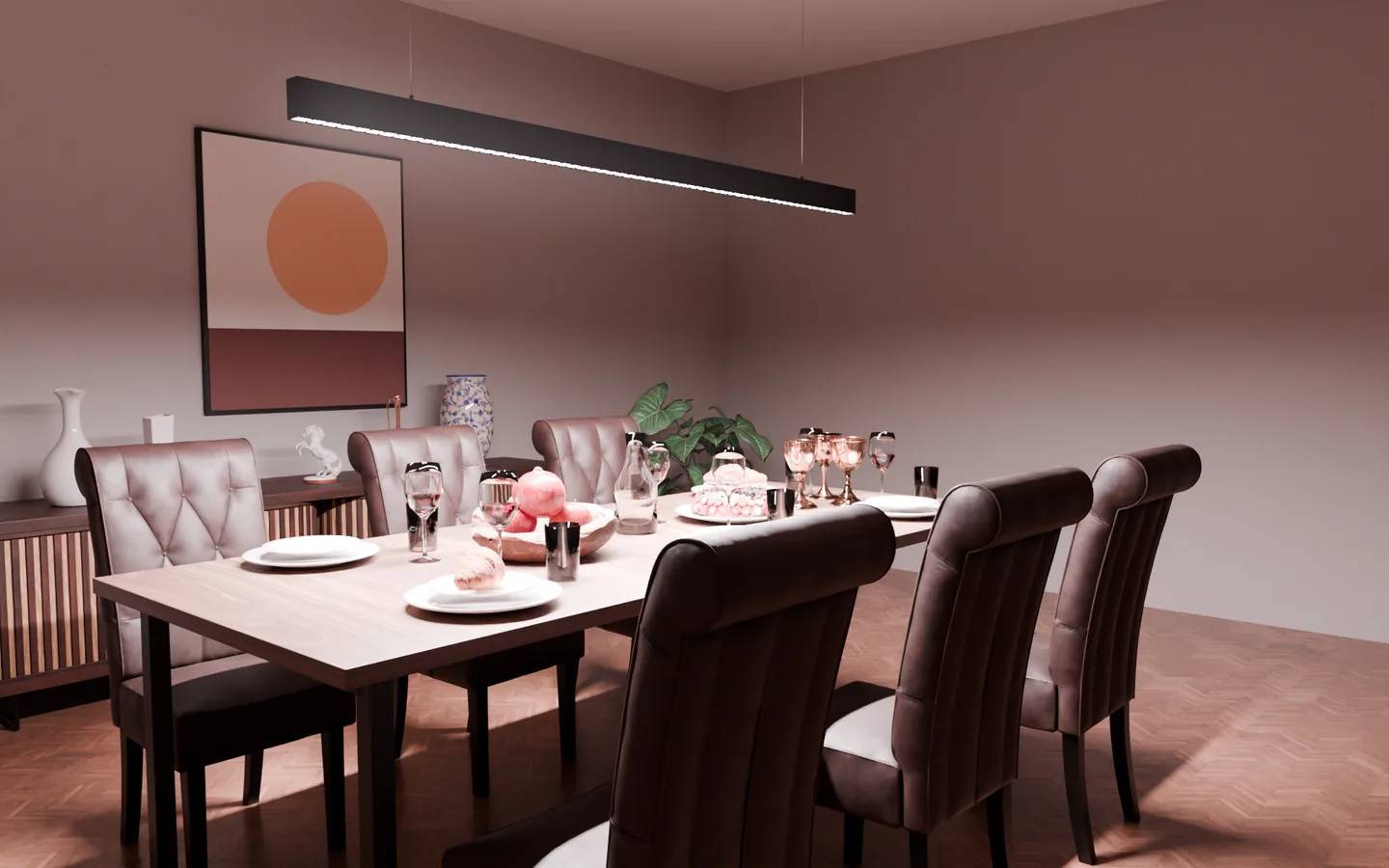
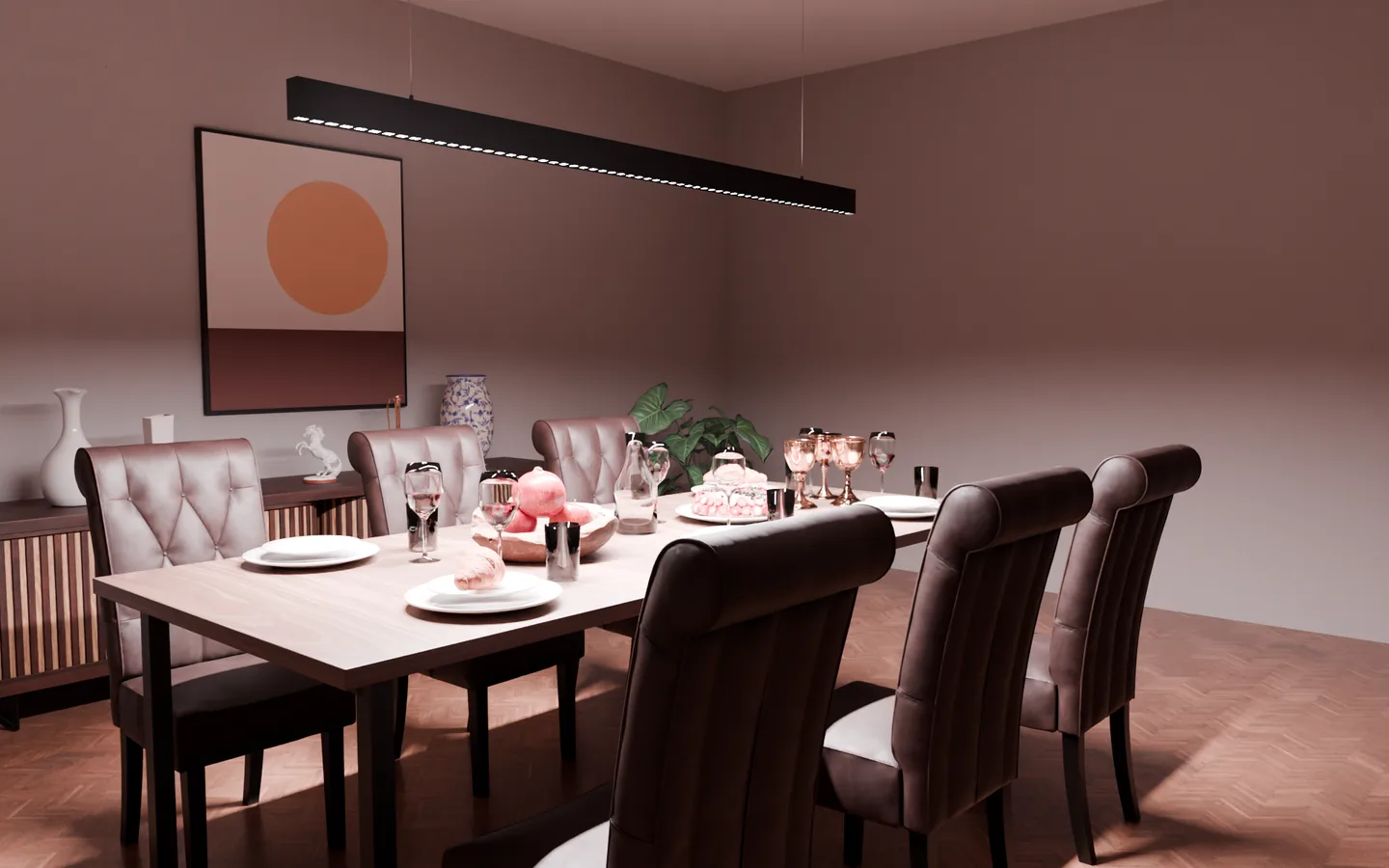
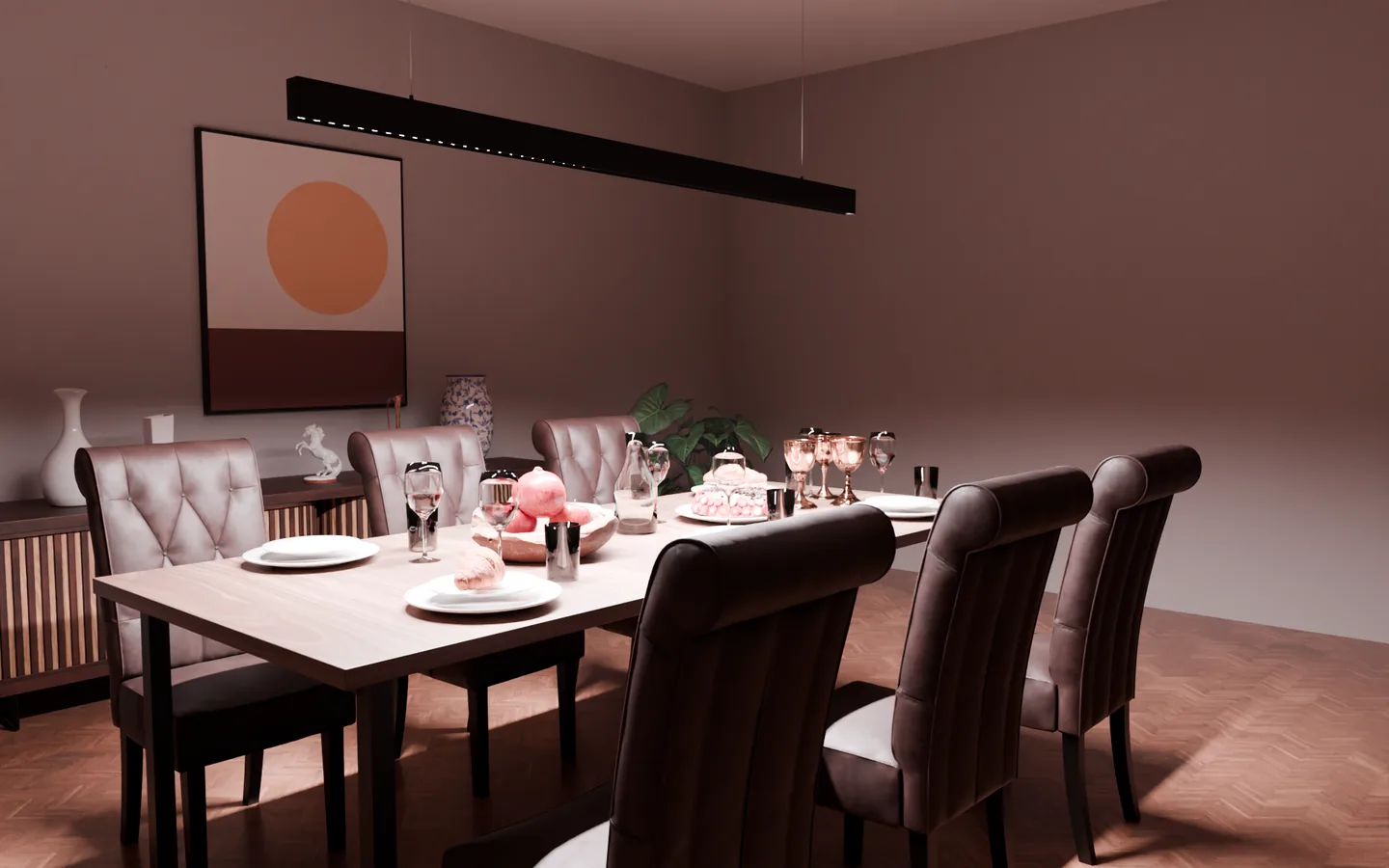
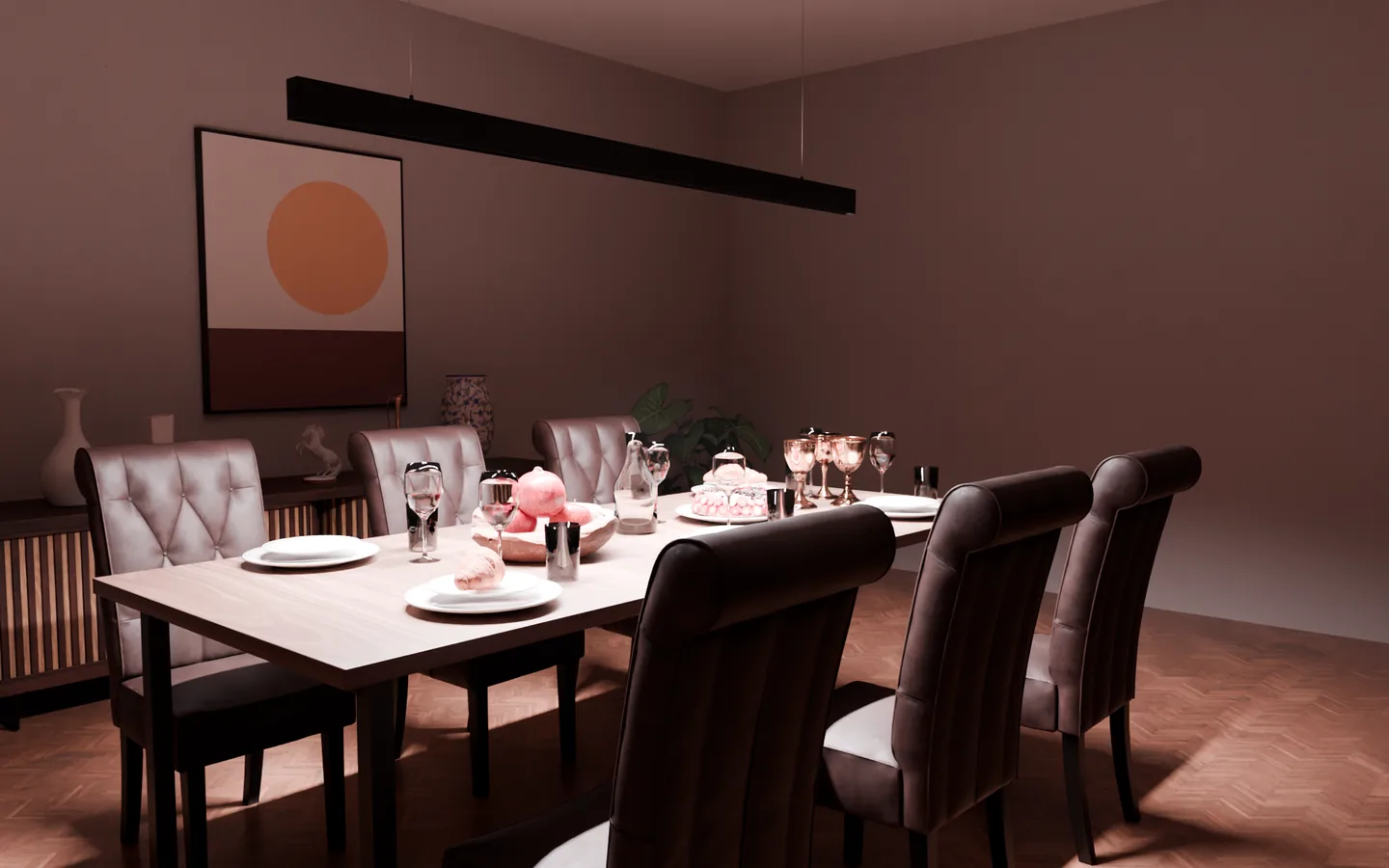
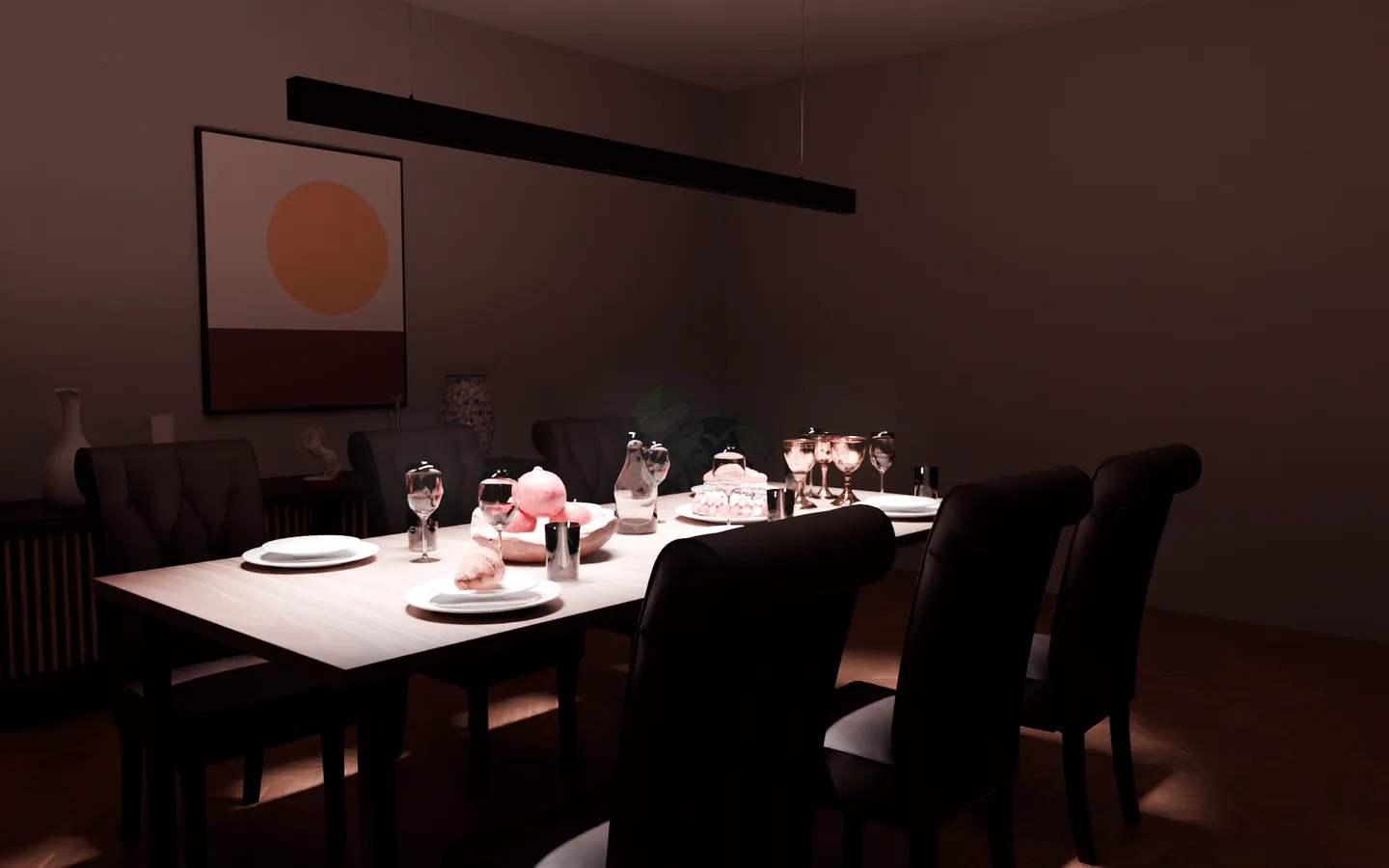
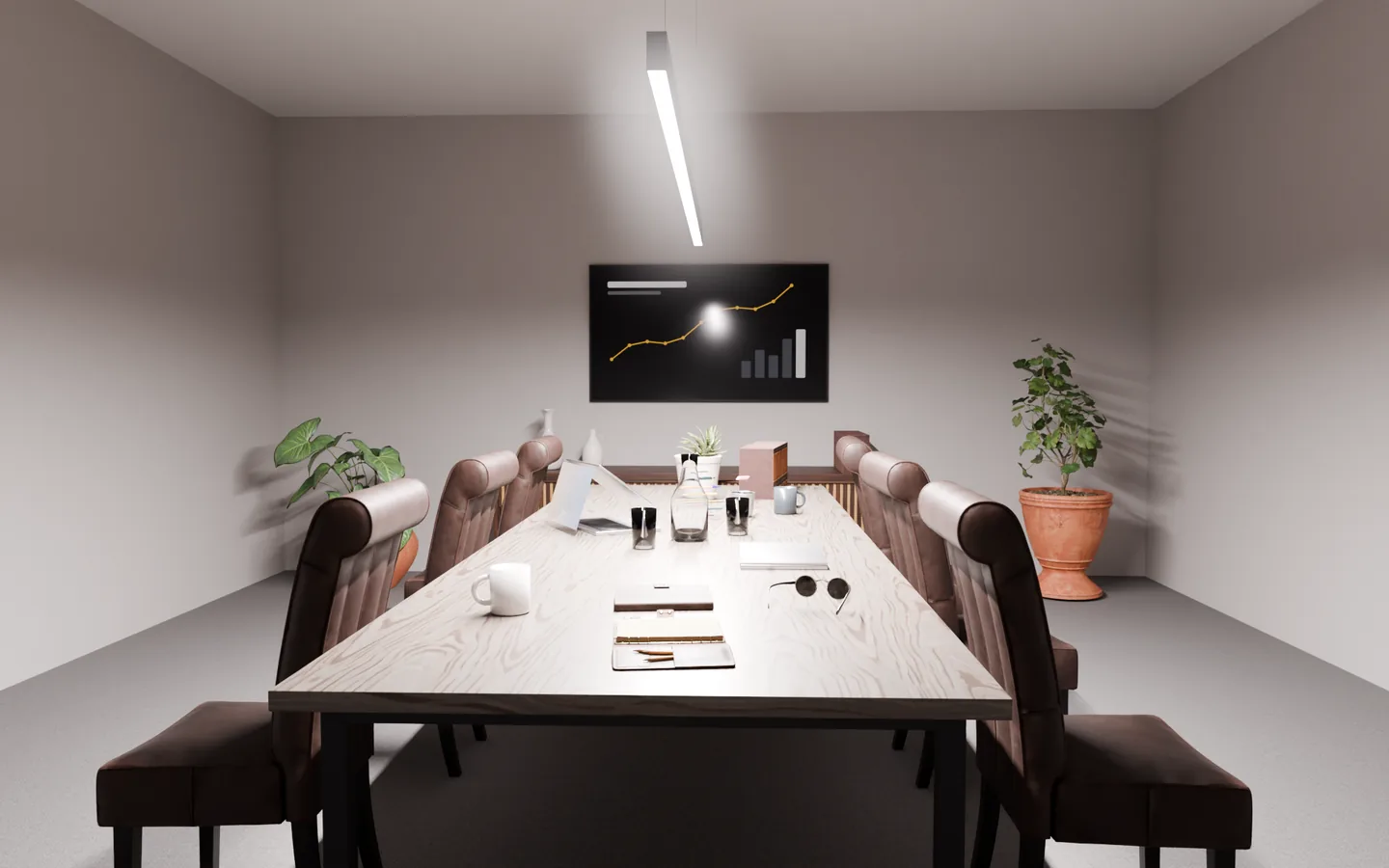
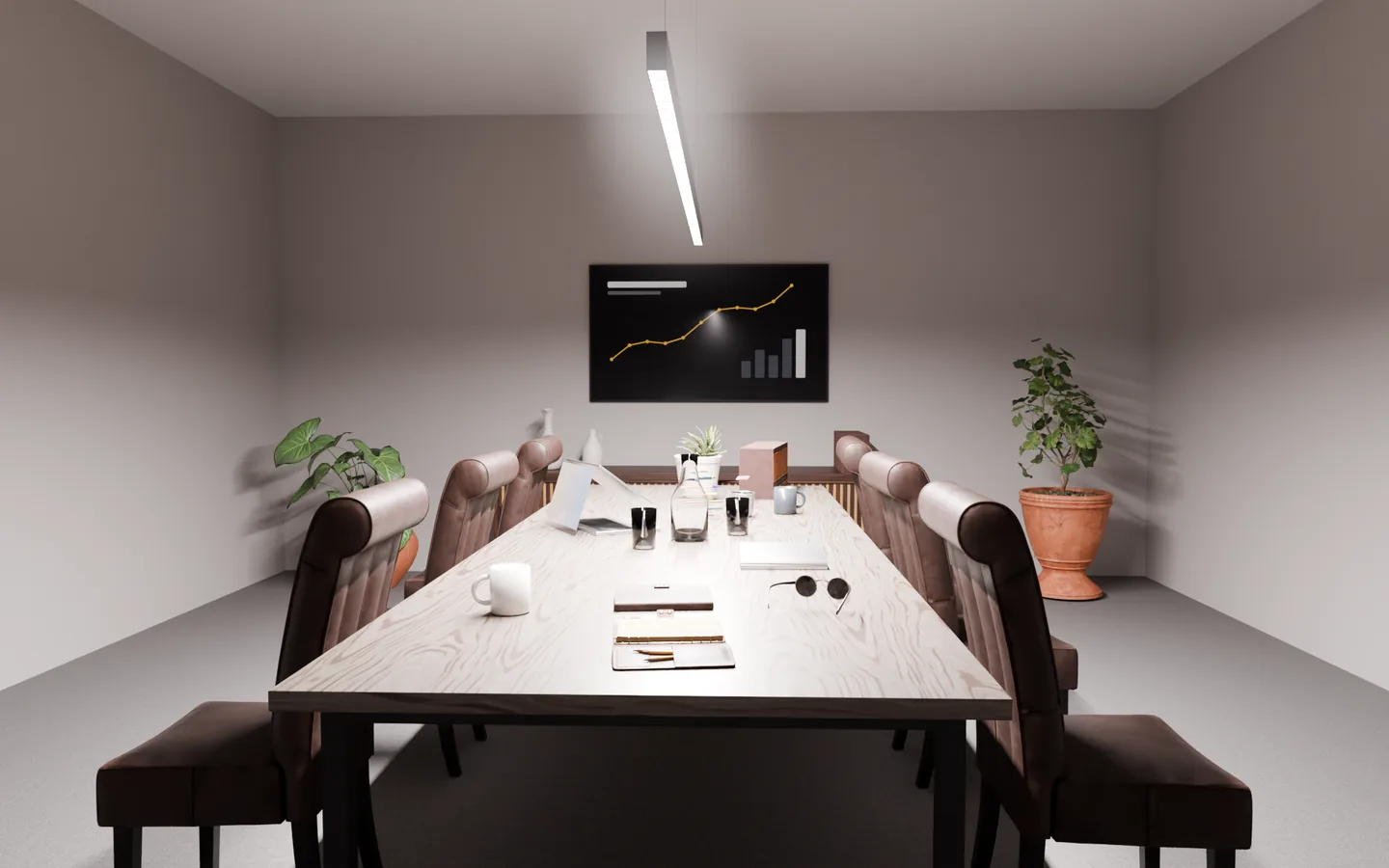
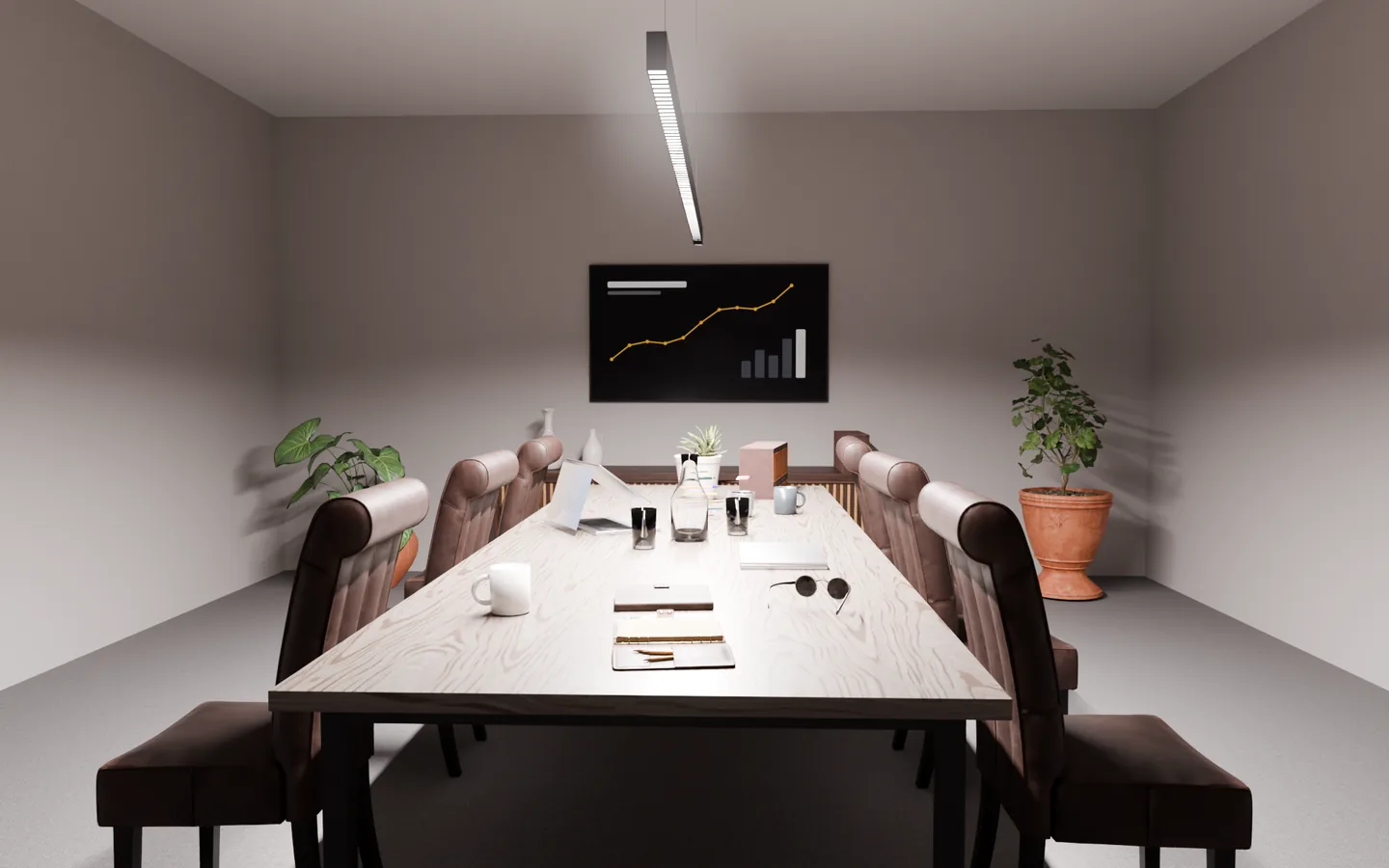
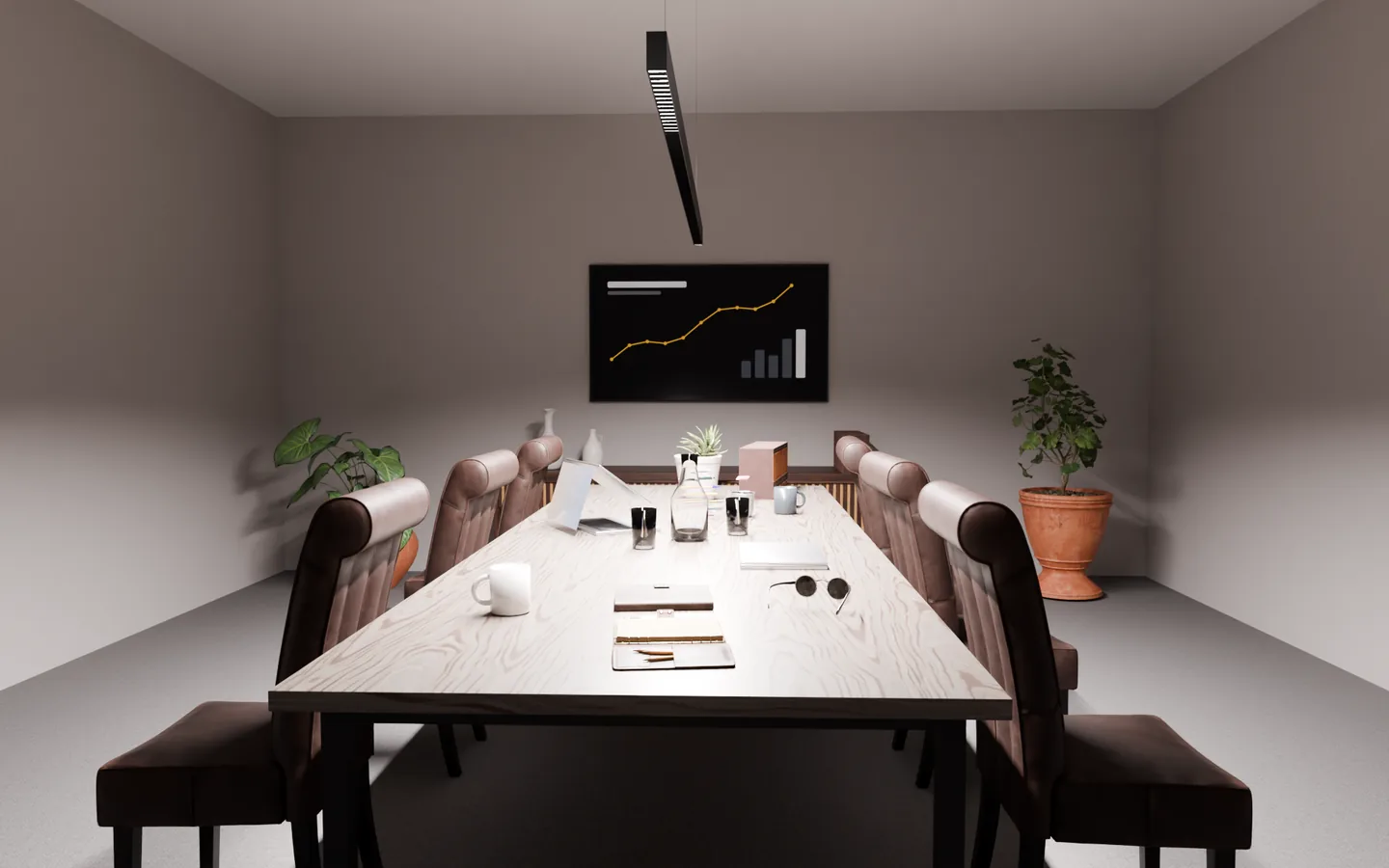
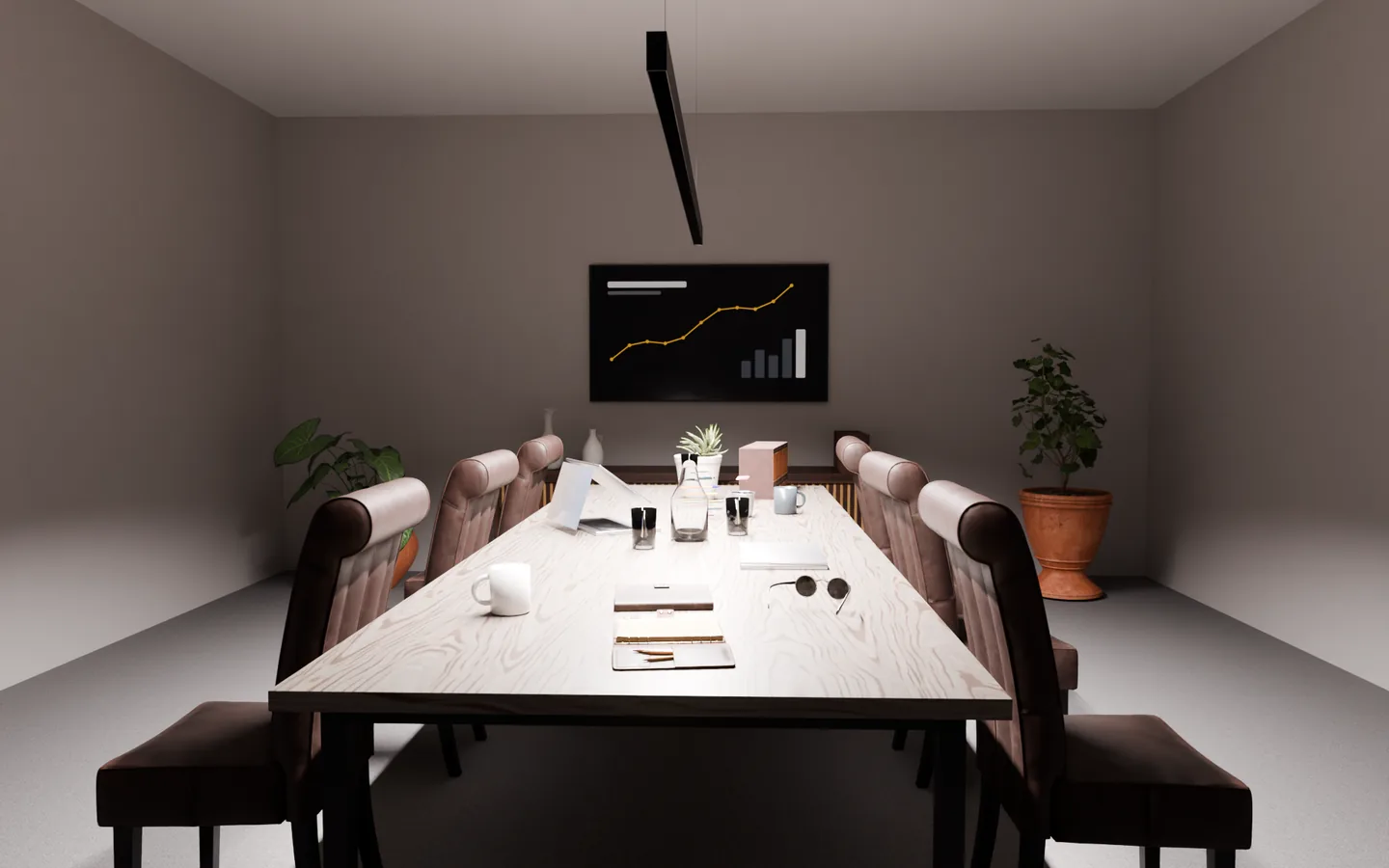
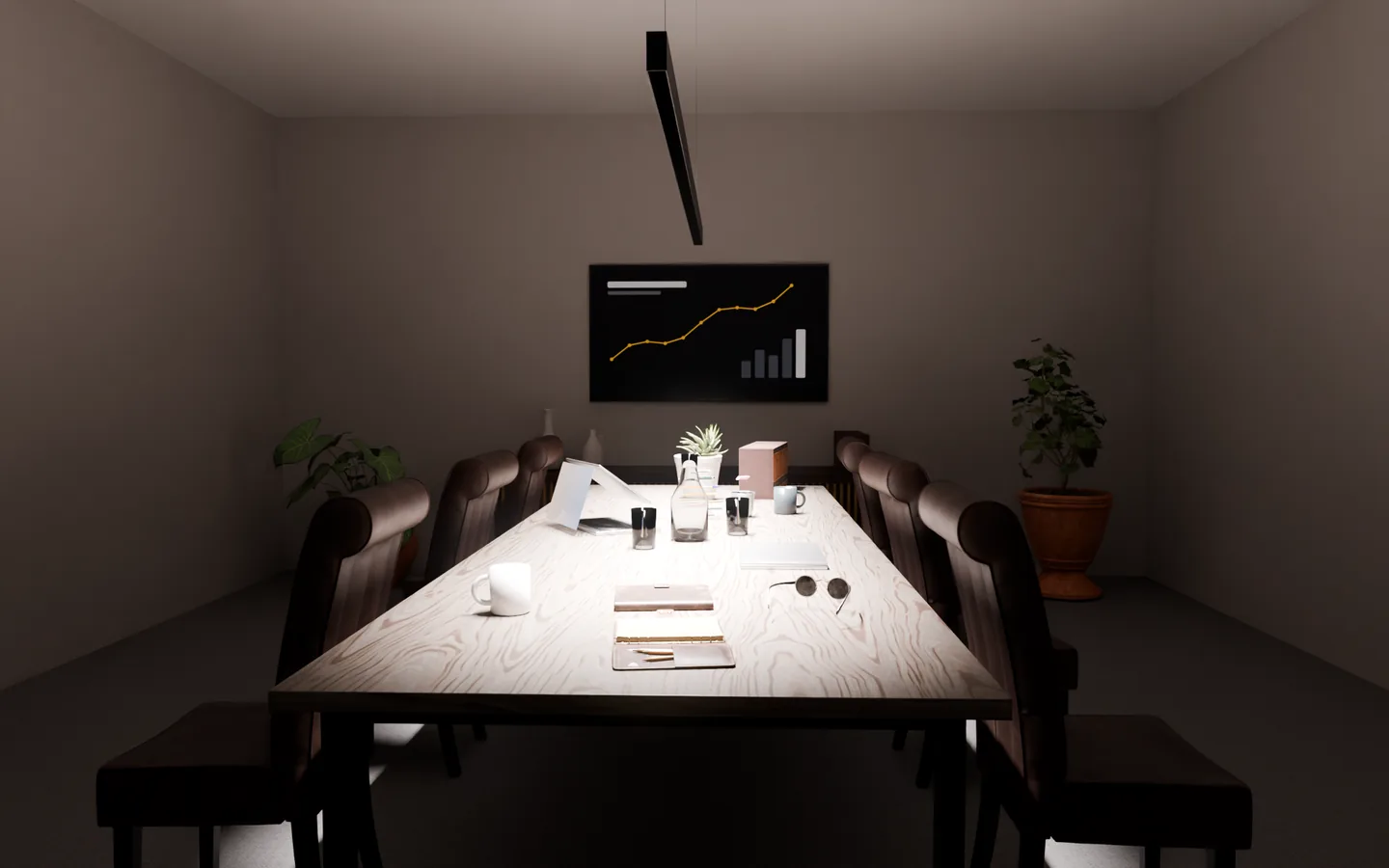
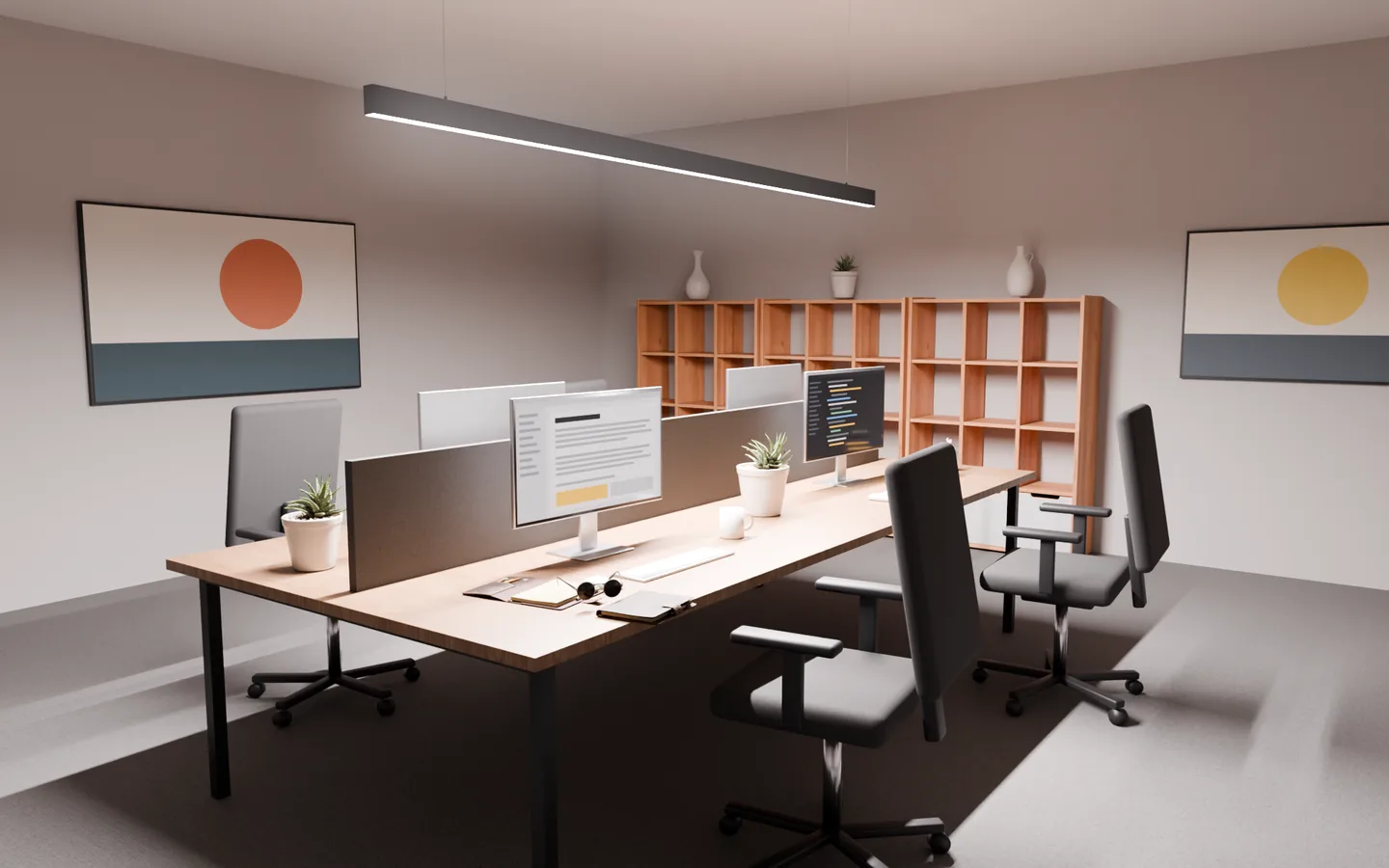
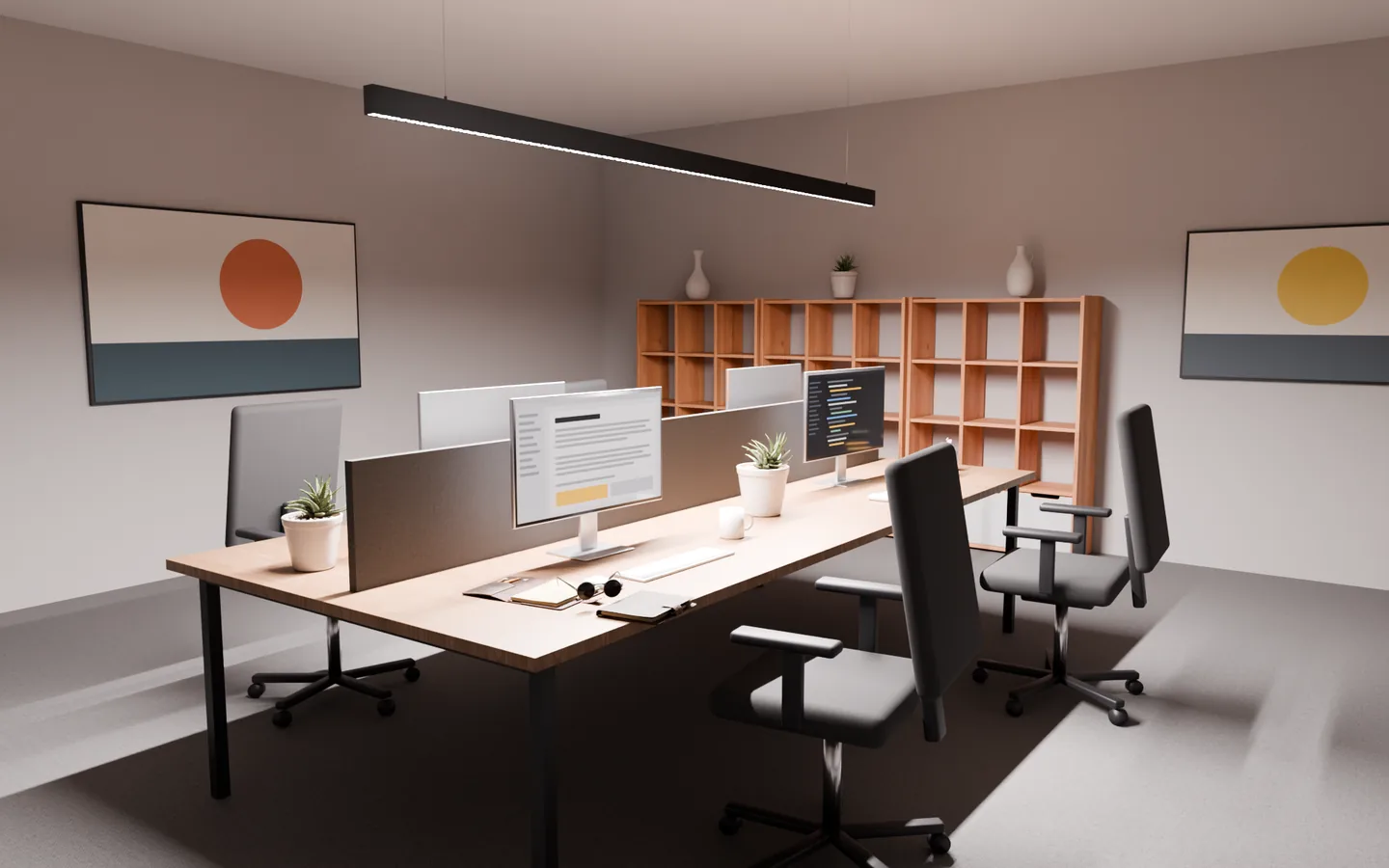
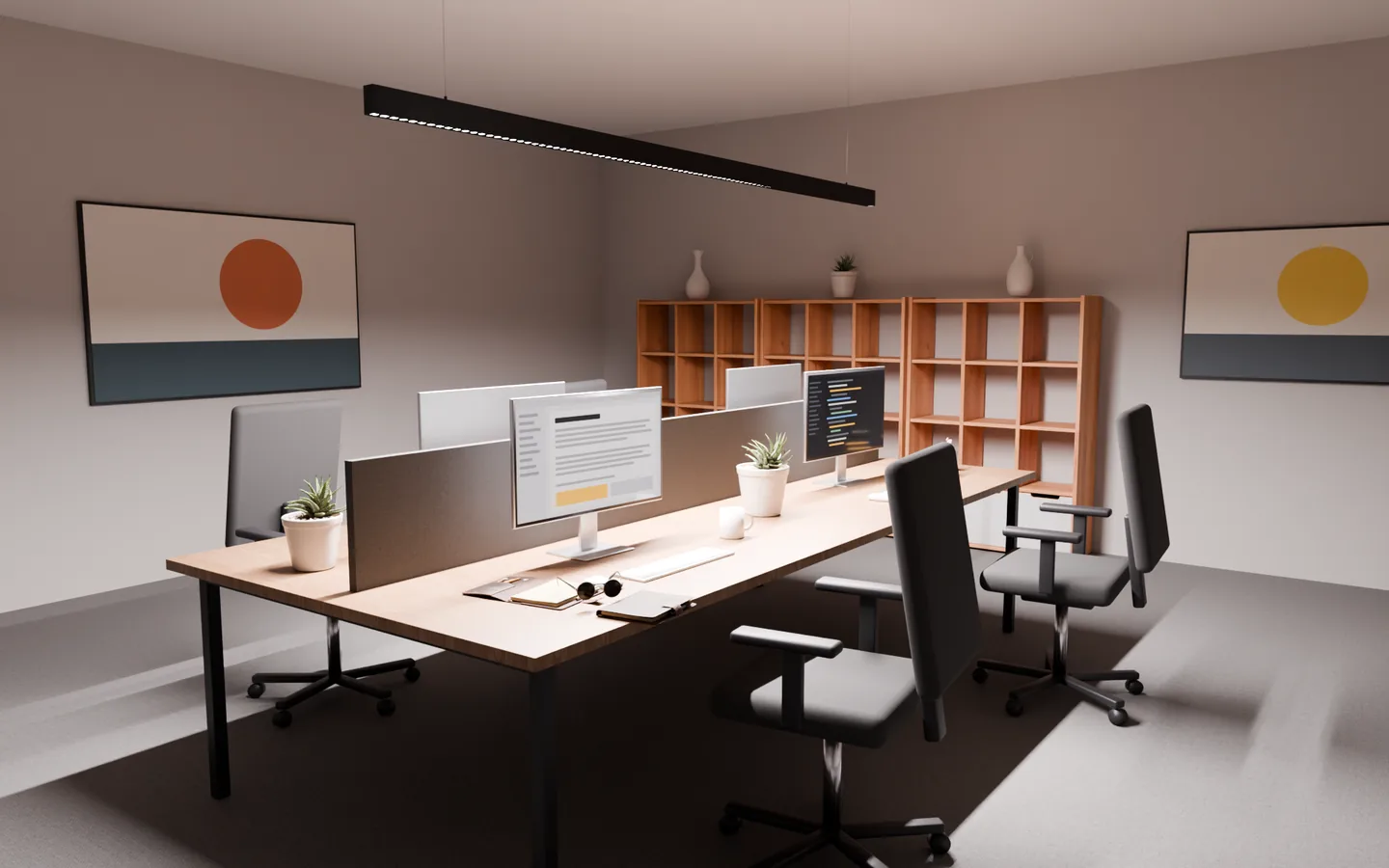
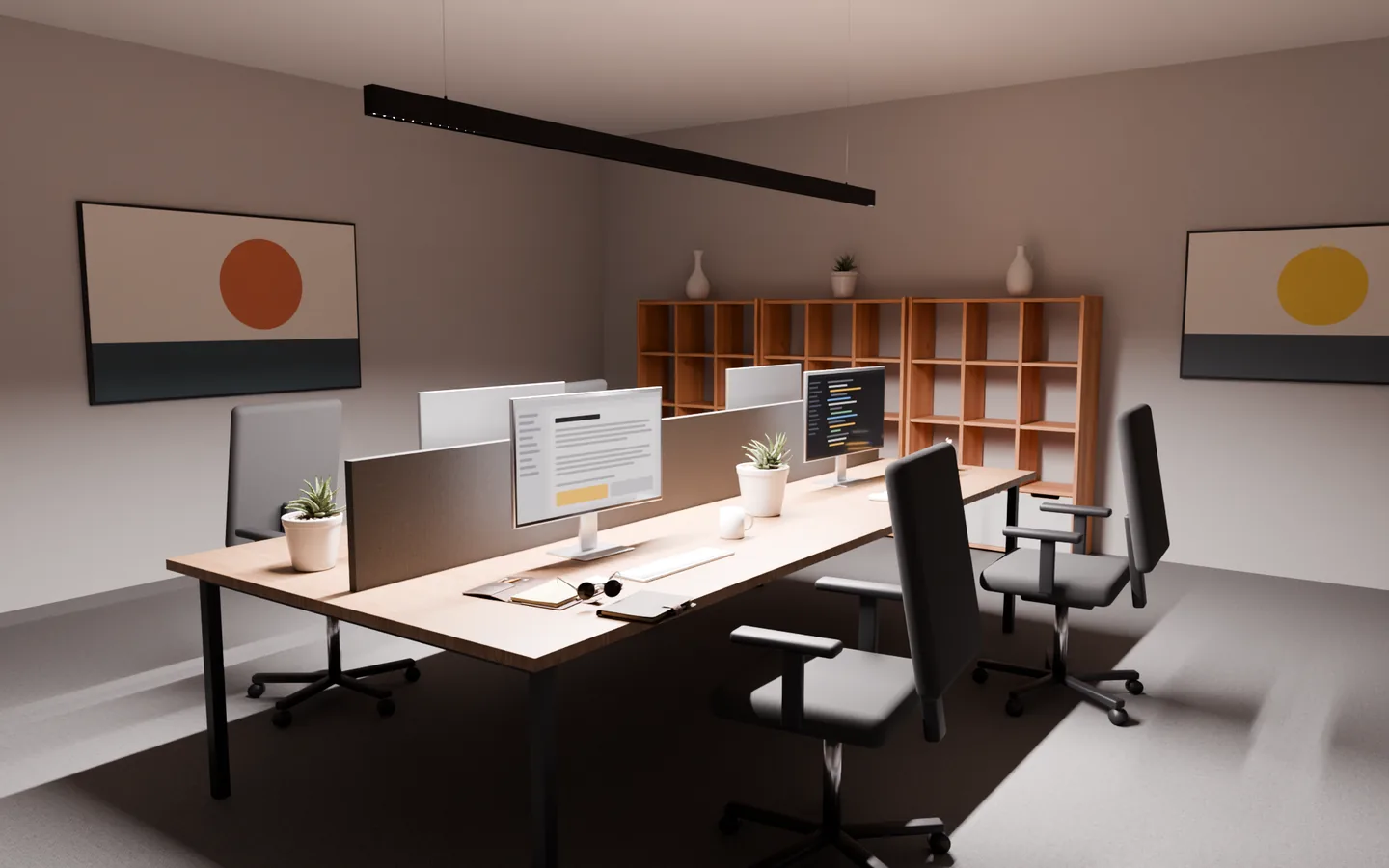
Pick a place and a beam angle, or move the slider. The opal line turns into a row of cells, the source hides deep inside the profile, and the optic decides how wide the light falls. The eyes show how your vision takes it.
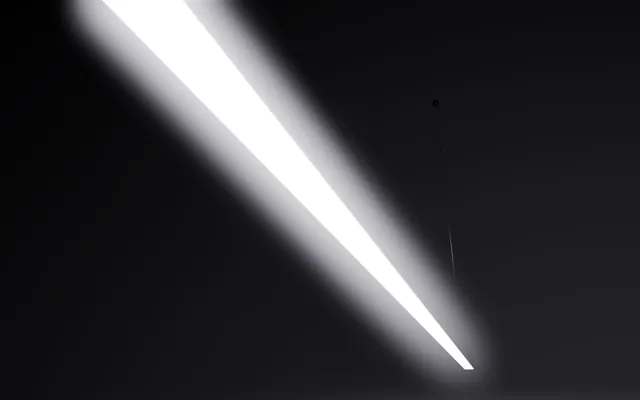 Luminaire up close
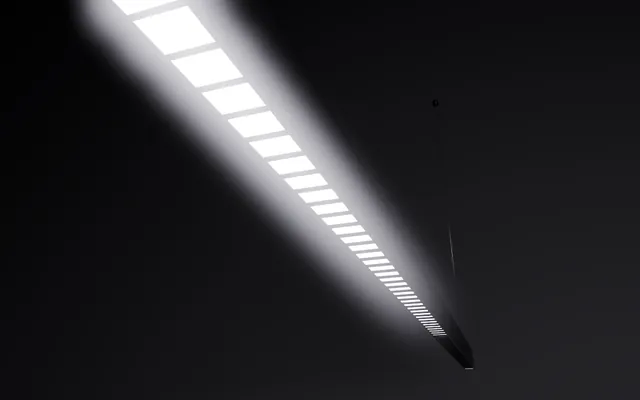
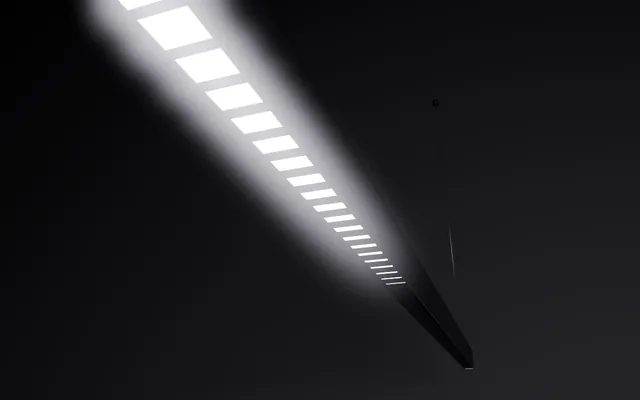
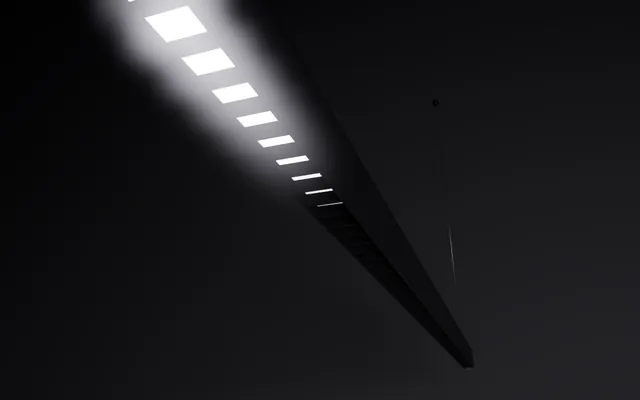
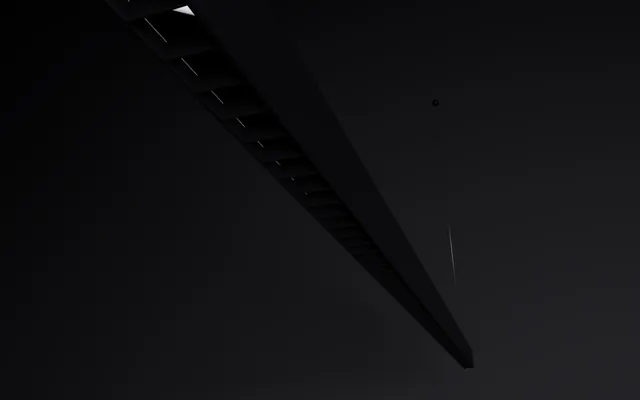
Your eyes are at rest
You notice the luminaire
You start to squint
Your eyes get tired
Irritation builds
Headache and irritation
- 120°beam angle
- 0mmsource set back in the profile
- 100%brightness of the line in your eyes
- 21UGR: glare in this viewstandard: up to 25standard: up to 22the standard gives no limitstandard: up to 19standard: up to 19
Hotel corridor: the standard allows UGR up to 25. Because people only walk through. The opal line stays within the standard, and still shines into the guest's eyes all the way to the room.
Reception: the standard requires UGR up to 22. It is the guest's first impression and eight working hours for the person behind the desk, who has the luminaires in front of their eyes all the time.
Restaurant: the standard gives no UGR limit. But a guest sits here for an hour or two and looks at the person opposite. The luminaire must not compete with them.
Conference room: the standard requires UGR up to 19. Everyone looks the same way for an hour or two. A bright line tires the eyes and reflects in the screen.
Office: the standard requires UGR up to 19. That is eight hours at a monitor. Less glare means fewer tired eyes and fewer headaches at the end of the day.
FREI renders. In each place only the luminaire changes: the furniture, the walls and the camera stay where they are. Each frame is rendered separately, with the brightness of the tabletop or the floor equalised. The beam angle is the half-intensity angle, as in data sheets. The opal cover comes to 117° by calculation, 120° in data sheets. The 80°, 52° and 36° optics sit 12 mm deep in the cell. The brightness of the line is measured in the render from where the camera stands.
UGR is calculated with the formula from the standard for this single view: one luminaire, the gaze at the centre of the picture, the brightness of the place assumed as in a lighting design (corridor and restaurant table 100 lx, lobby 200 lx, conference room and office 500 lx). This is not the UGR from a data sheet: there the whole room with many luminaires is calculated, so the result is different, usually lower. The descriptions next to the eyes follow the glare scale on which UGR is built: from imperceptible (below 10) to intolerable (from 28). The eyes react across the whole scale: from UGR 30 down to below 10.
Every zone.
Different requirements.
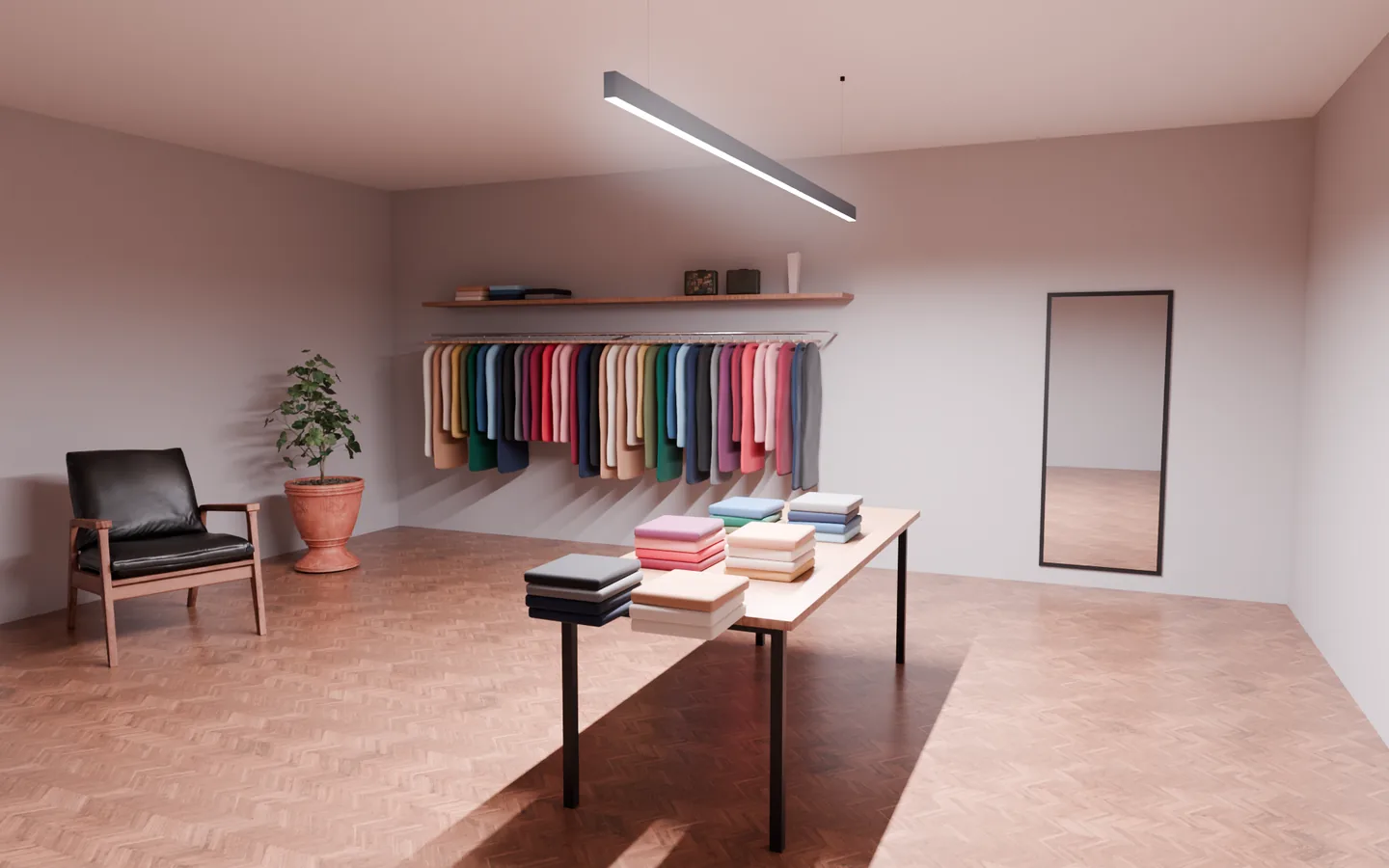
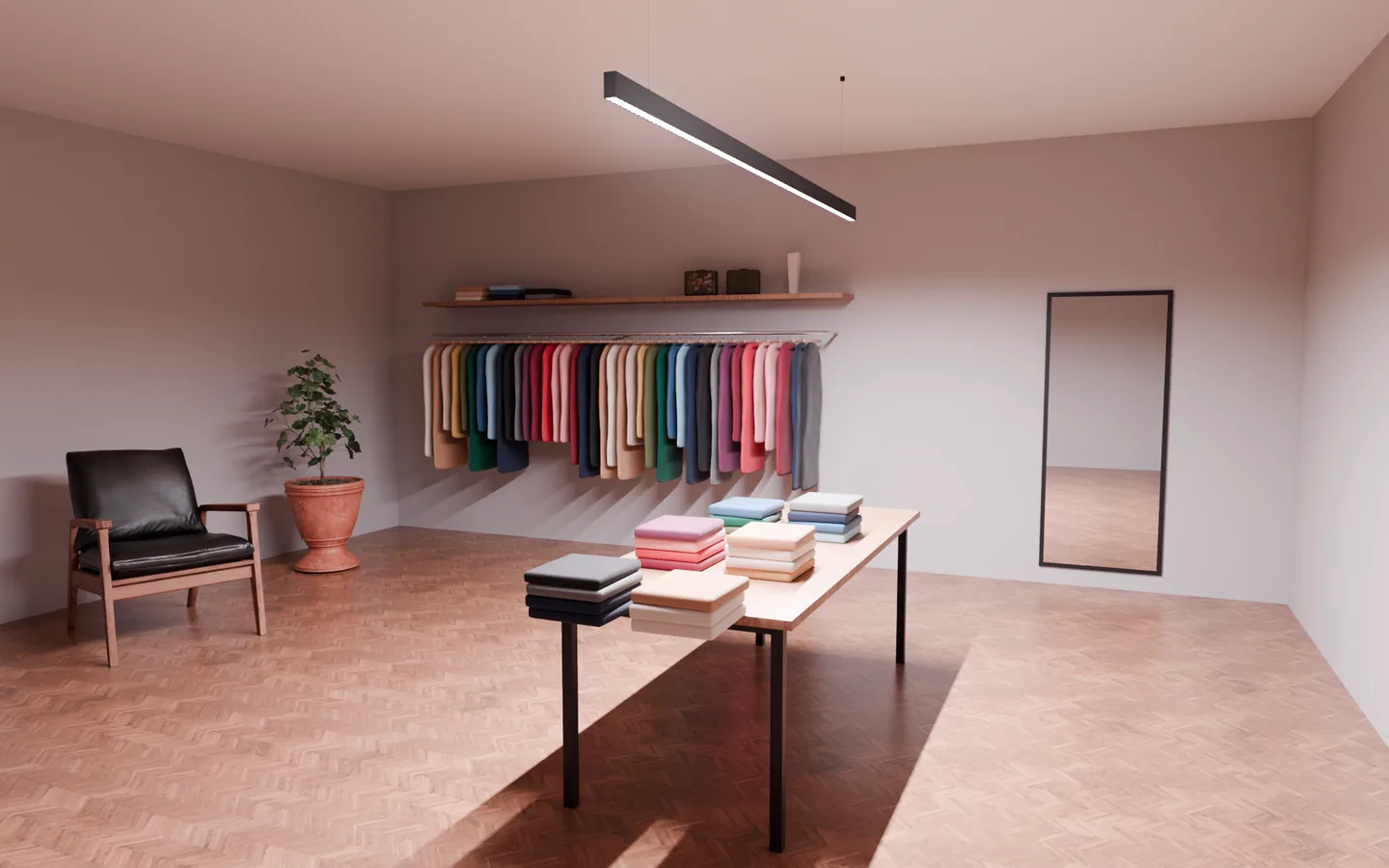
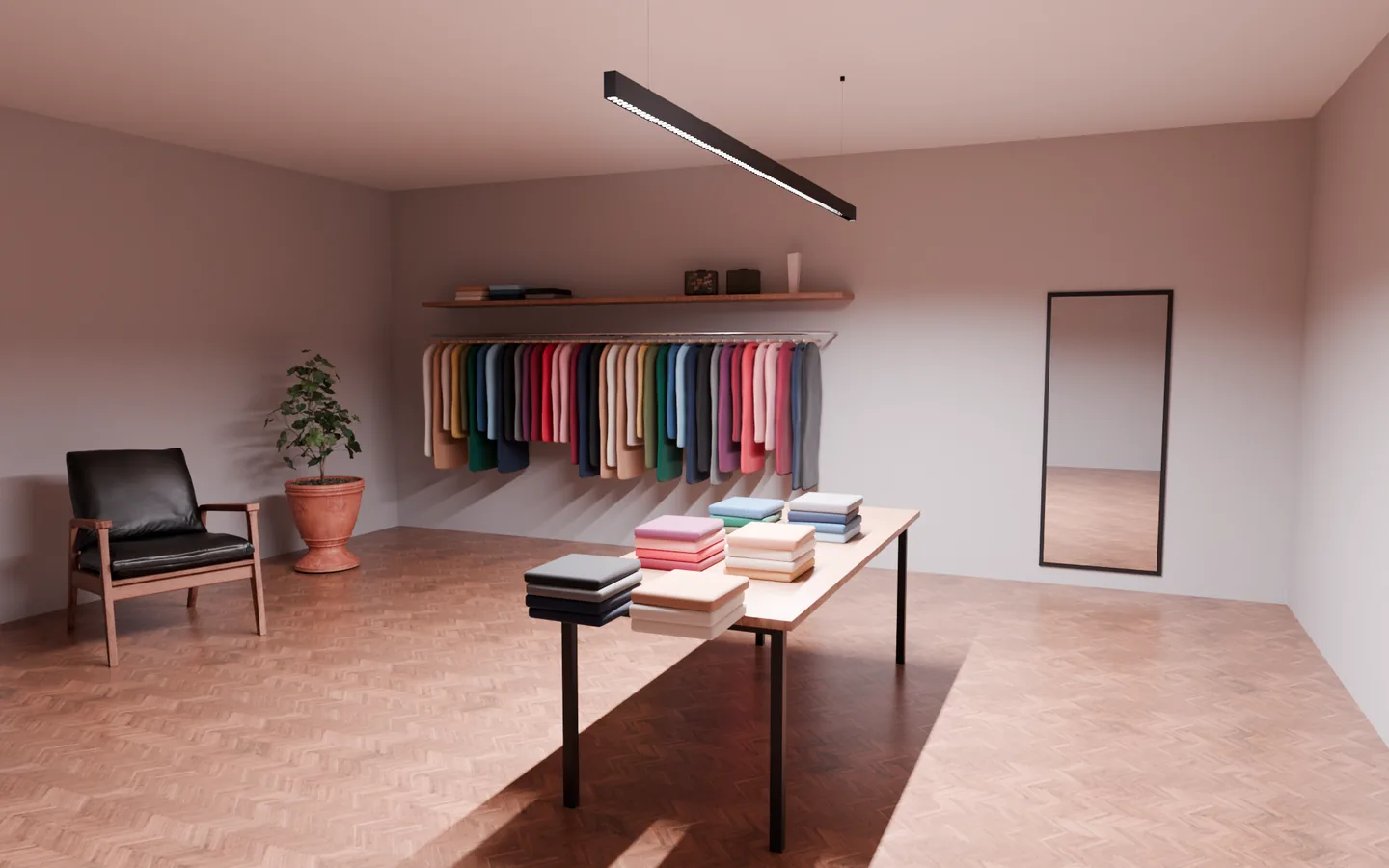
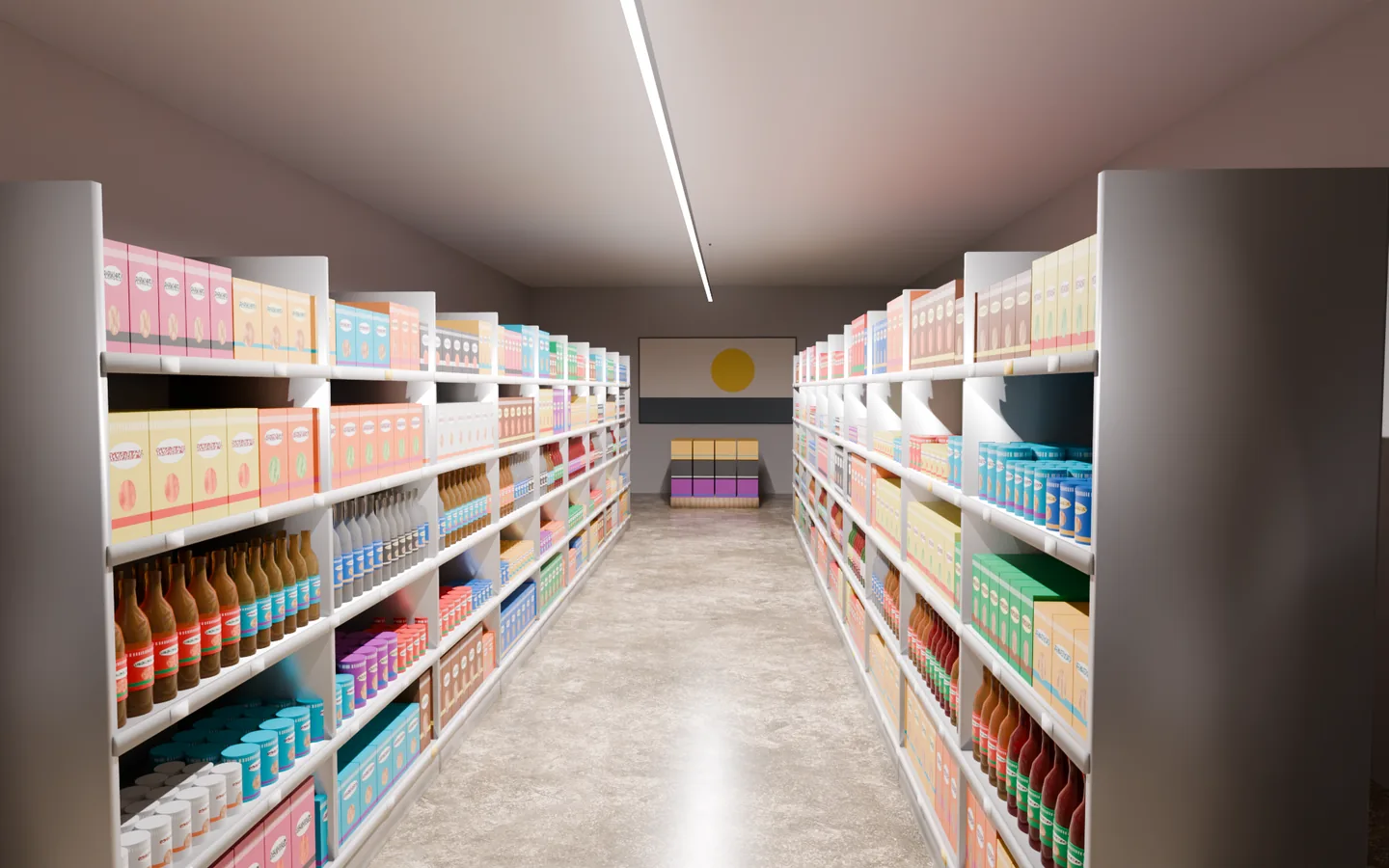
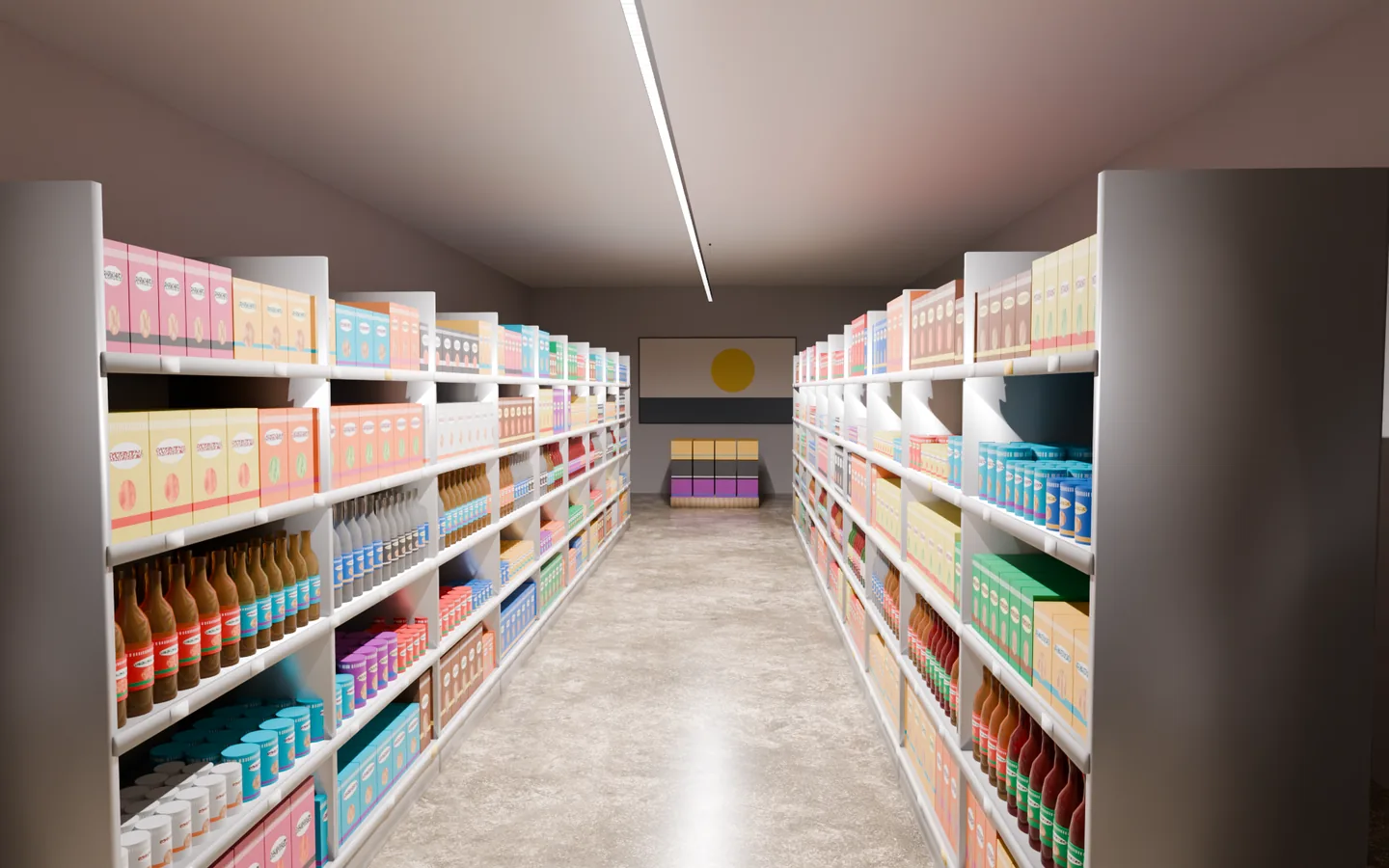
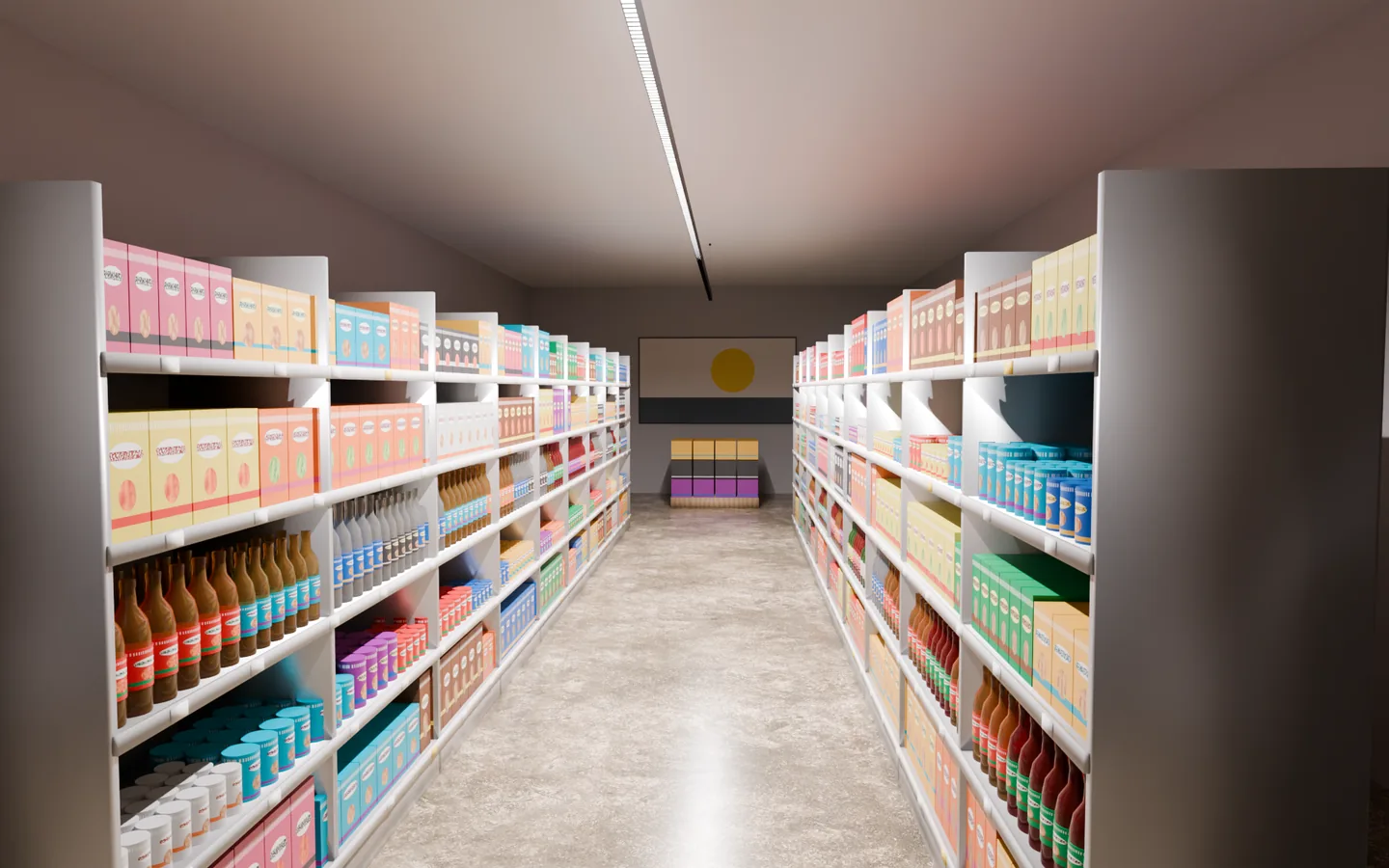
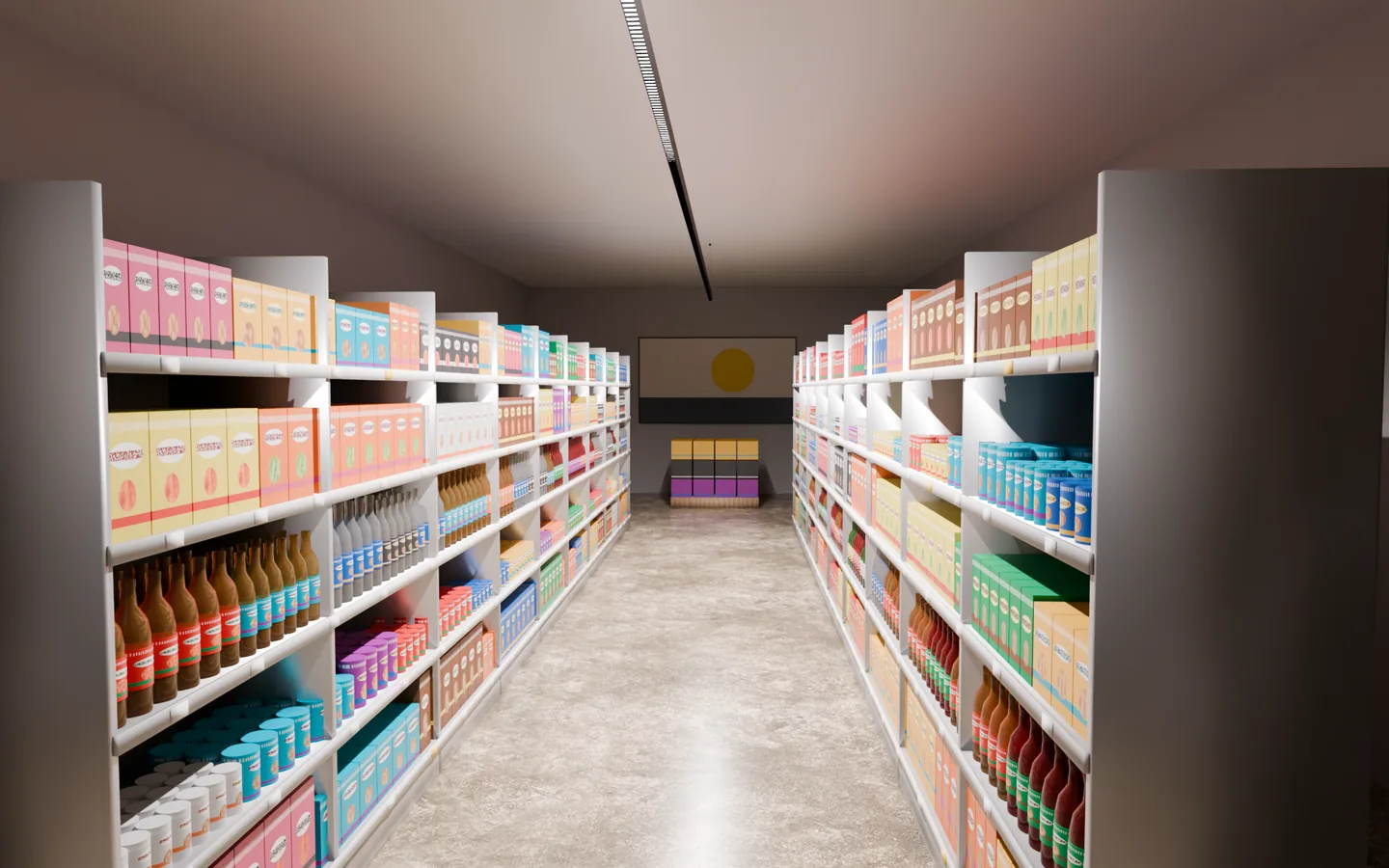
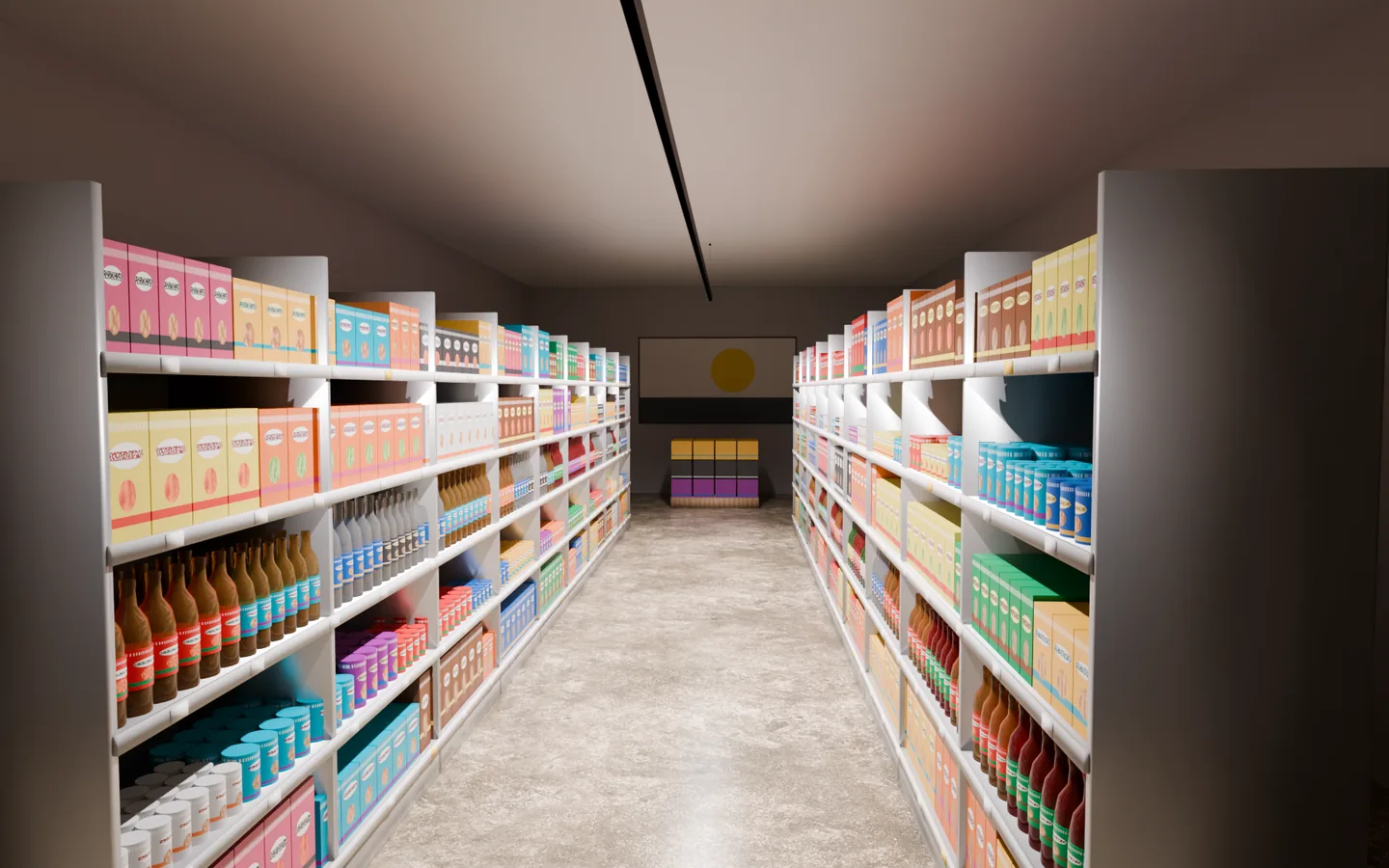
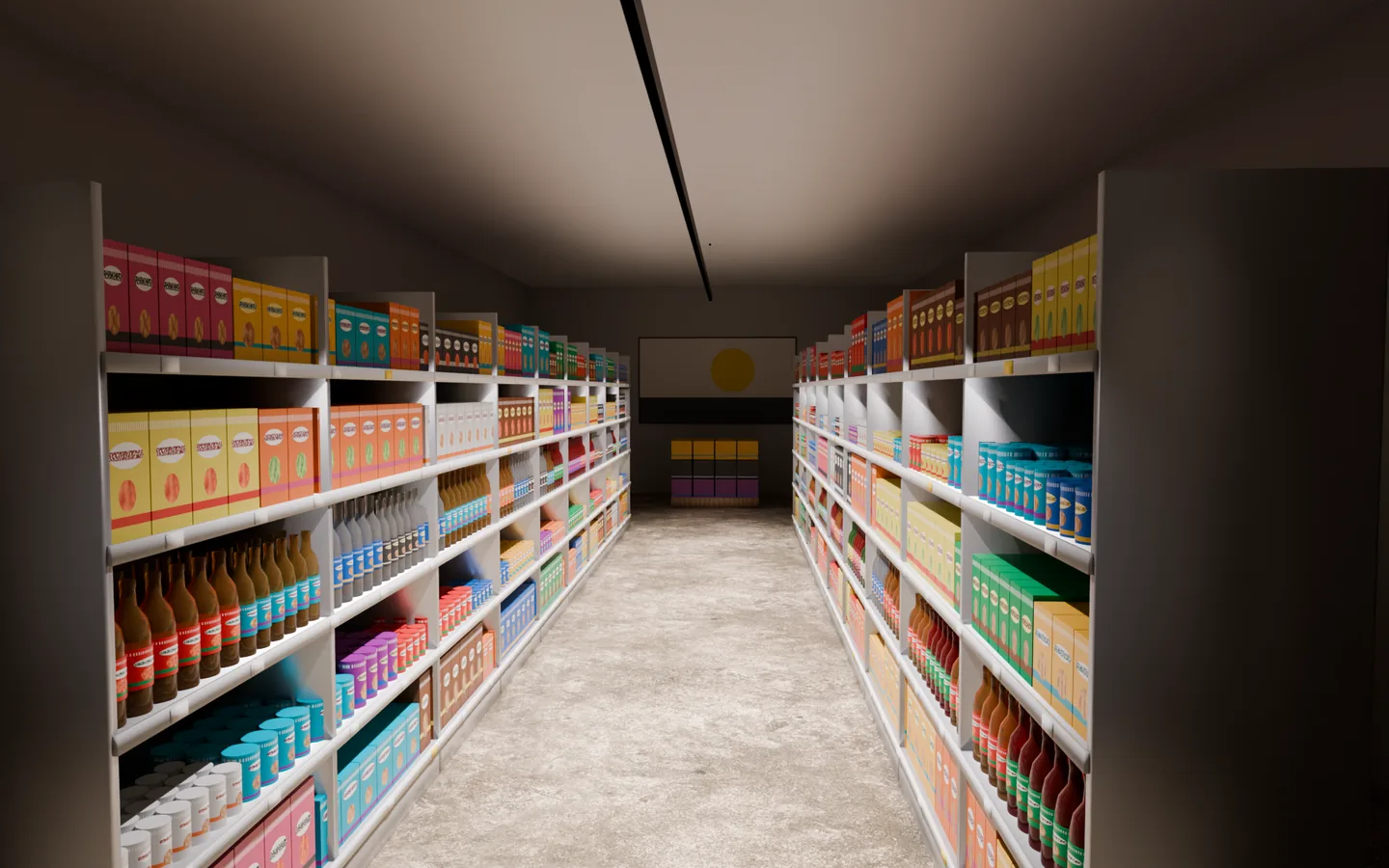
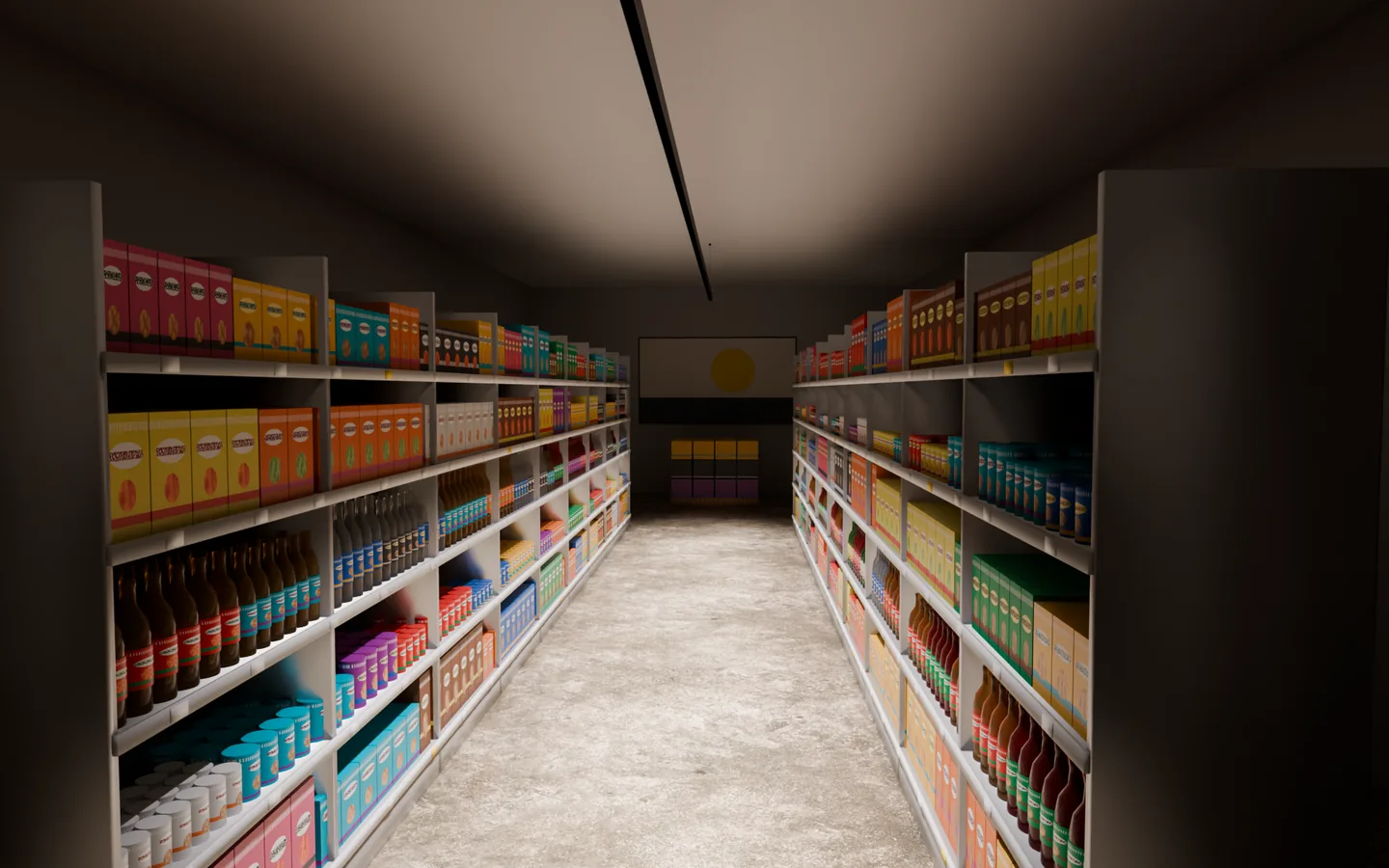
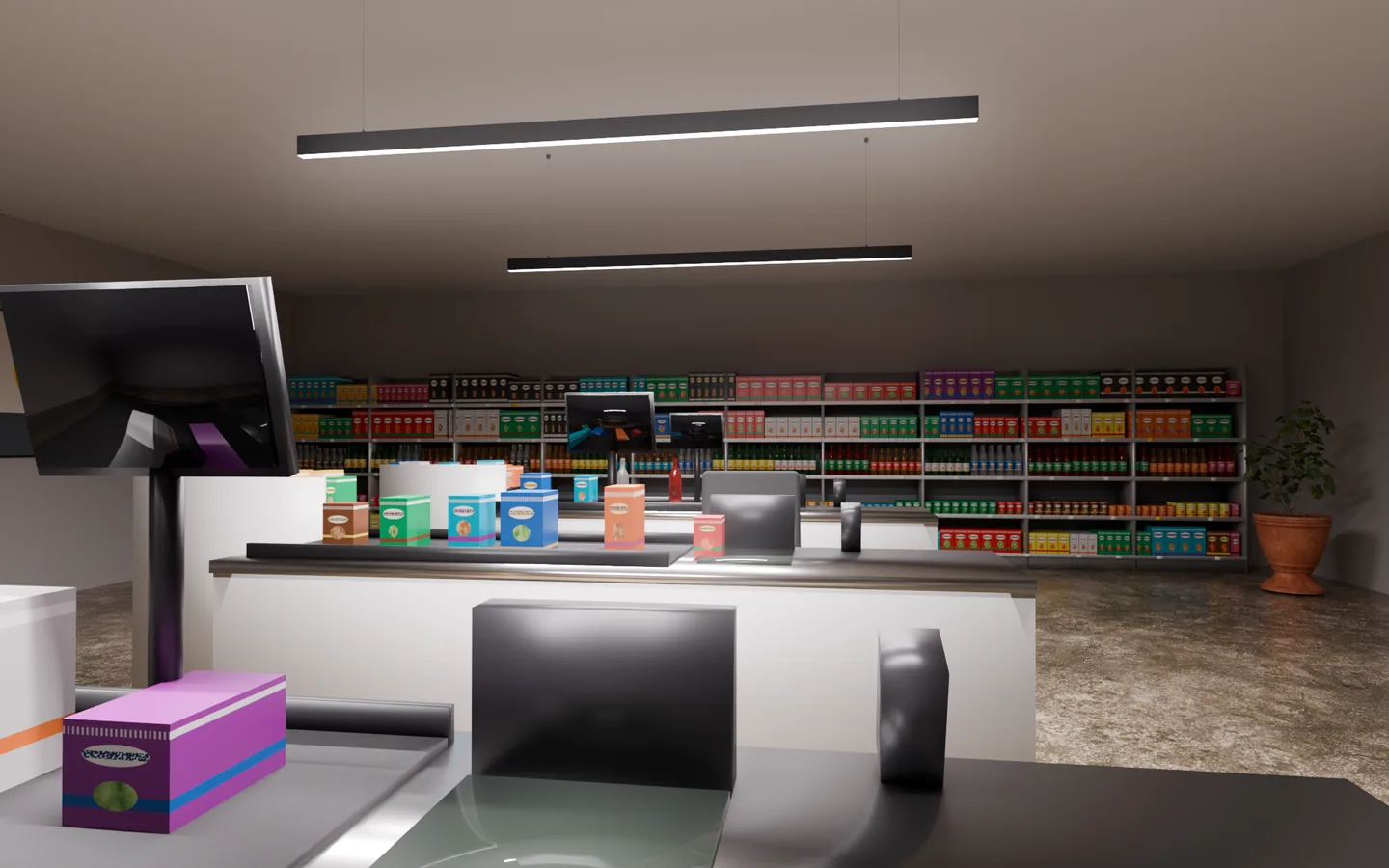
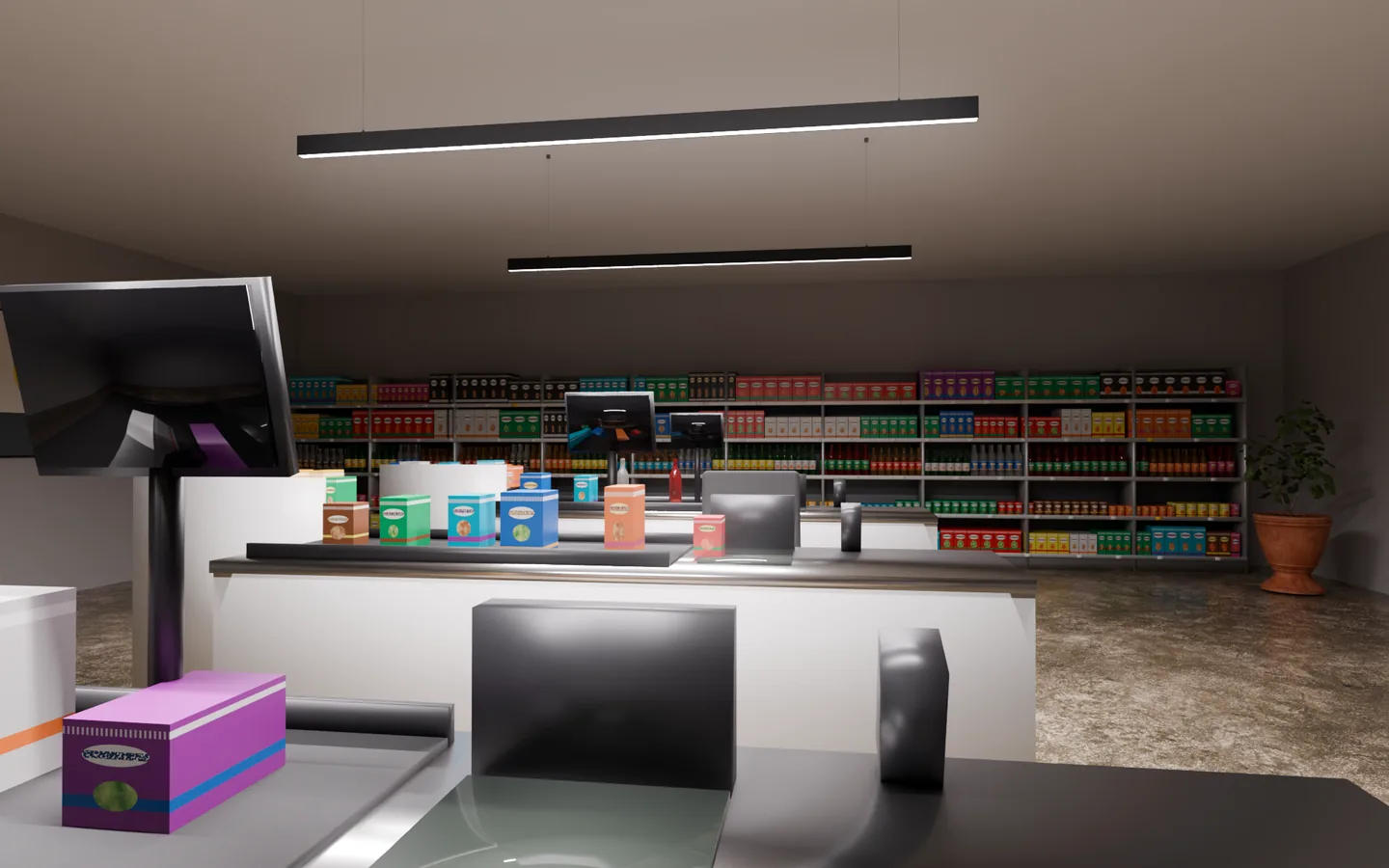
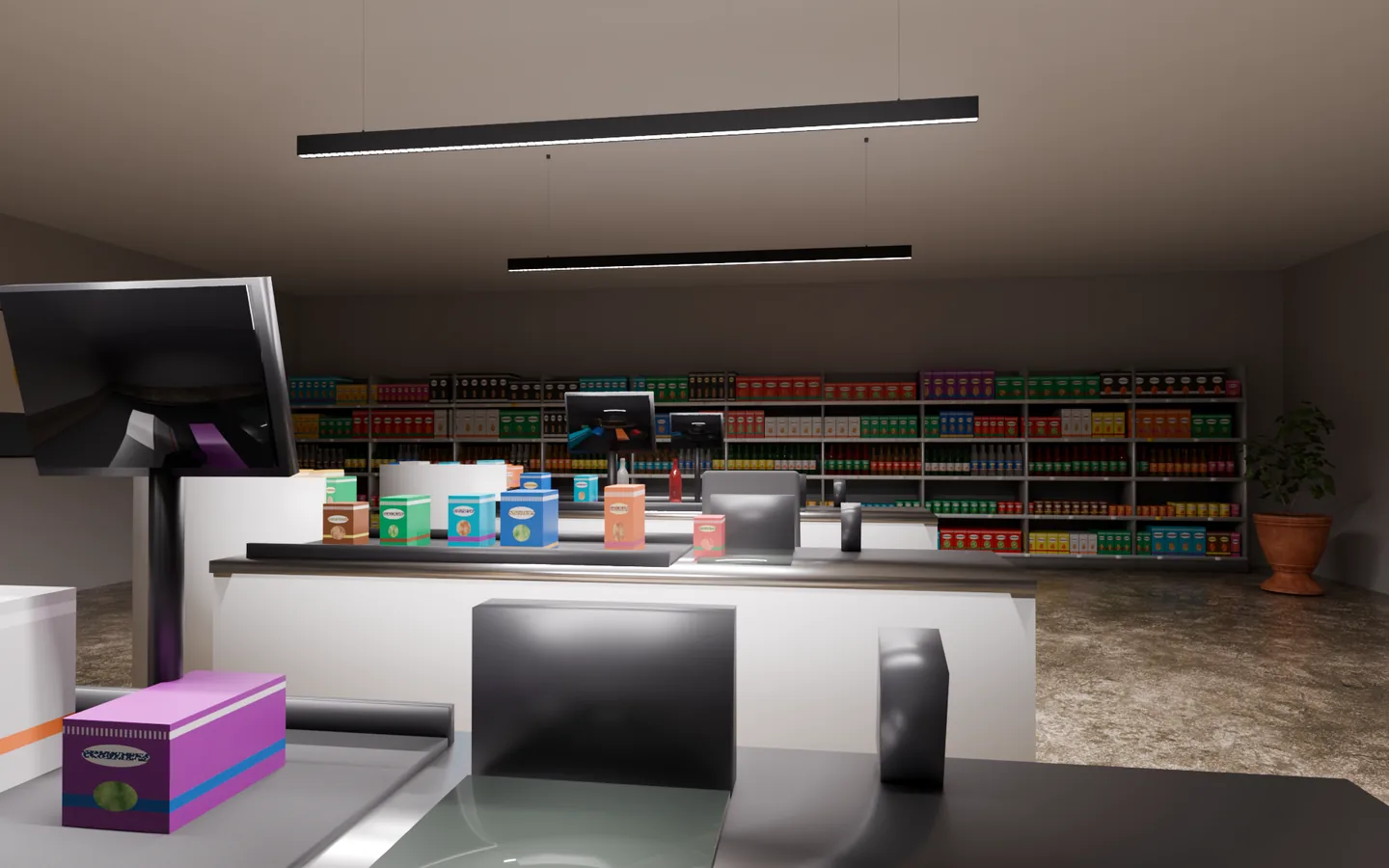
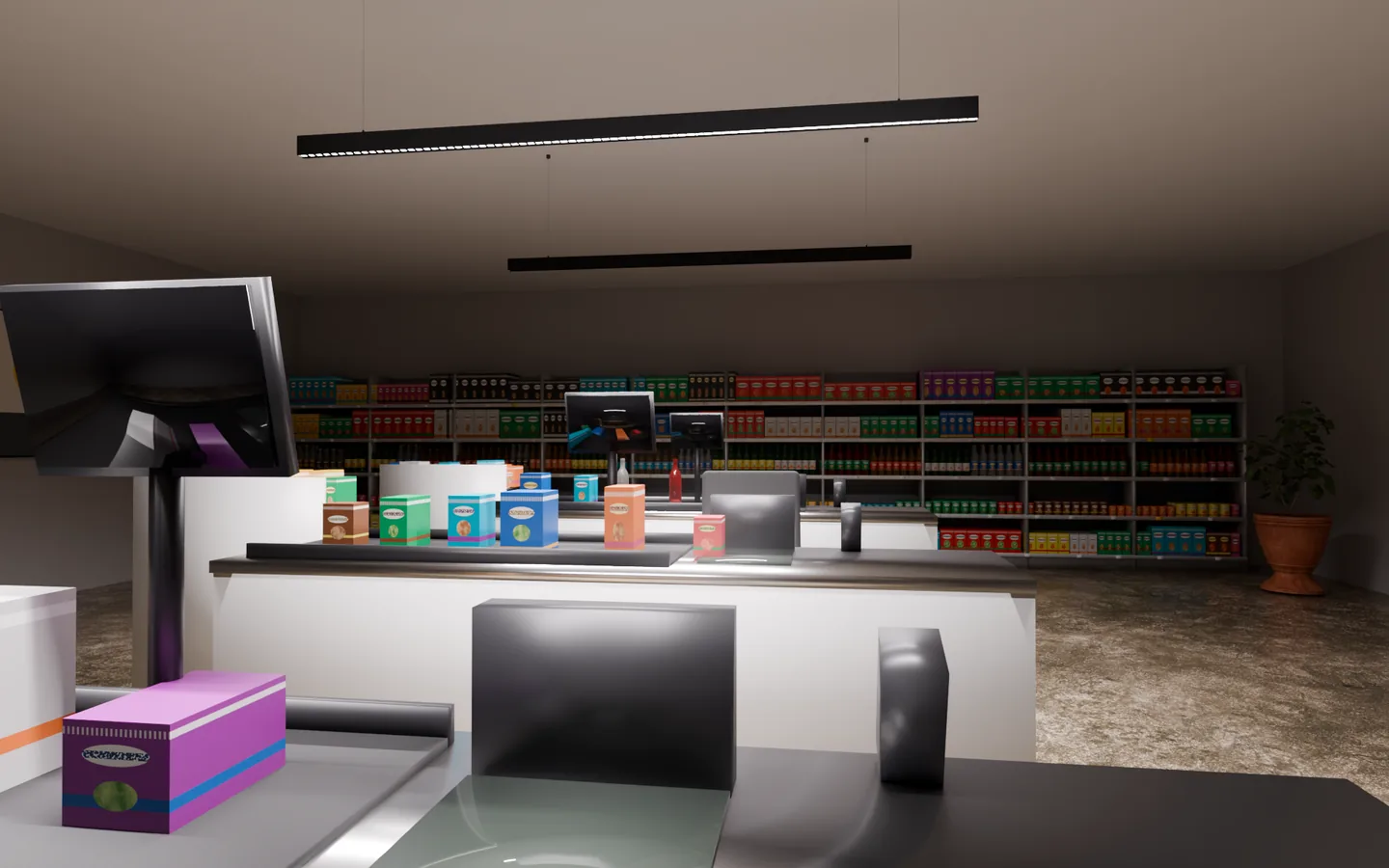
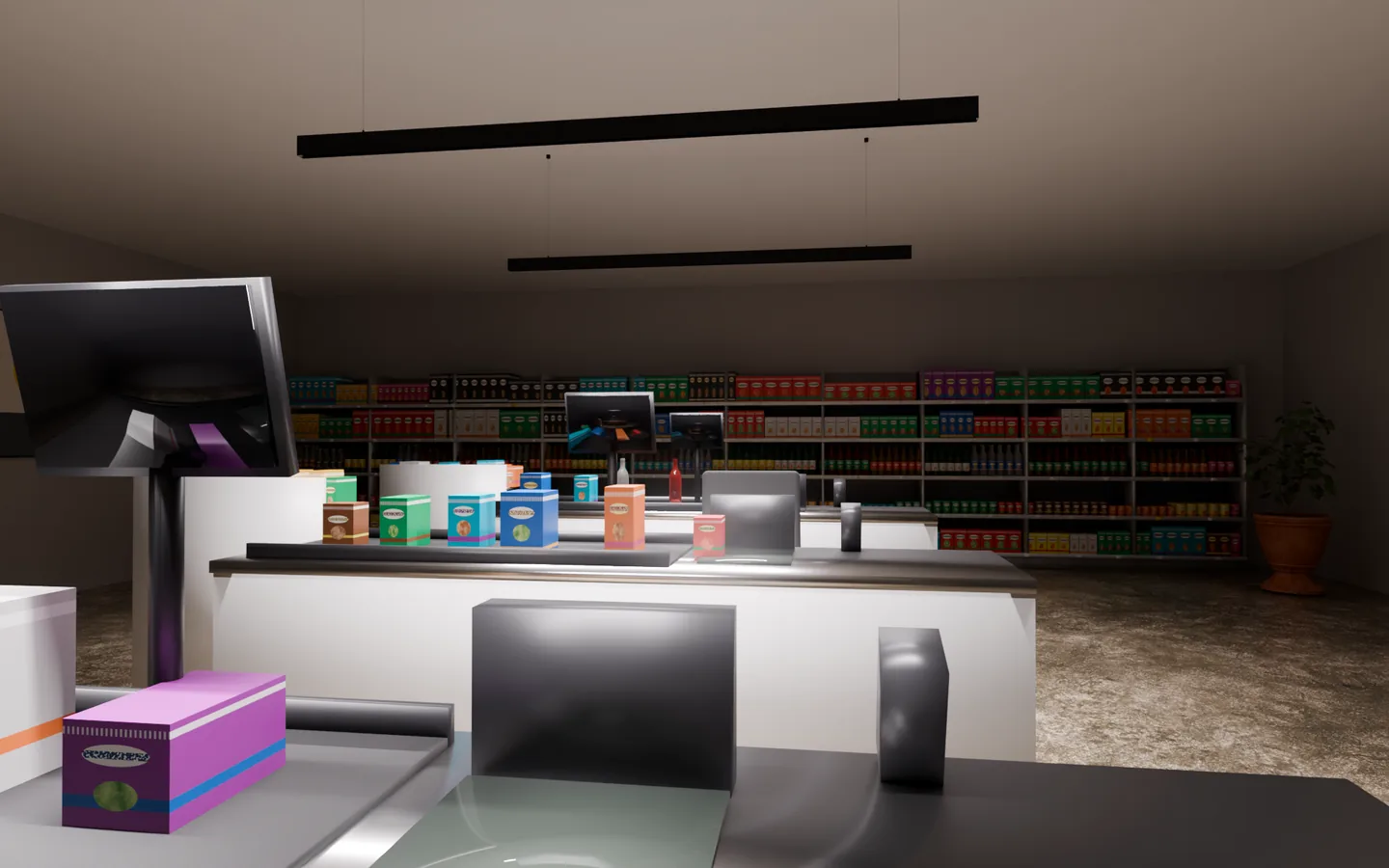
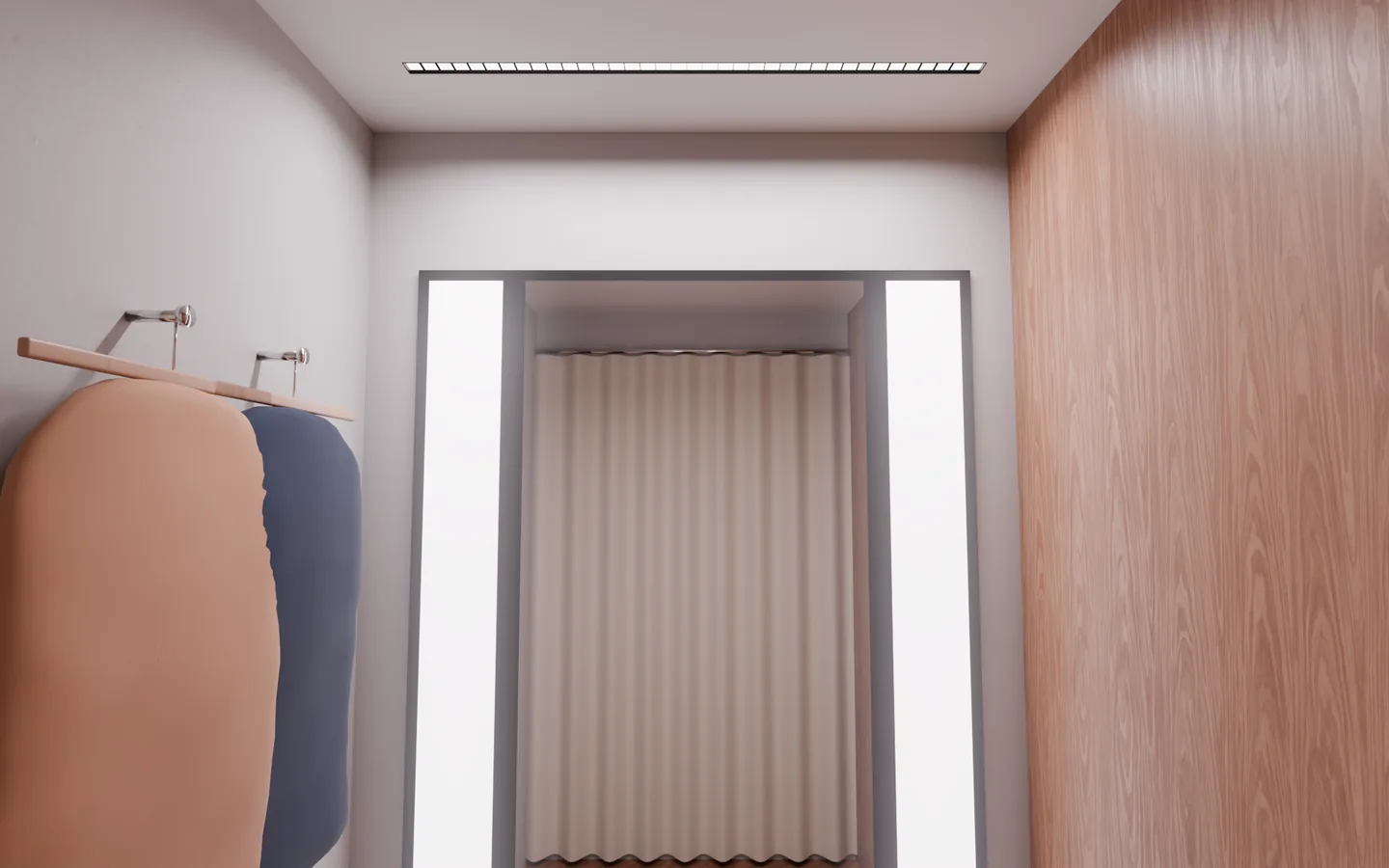
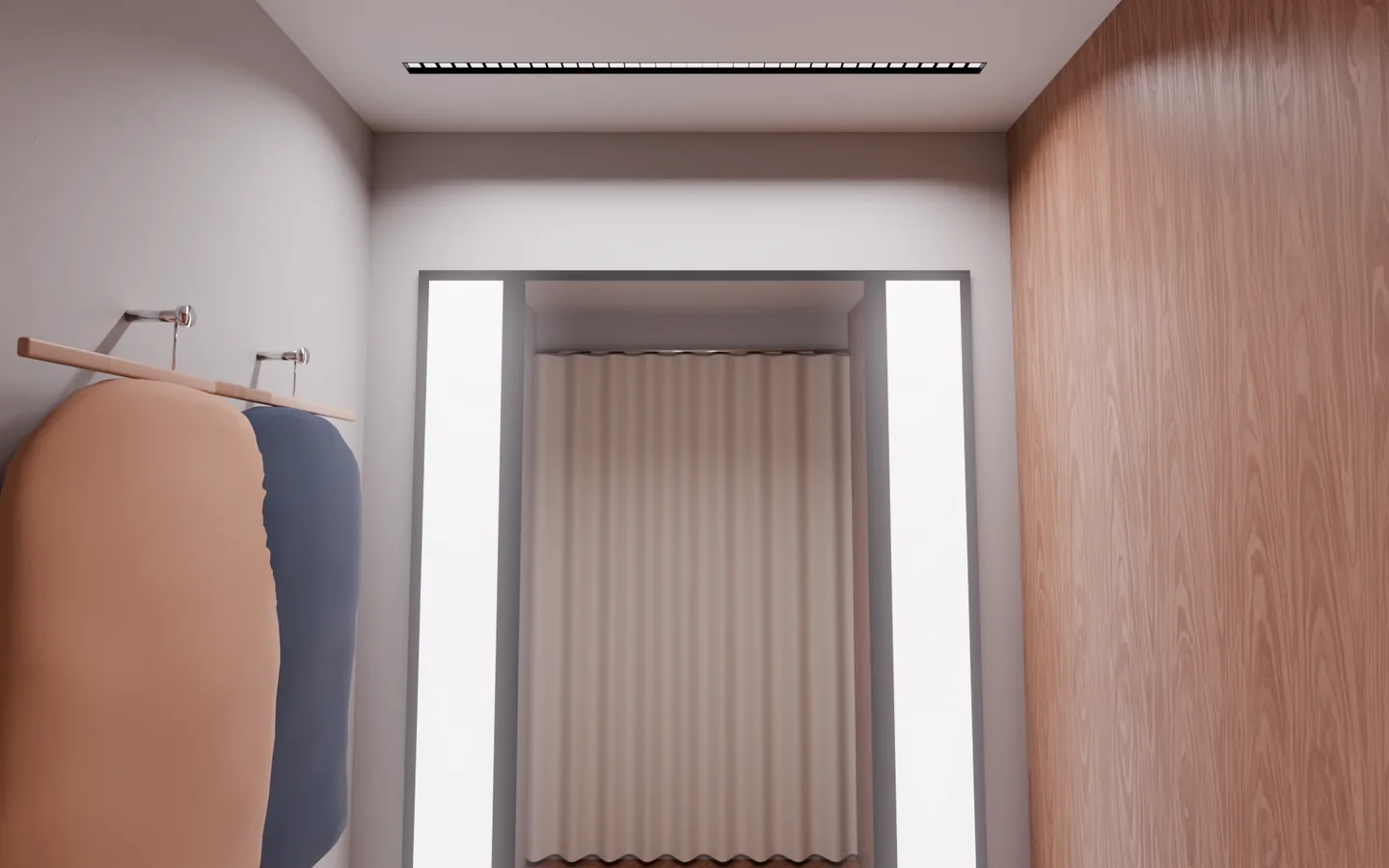
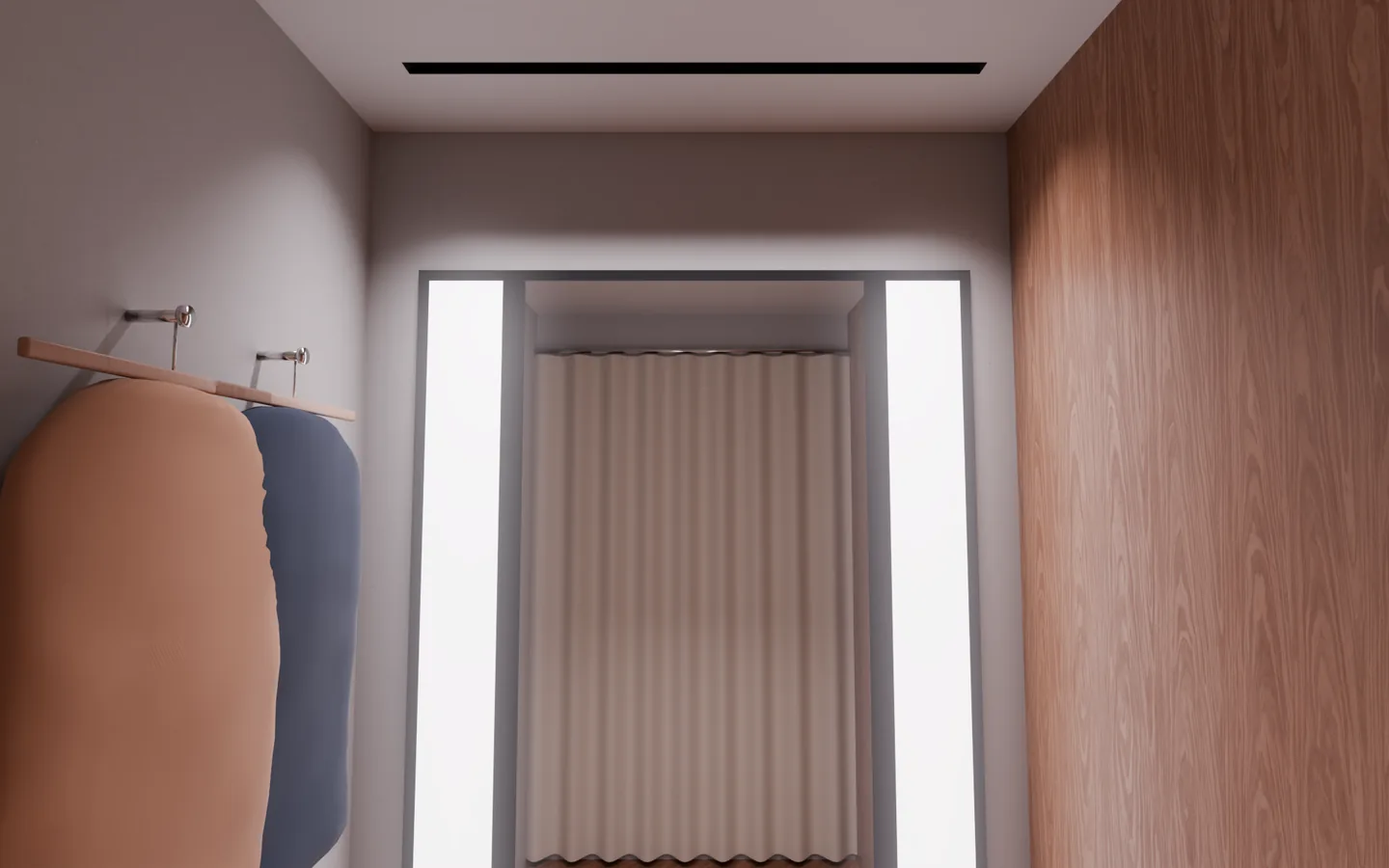
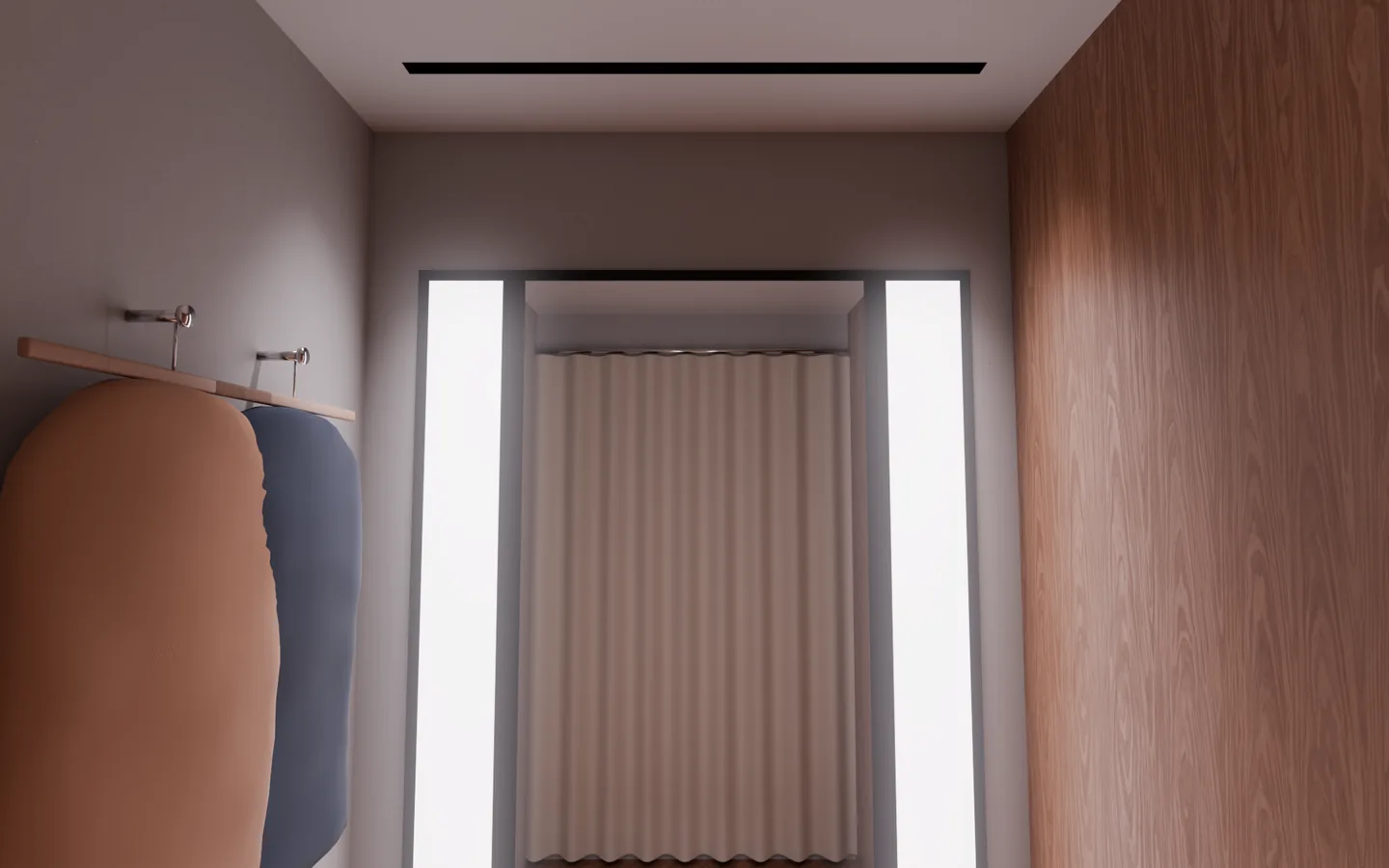
Sales floor, aisle, checkout, counter and fitting room. Choose the zone and the optic. The eyes show what the customer and the person at the checkout feel.
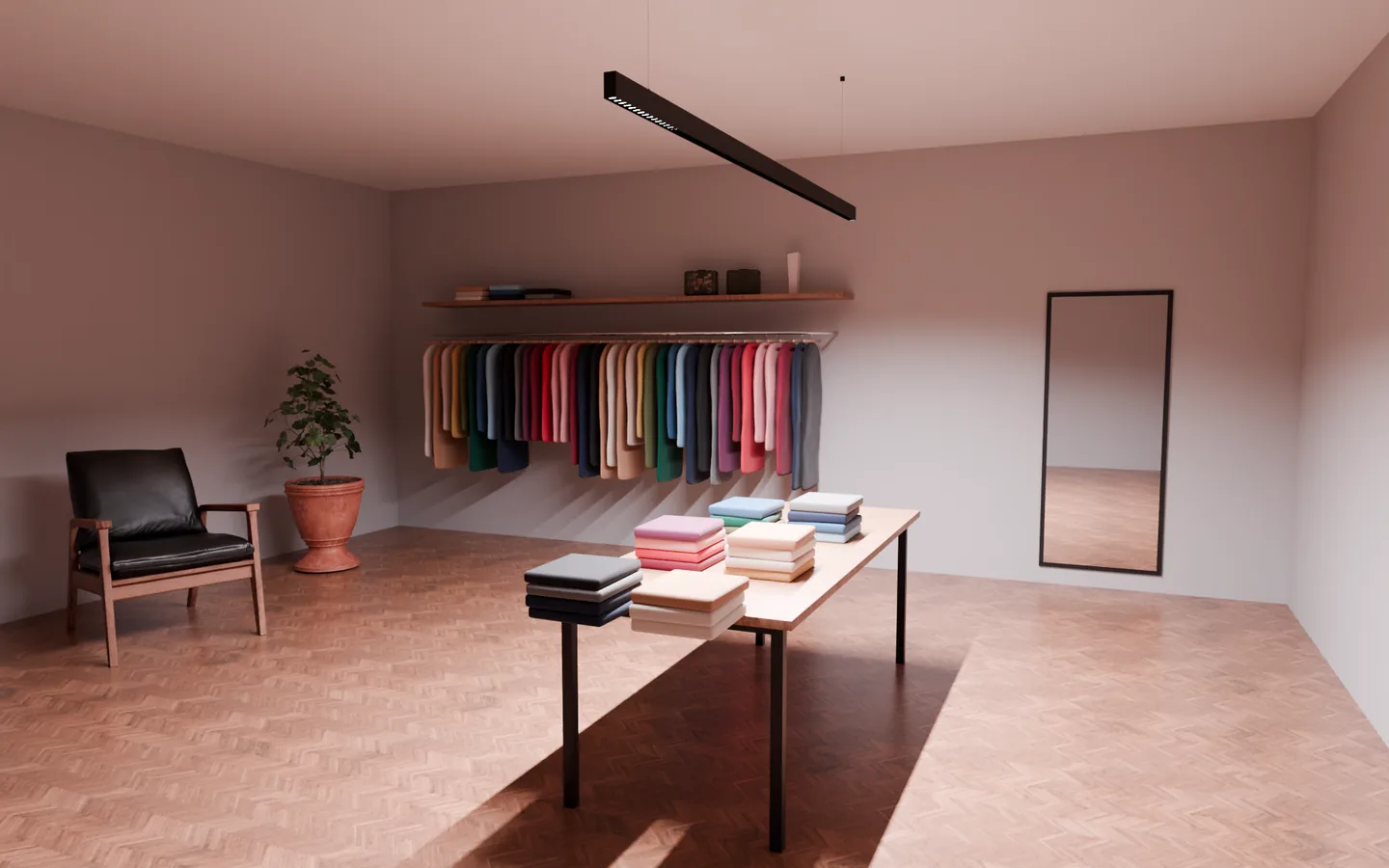
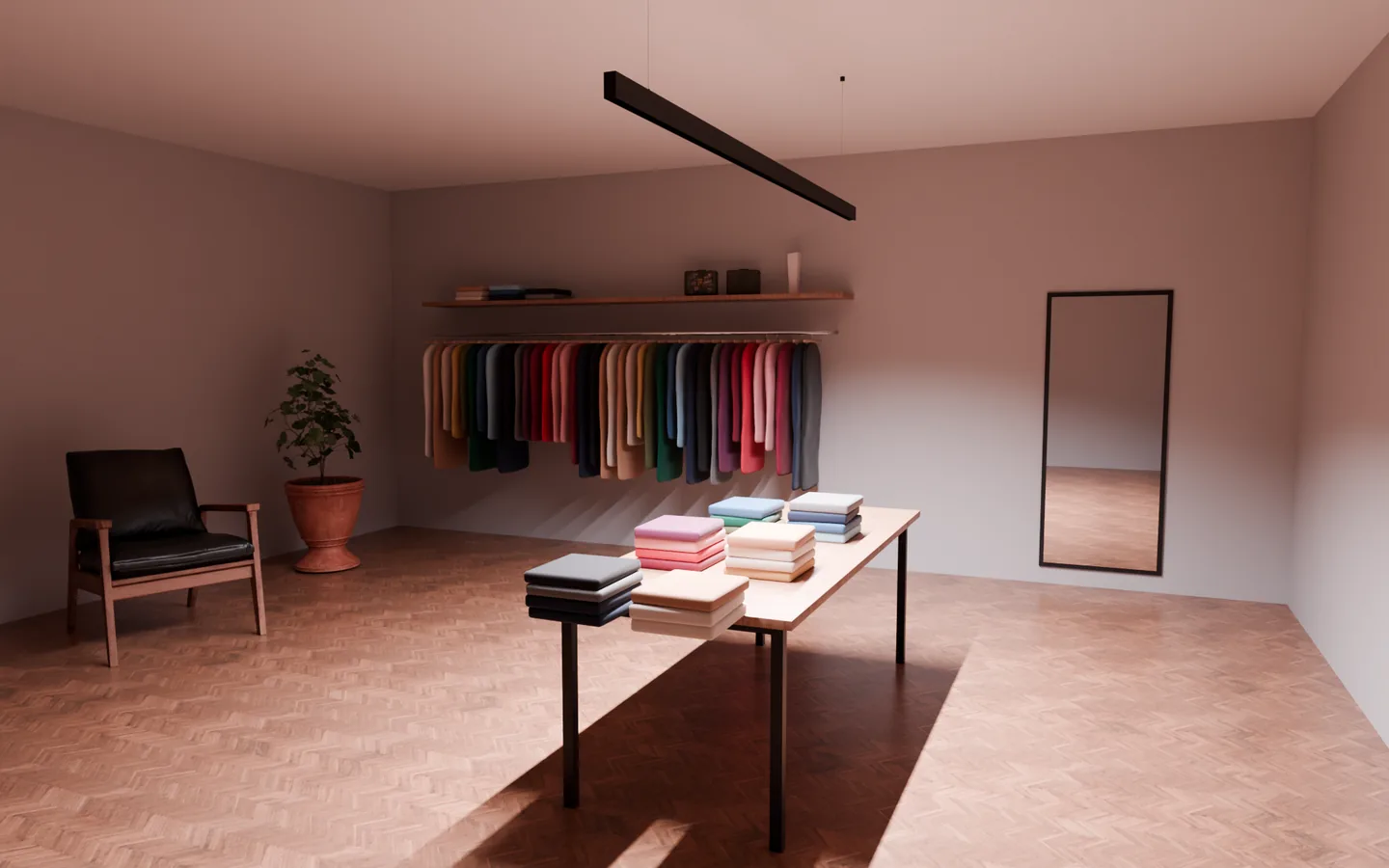
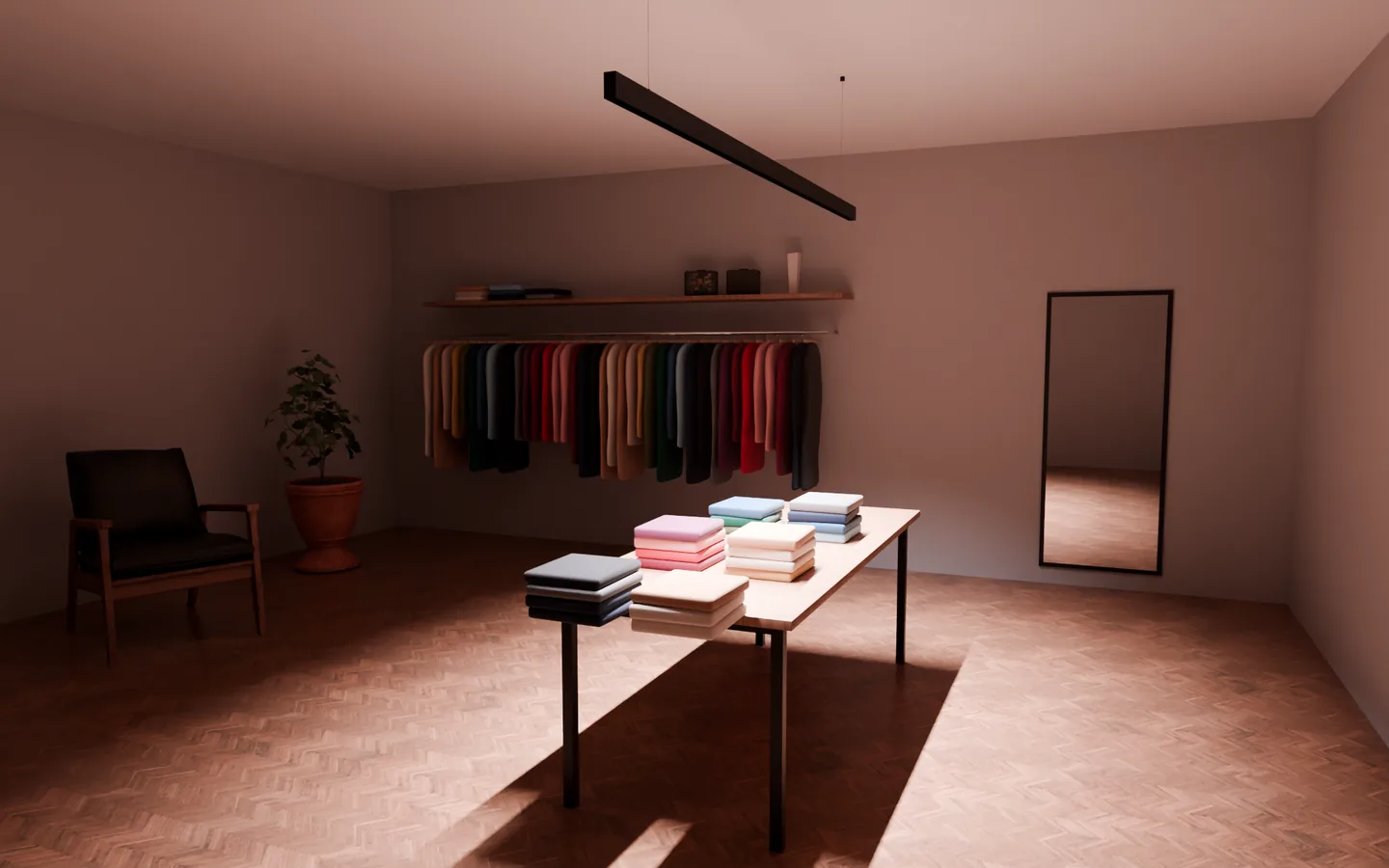
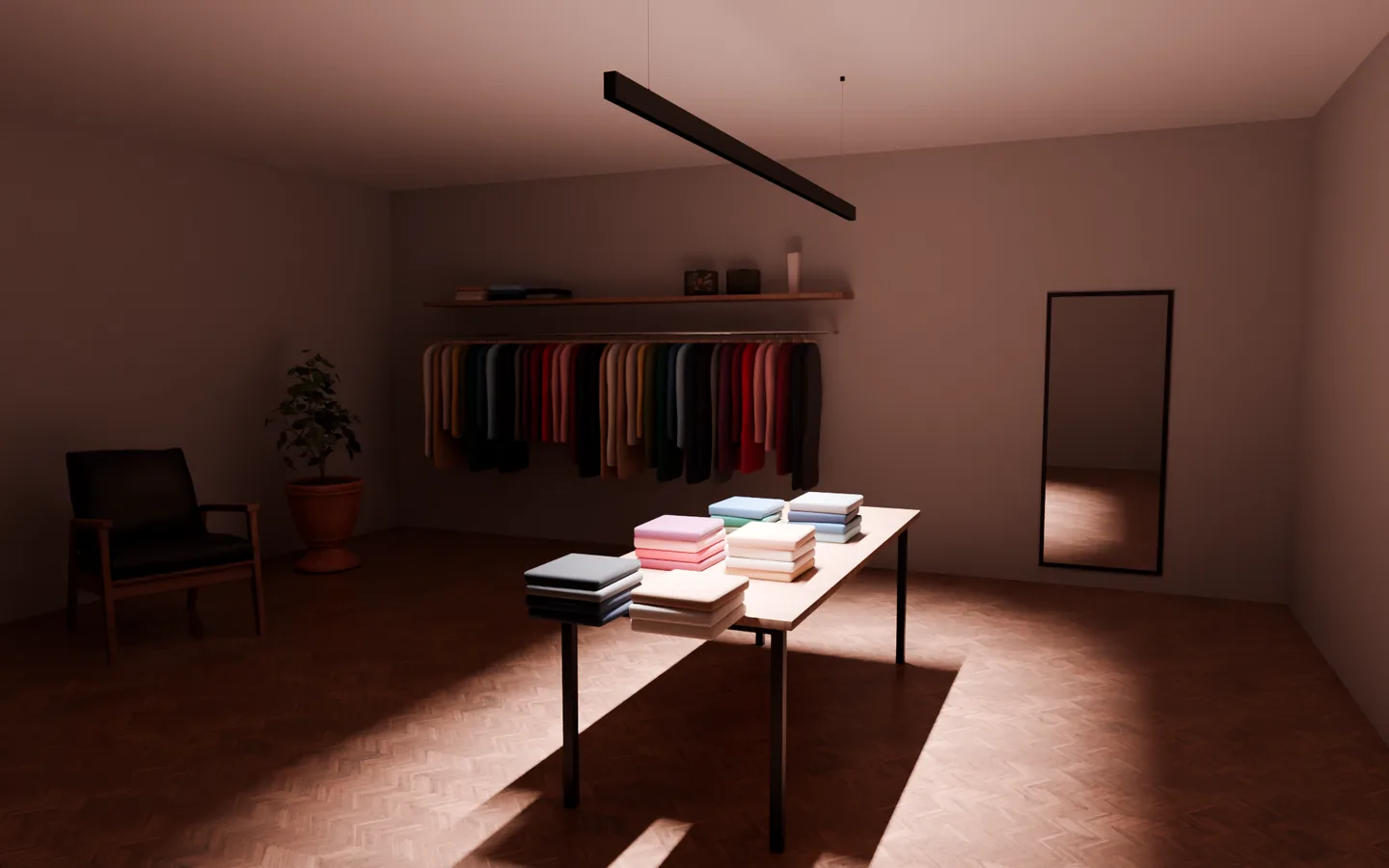
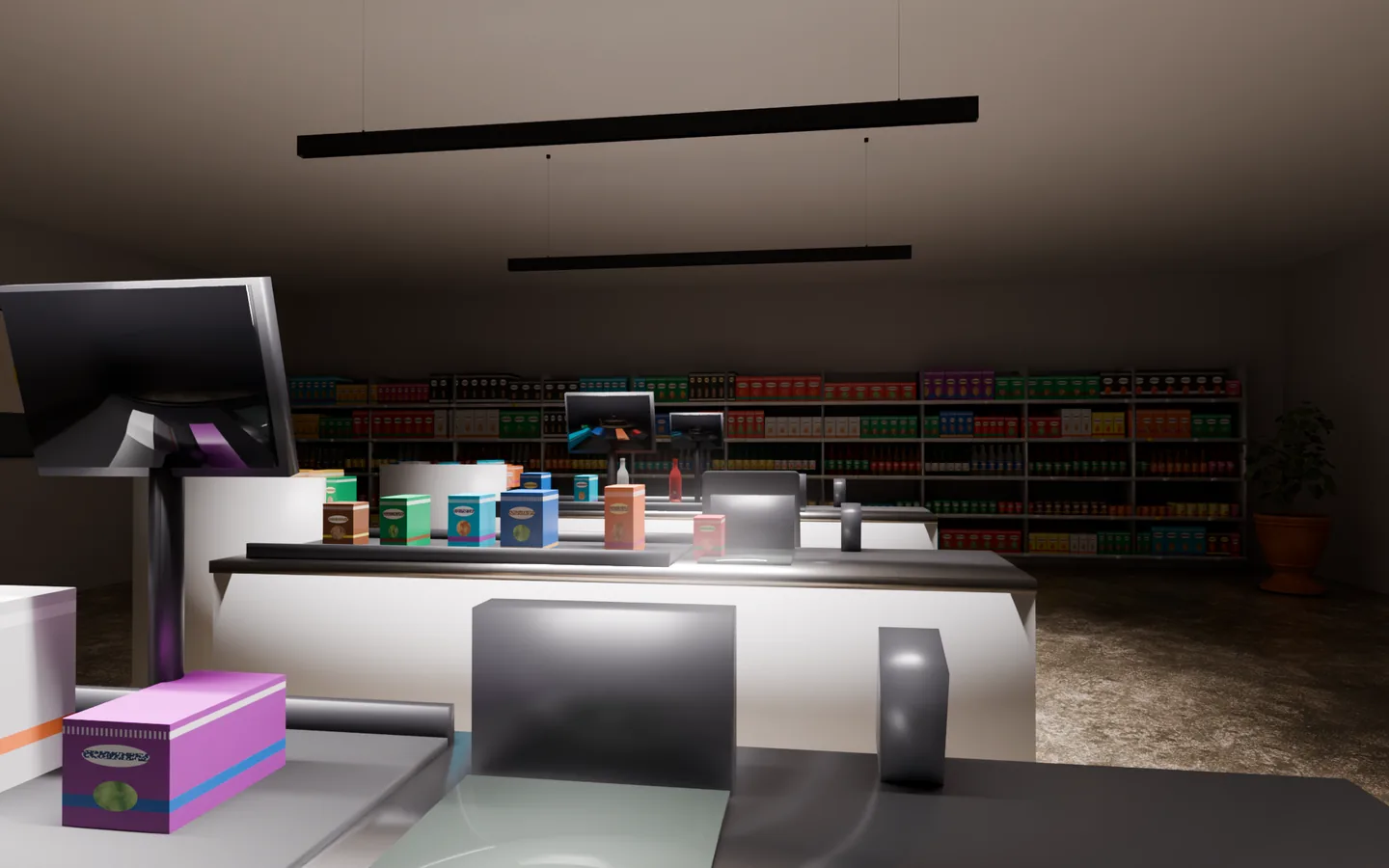
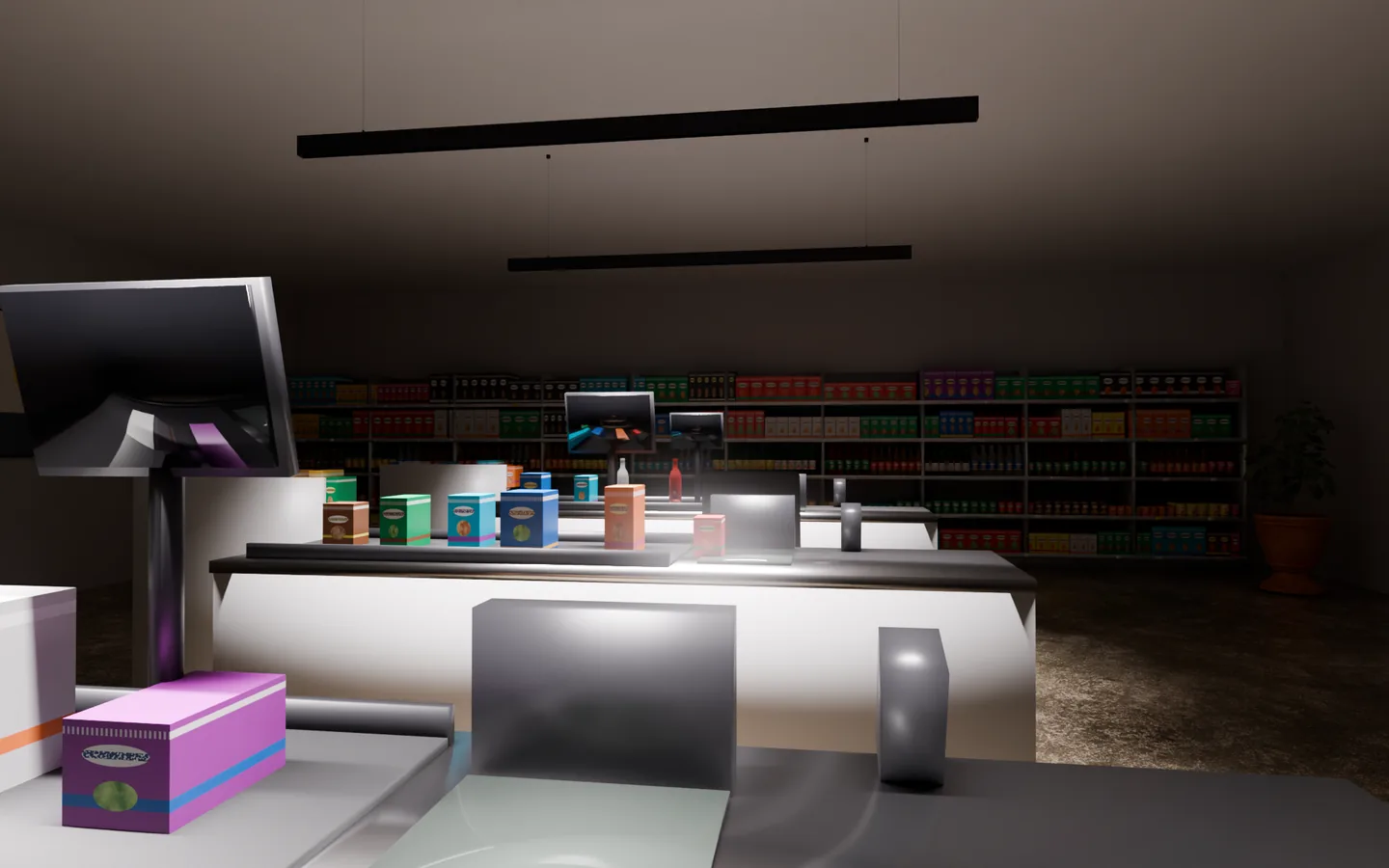
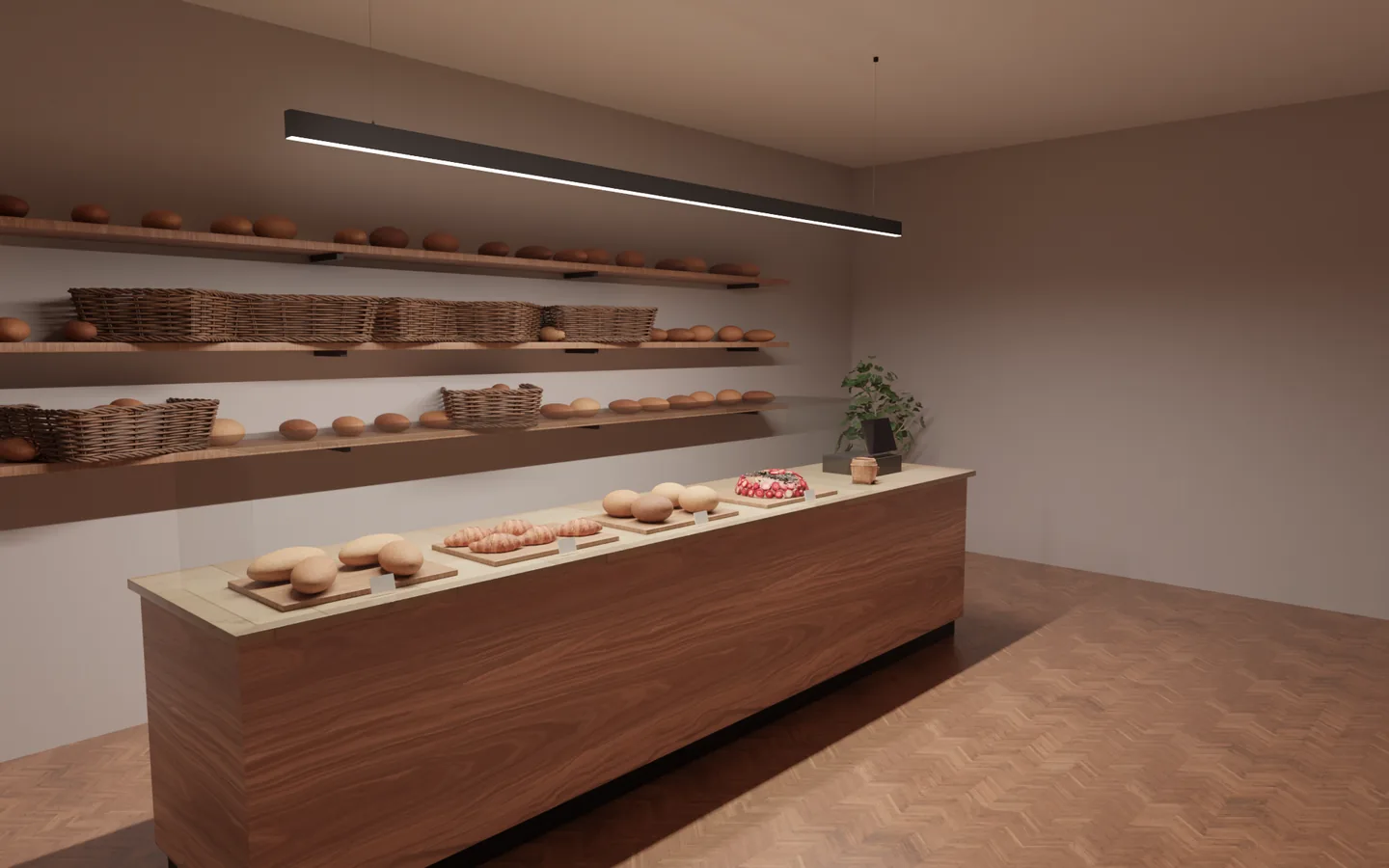
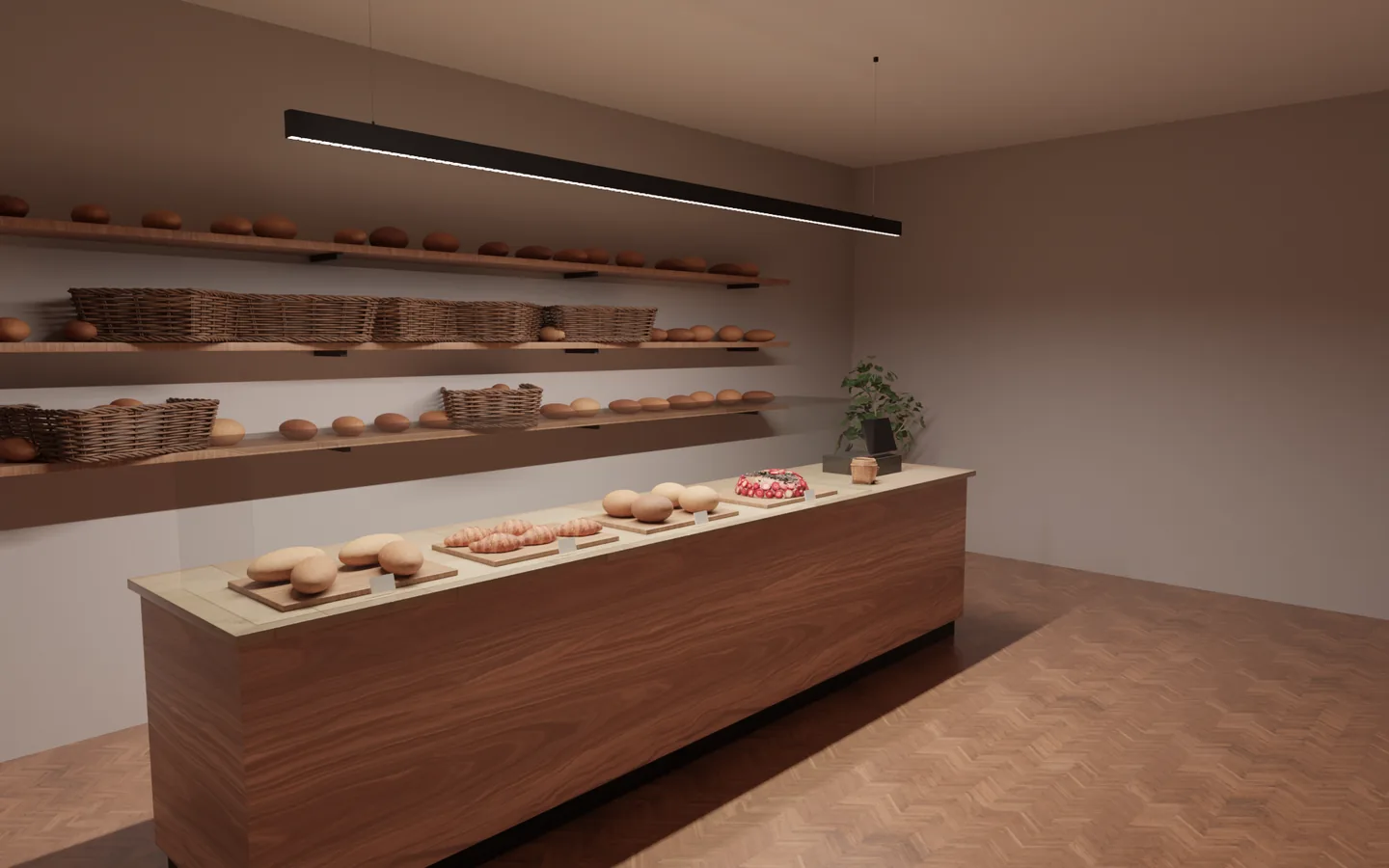
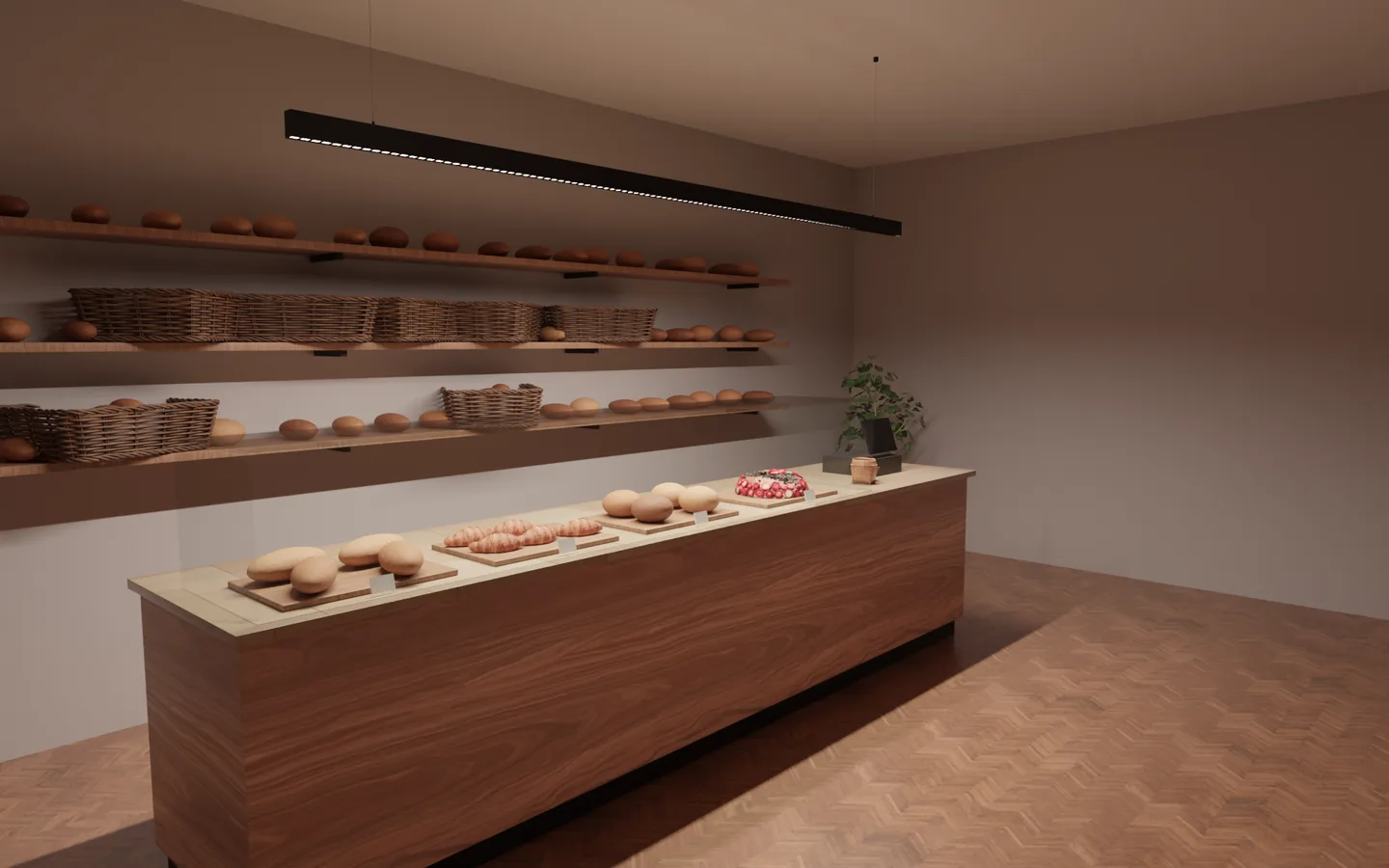
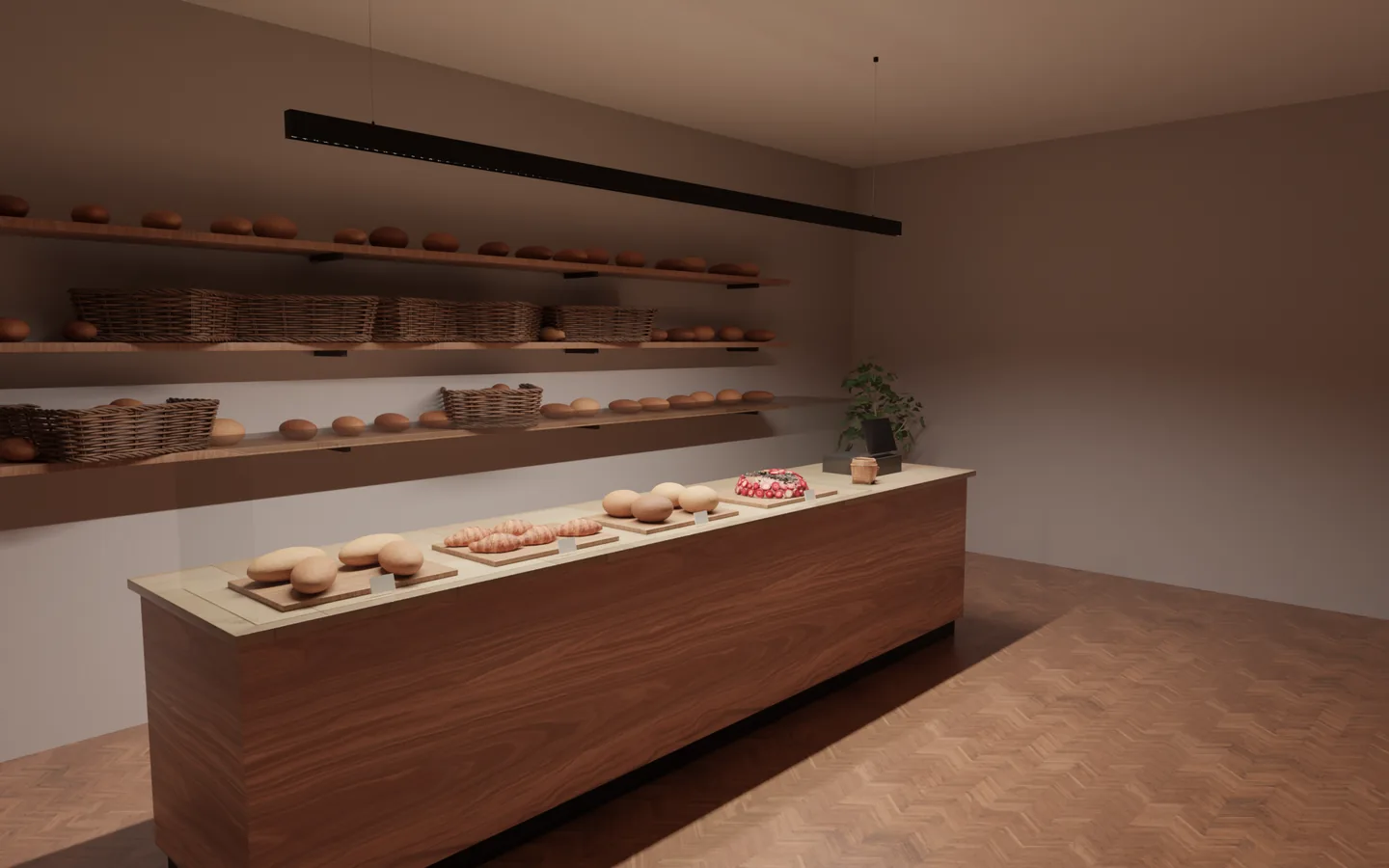
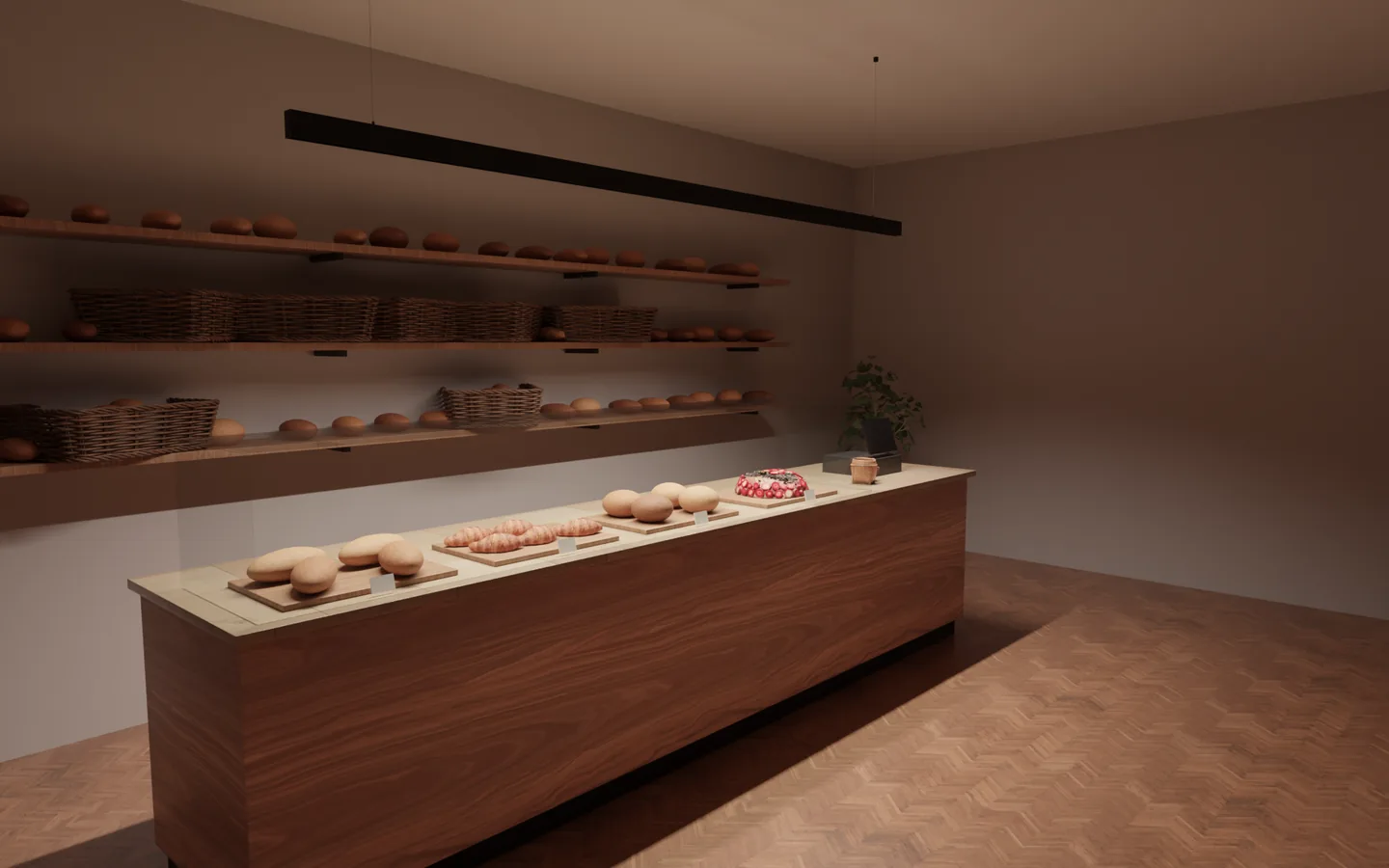
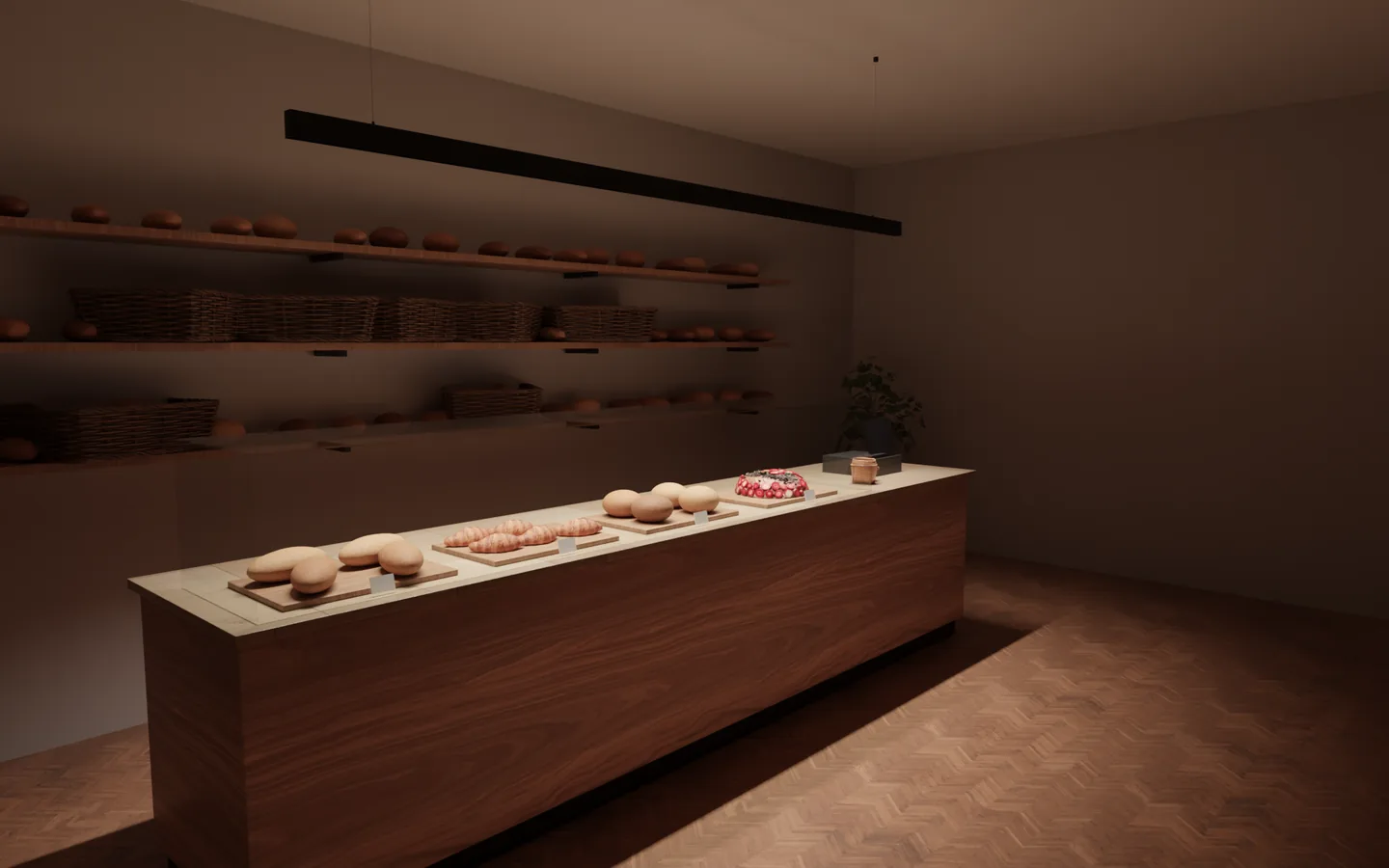
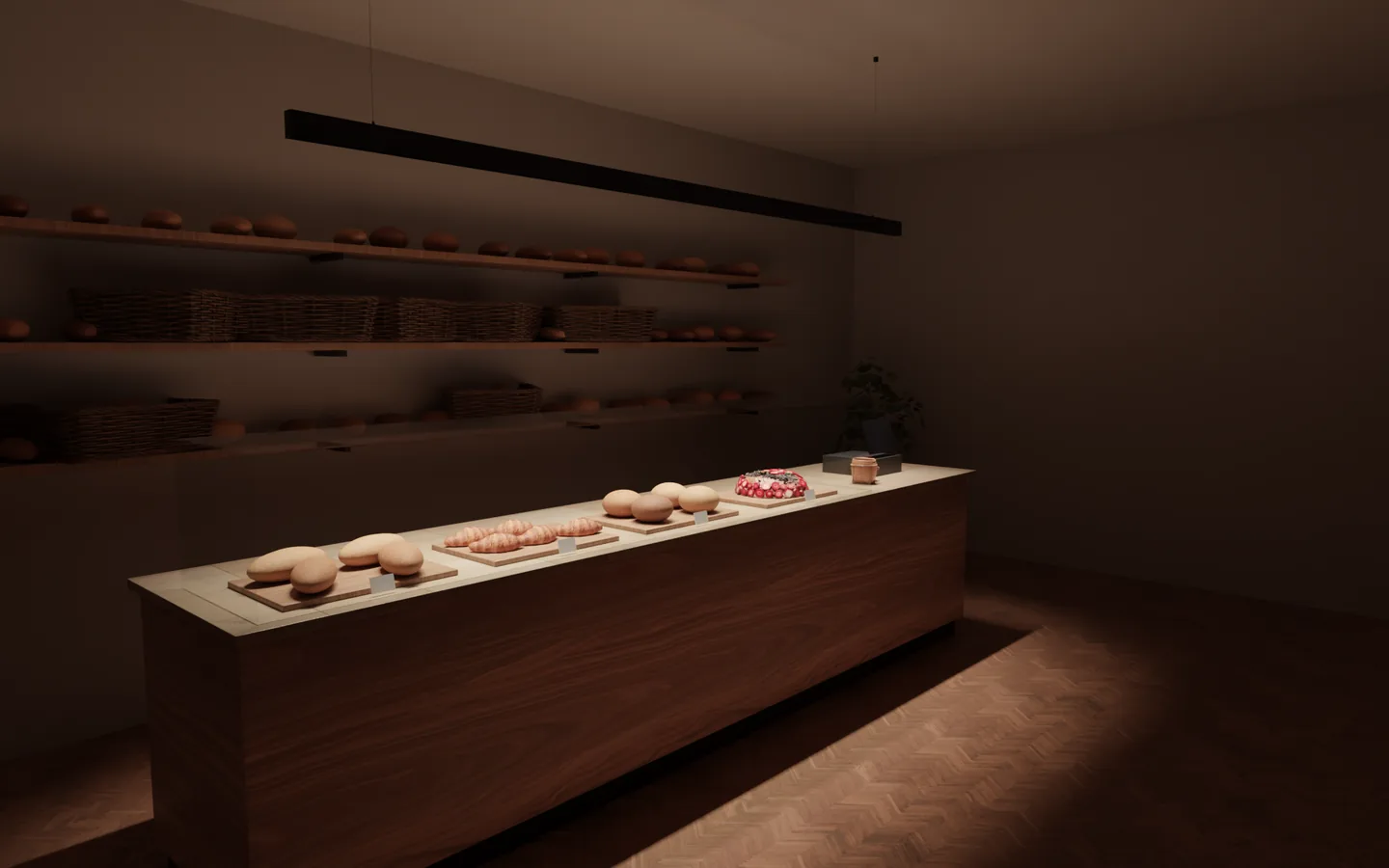
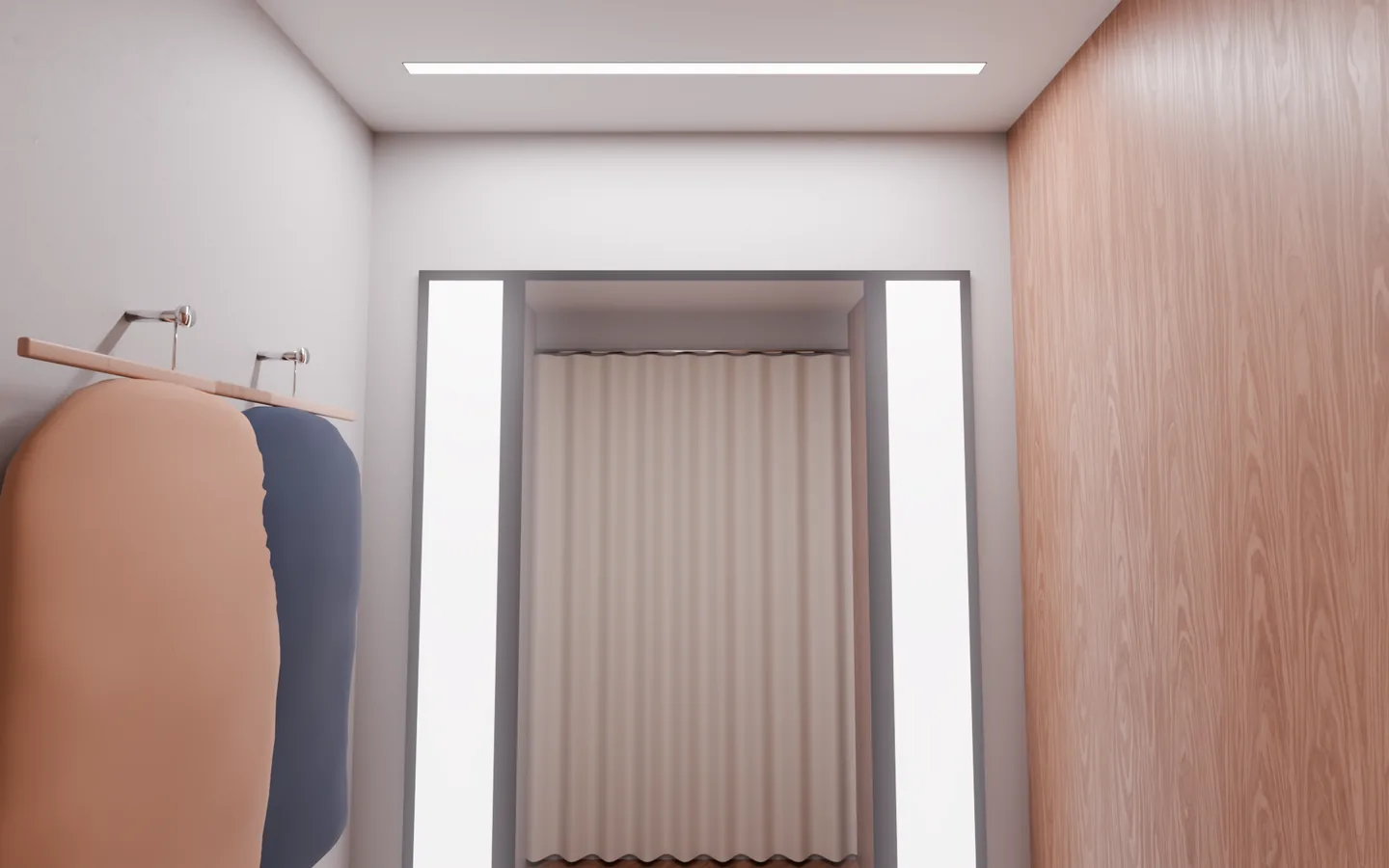
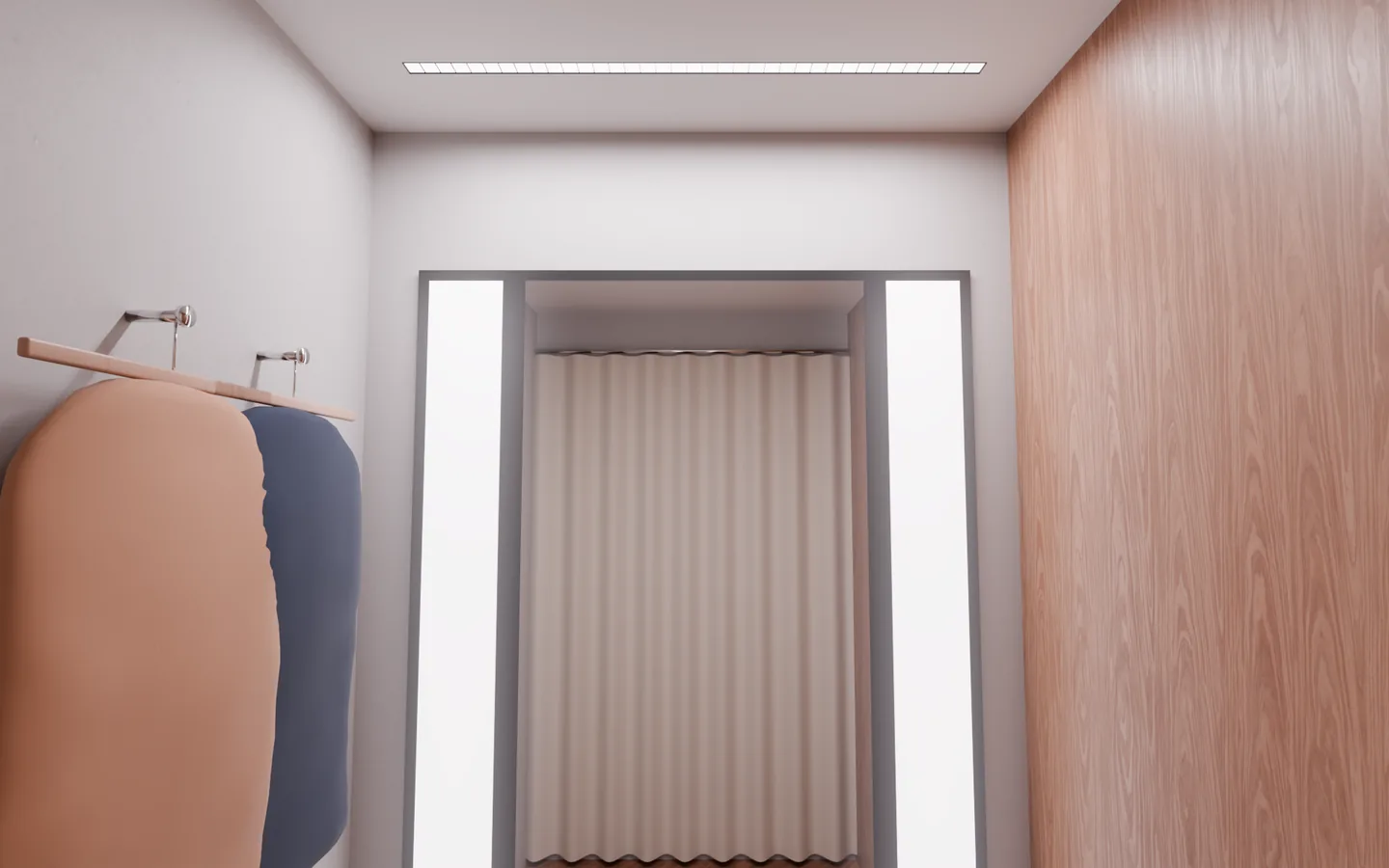
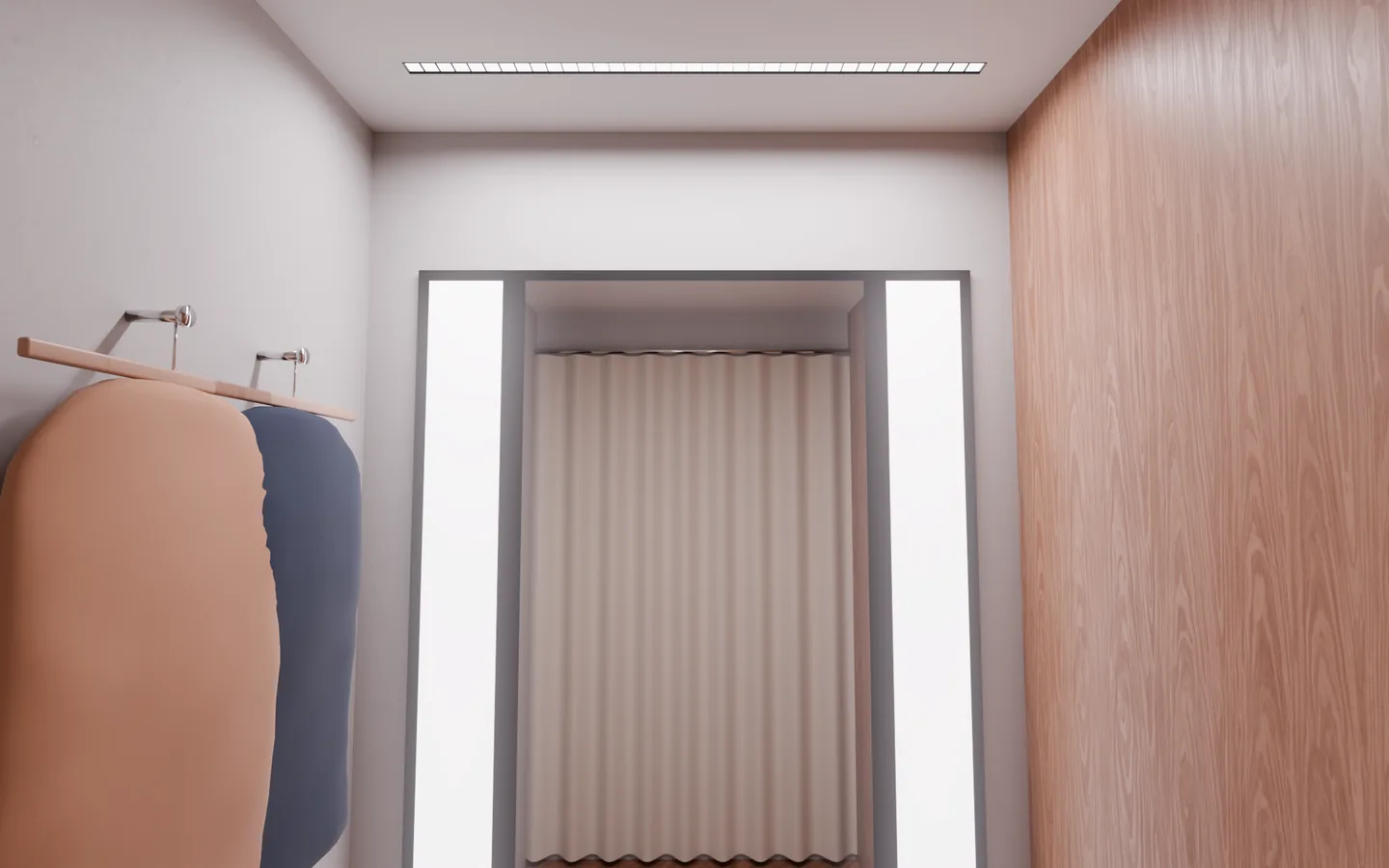
 Luminaire up close
Your eyes are at rest
You notice the luminaire
You start to squint
Your eyes get tired
Irritation builds
Headache and irritation
- 120°beam angle
- 0mmsource set back in the profile
- 100%brightness of the line in your eyes
- 31UGR: glare in this viewstandard: up to 22standard: up to 22standard: up to 19as sales floor: up to 22as sales floor: up to 22
Sales floor: the standard requires UGR up to 22. The customer should look at the goods, not at the luminaire. When the line does not dazzle, the eyes stay on the table and on the rails.
Aisle: the standard requires UGR up to 22. The line runs above the whole aisle, so the customer has it in view all the way between the shelves. A source set back by 7 mm meets the standard, and the 80° optic removes the glare completely while still lighting the top shelves.
Checkout: the standard requires UGR up to 19. The person at the checkout sits here for the whole shift with the luminaires in front of them all the time. Less glare means less tired eyes at the end of the day.
Counter: we treat it as a sales floor, UGR up to 22. The customer looks at the bread and at the person behind the counter. The optic puts the light on the goods and the luminaire disappears from view.
Fitting room: the light should come from the mirror side. Two soft panels beside the mirror light your face evenly, from the front, so you see yourself well. This is where the decision to buy is made. The ceiling luminaire only fills in, and we hide its source deep inside. The standard has no separate row for fitting rooms, we treat them as a sales floor: UGR up to 22.
FREI renders. The same rules as above: in every zone only the luminaire changes, and the brightness of the goods or the worktop is equalised. UGR is calculated for a single view, with the brightness assumed as in a lighting design: sales floor, aisle, counter and fitting room 300 lx, checkout 500 lx. At the checkout two luminaires are in the frame and both count. In the fitting room the panels beside the mirror shine the same in every frame: about 360 cd/m², which gives about 100 lx on a face 80 cm from the mirror. They count towards UGR like any luminaire, which is why the result does not drop to zero there.
The same lumens.
A different shop.
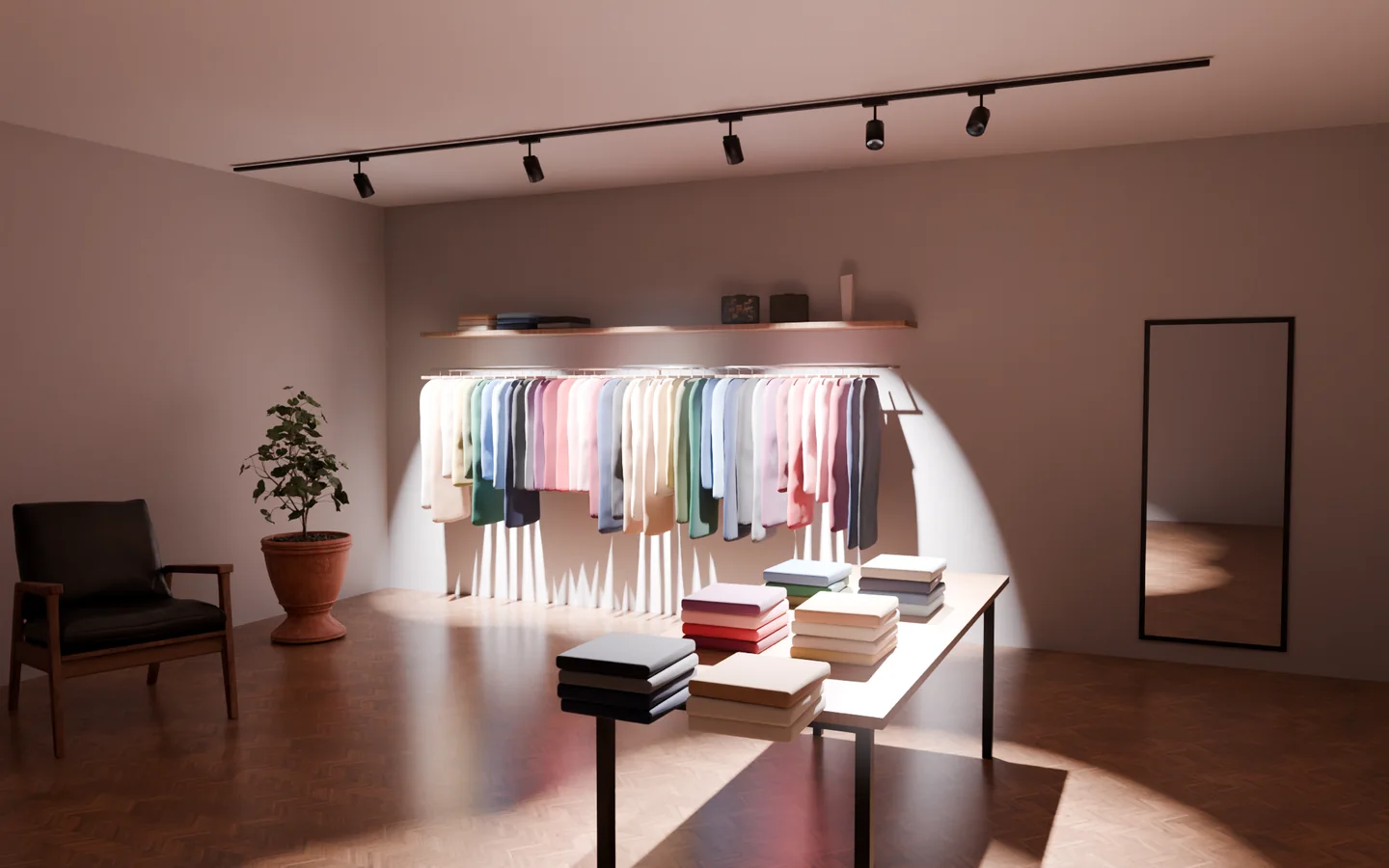
On the left, five spots on a track. On the right, low-glare panels on the same track: FLY ORB by the wall and st(e)lla above the table. Move the slider.
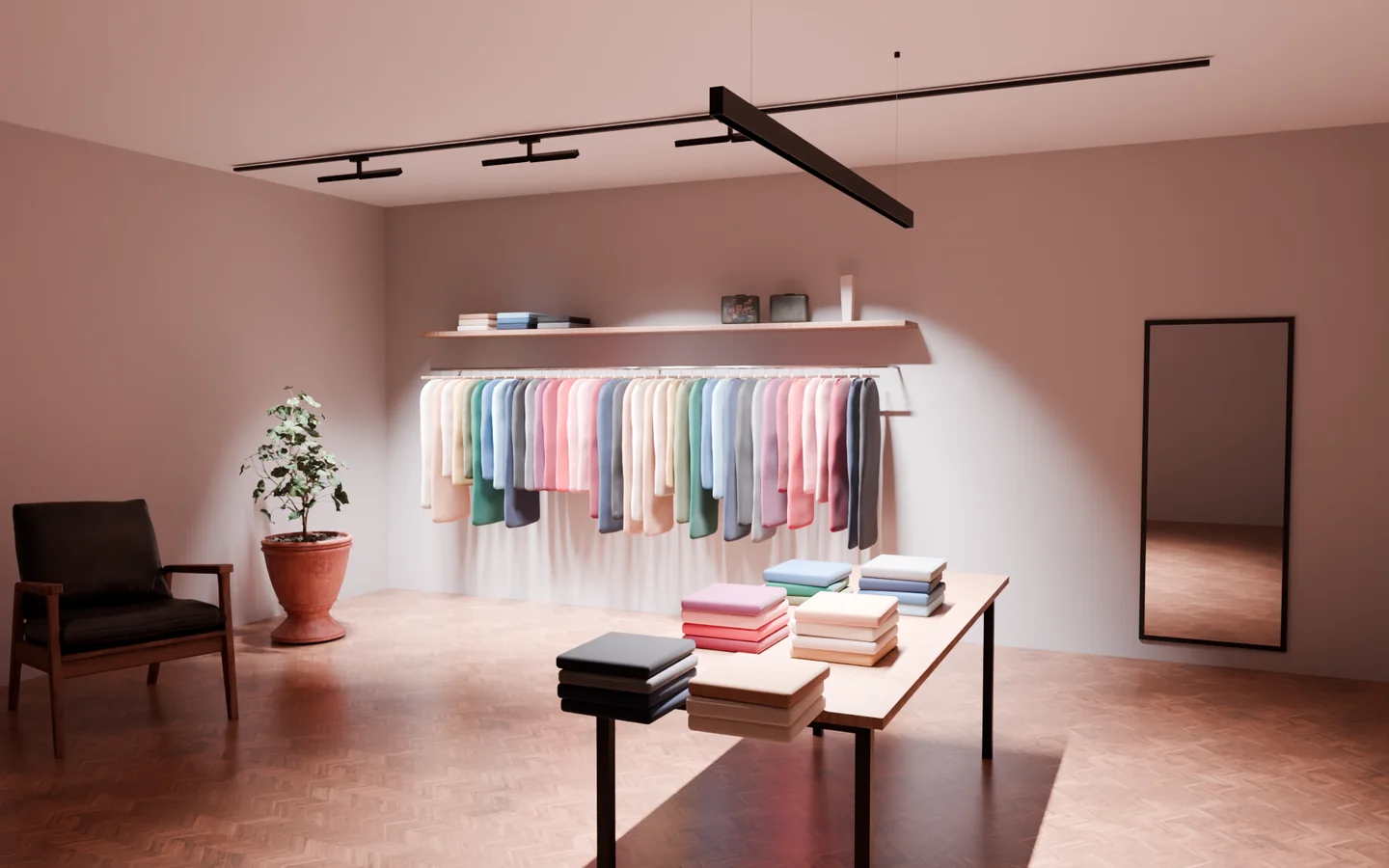 SpotsUGR 21PanelsUGR <10
Your eyes are at rest
You notice the luminaire
You start to squint
Your eyes get tired
Irritation builds
Headache and irritation
Uniformity on the clothes
6%spots35%panelsThe darkest place on the rail compared with the average. A spotlight leaves bright patches and dark gaps, a panel lights the whole rail.
UGR glare
21spots<10panelsSpots are aimed at the goods at an angle, so some of them shine towards you. In a panel the source sits deep inside a dark cell.
Points of light
5spots115panelsMultidimensional light: light from many points arrives from many sides. Shadows are soft, and the fabric shows its texture and shape.
Colour rendering CRI
80spots98panelsA typical LED in the spot and FREI sources in the panel. Reds and warm shades stay vivid along the whole rail.
FREI renders. In both views the luminaires hang on the same track and give the same total amount of light: five 24° spots, or three FLY ORB and st(e)lla above the table. We measured uniformity in the render on a grid of fields on the rail. UGR is calculated for this one view with the formula for small sources, at 3000 lm per luminaire; we assumed that the spot lens scatters 10% of the light sideways. Colours calculated from spectra: a typical CRI 80 LED in the spots, CRI 98 in the panels.
The same layout.
A different effect.
On the left, the opal line. On the right, the same luminaire with the source deep in the profile and an optic chosen for the place.
Opal line 120°UGR 21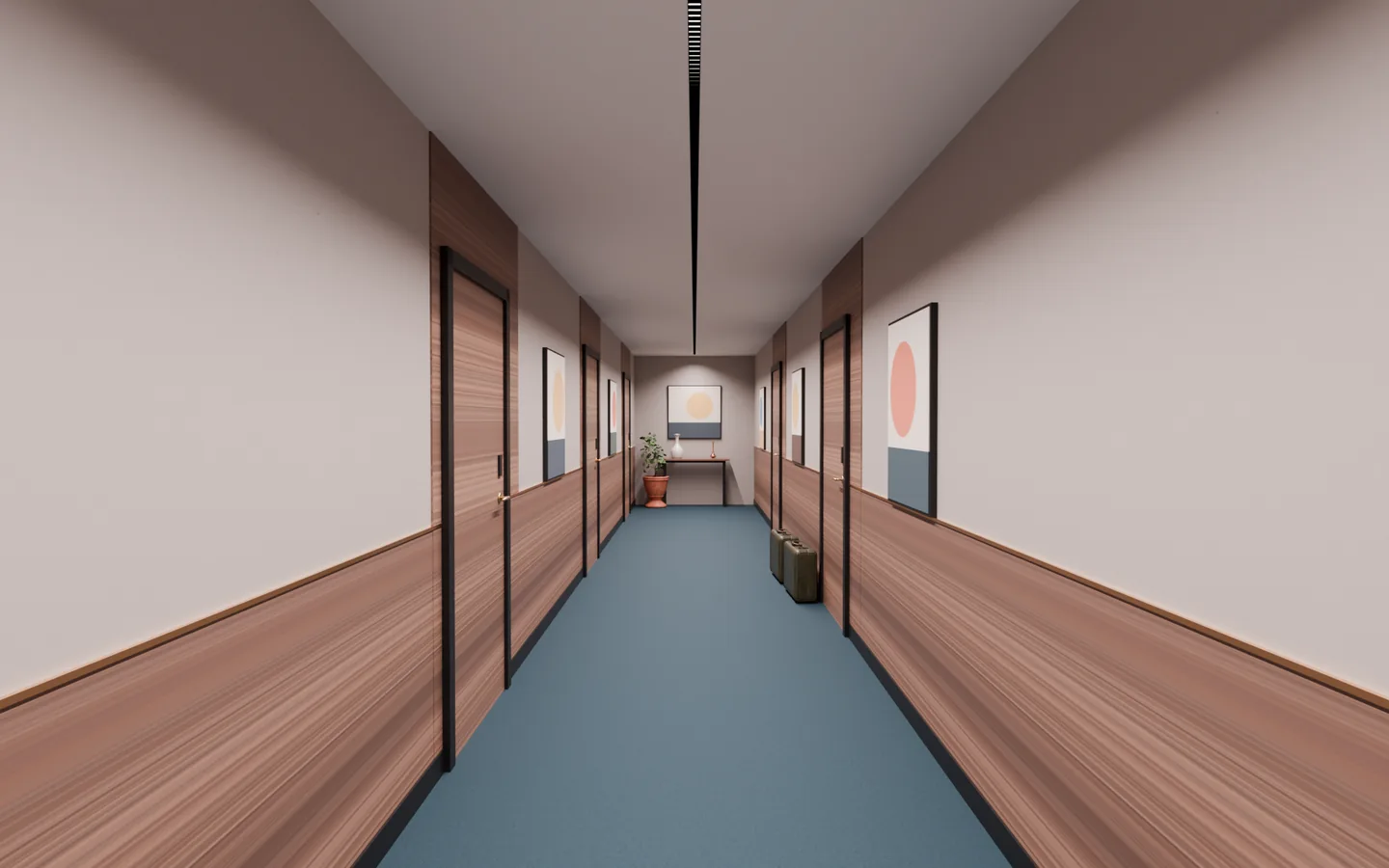 Optic 80°UGR <10Opal line 120°UGR 25
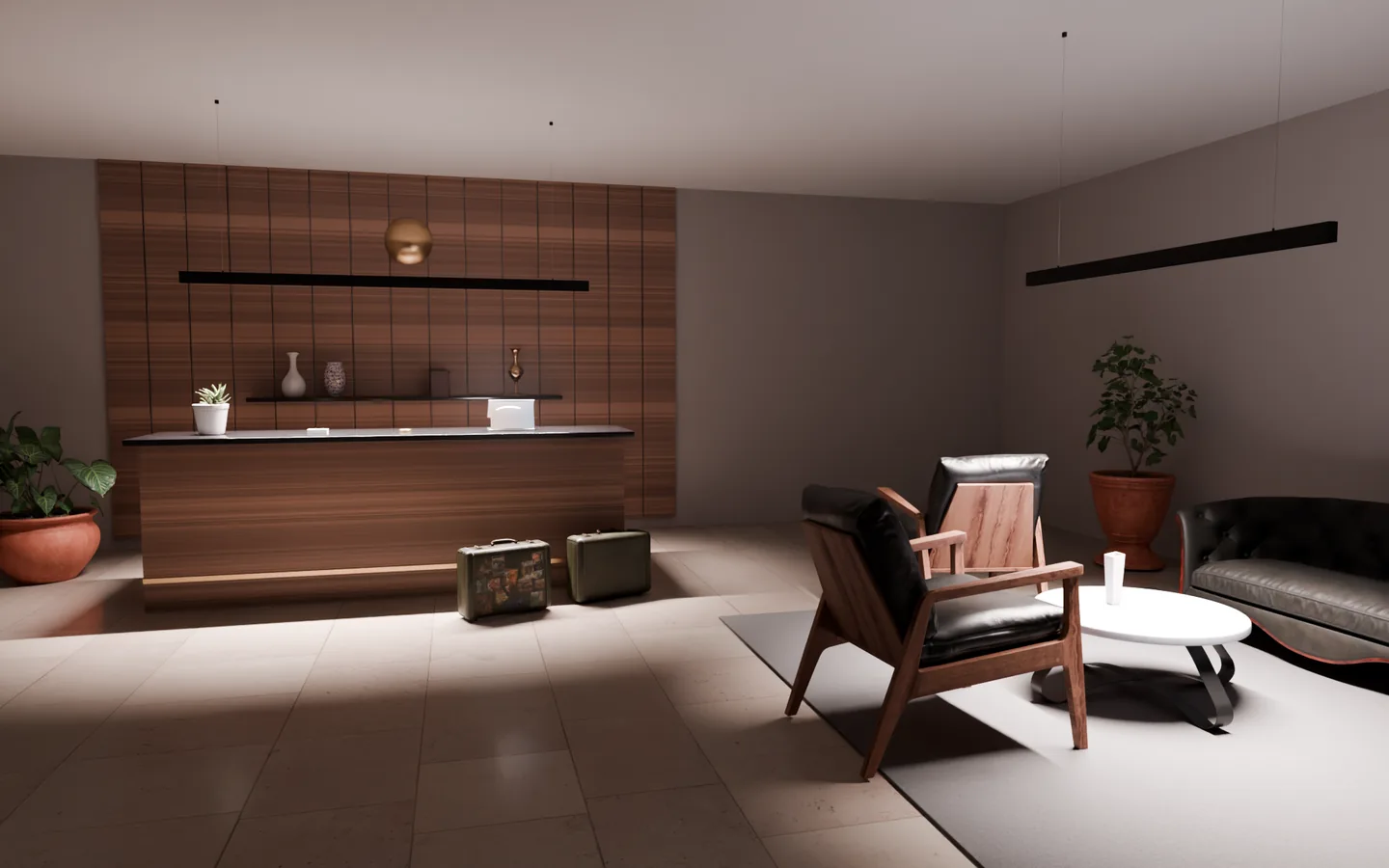 Optic 52°UGR <10Opal line 120°UGR 26
 Optic 52°UGR <10Opal line 120°UGR 31
 Optic 52°UGR <10Opal line 120°UGR 30
 Optic 80°UGR <10
Line. Set-back line.
Spot.
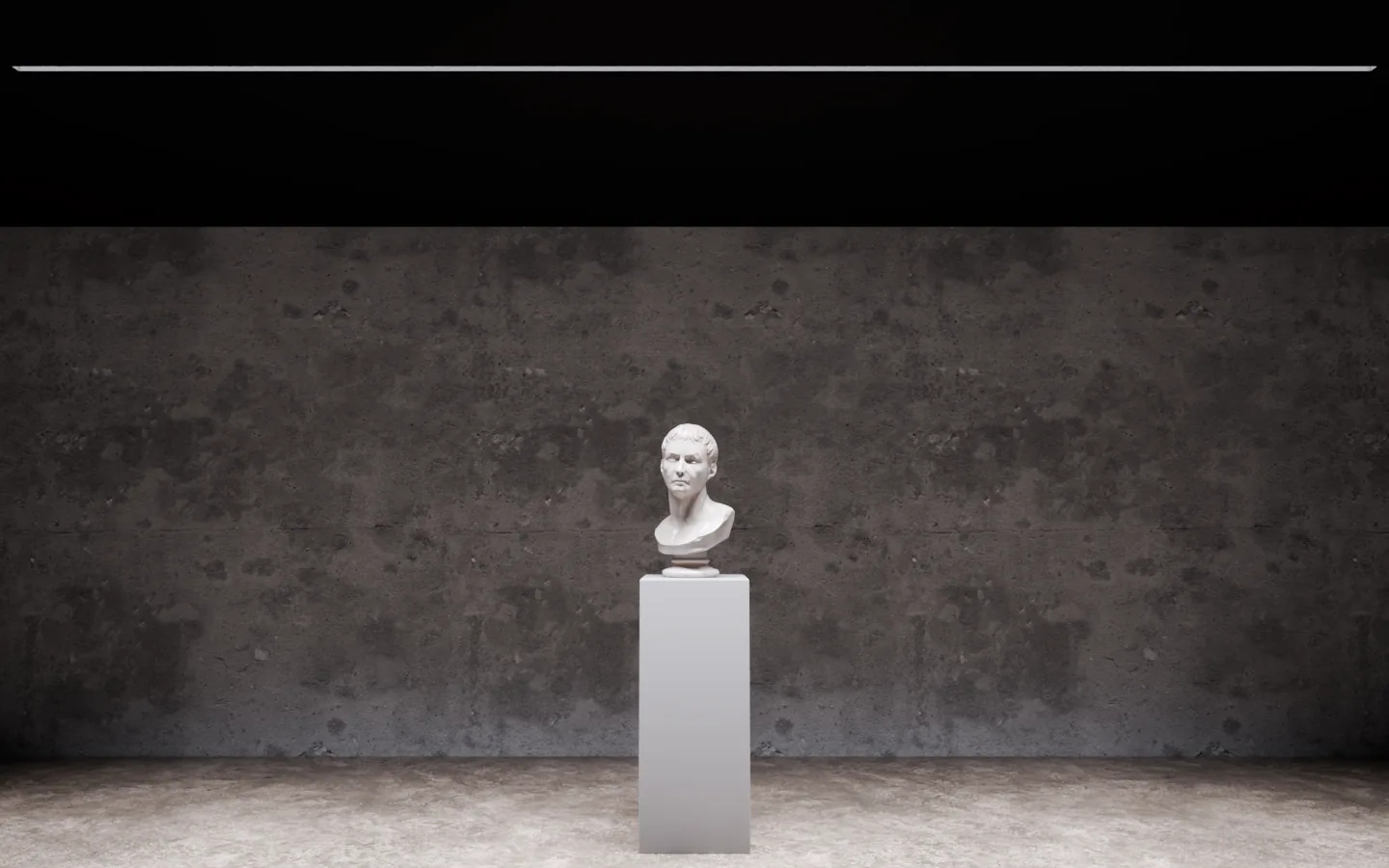
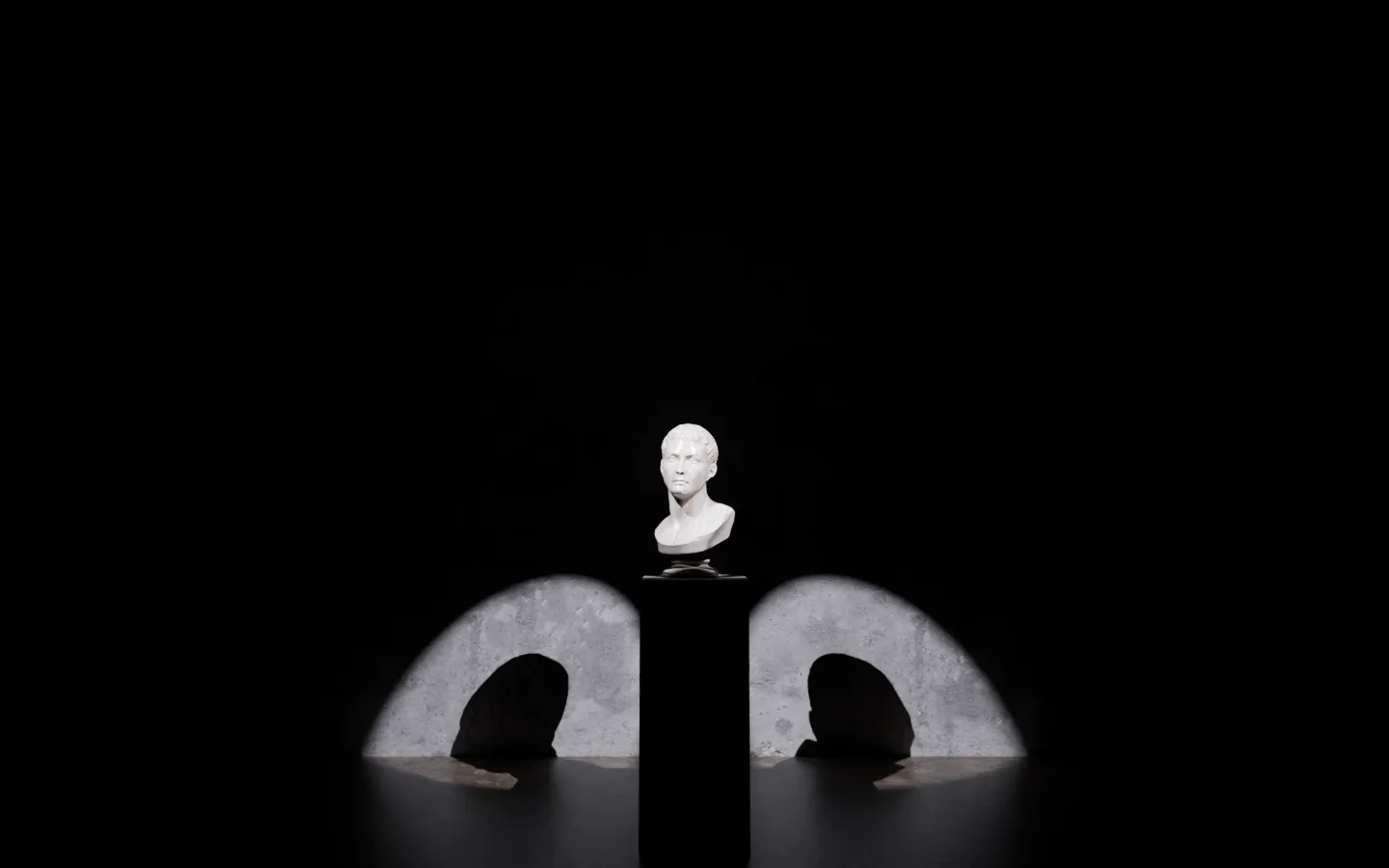
The same room and the same sculpture. The yellow shape shows where the luminaire shines, and the dashed line shows what you see from the side.
- Beam angle
- 120°
- From the side you see
- a glowing diffuser
- Beam angle
- 43°
- From the side you see
- a dark profile
- Beam angle
- 18°
- From the side you see
- a dark tube
General light, high overhead.
Back rooms, walk-in wardrobes, storage: places where nobody sits for hours with a luminaire in their field of view.
Work and rest.
Office, conference room, hotel, restaurant, pergola: even light on the tabletop and calm for the eyes.
Accent.
Merchandise, a shop window, a painting, a restaurant table: high contrast that guides the eye.
Background and accent.
A set-back line gives a calm background, and spots bring out what matters most. This is how we design stores and restaurants.
How much light
each place needs.
The EN 12464-1 standard gives three numbers for every task: how much light (lux), the maximum glare (UGR) and the minimum colour fidelity (Ra).
Selected values from EN 12464-1, in short. Lux is the minimum the luminaires must give for the whole working time. The standard is the lower limit: in a store, goods usually need more light. In the design we calculate everything for your place in DIALux.
Ask before you buy.
Tell us what you are lighting. We will give you the CRI, UGR, lux and flicker for your place before the first luminaire goes up.