Light ABC: CRI, UGR and lighting standardsLight
without secrets.
CRI, UGR, lux, flicker and UV-B. Short and in plain words, so you know what to ask when buying luminaires.
Colours do not lie.
Or do they?
CRI tells you how faithfully a luminaire shows colours compared with daylight. The scale ends at 100. The higher, the closer to the truth.
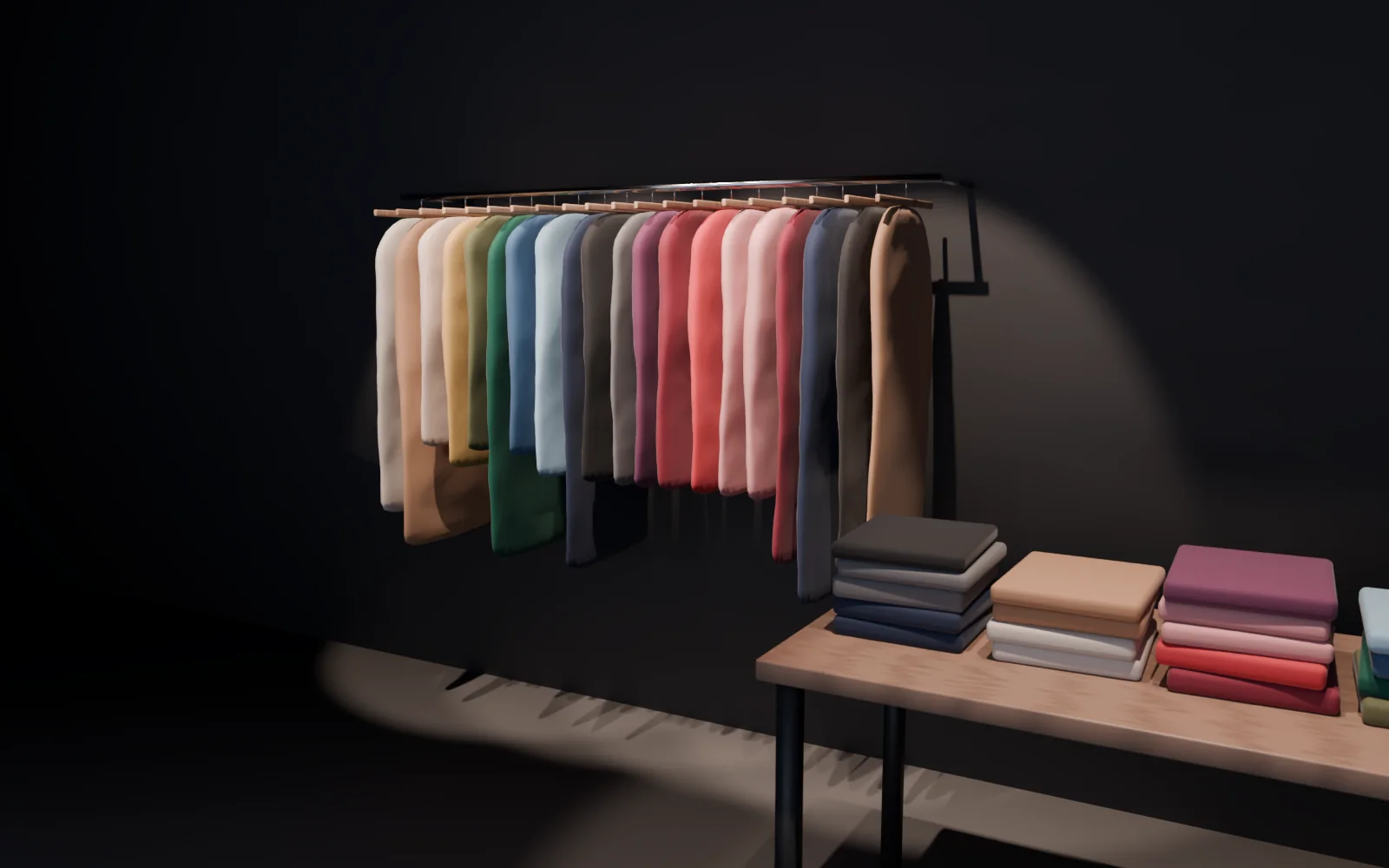
FREI render. CRI 80 is shown approximately, and colours on screen are approximate.
The minimum in an office and a store according to the standard.
Where colour matters: clothing, cosmetics, food.
The hardest for LEDs. It decides how meat, fruit and skin look.
That is what FREI luminaires have.
A luminaire should shine.
Not dazzle.
UGR tells you how much luminaires dazzle. Here it is the opposite of CRI: the lower, the better.
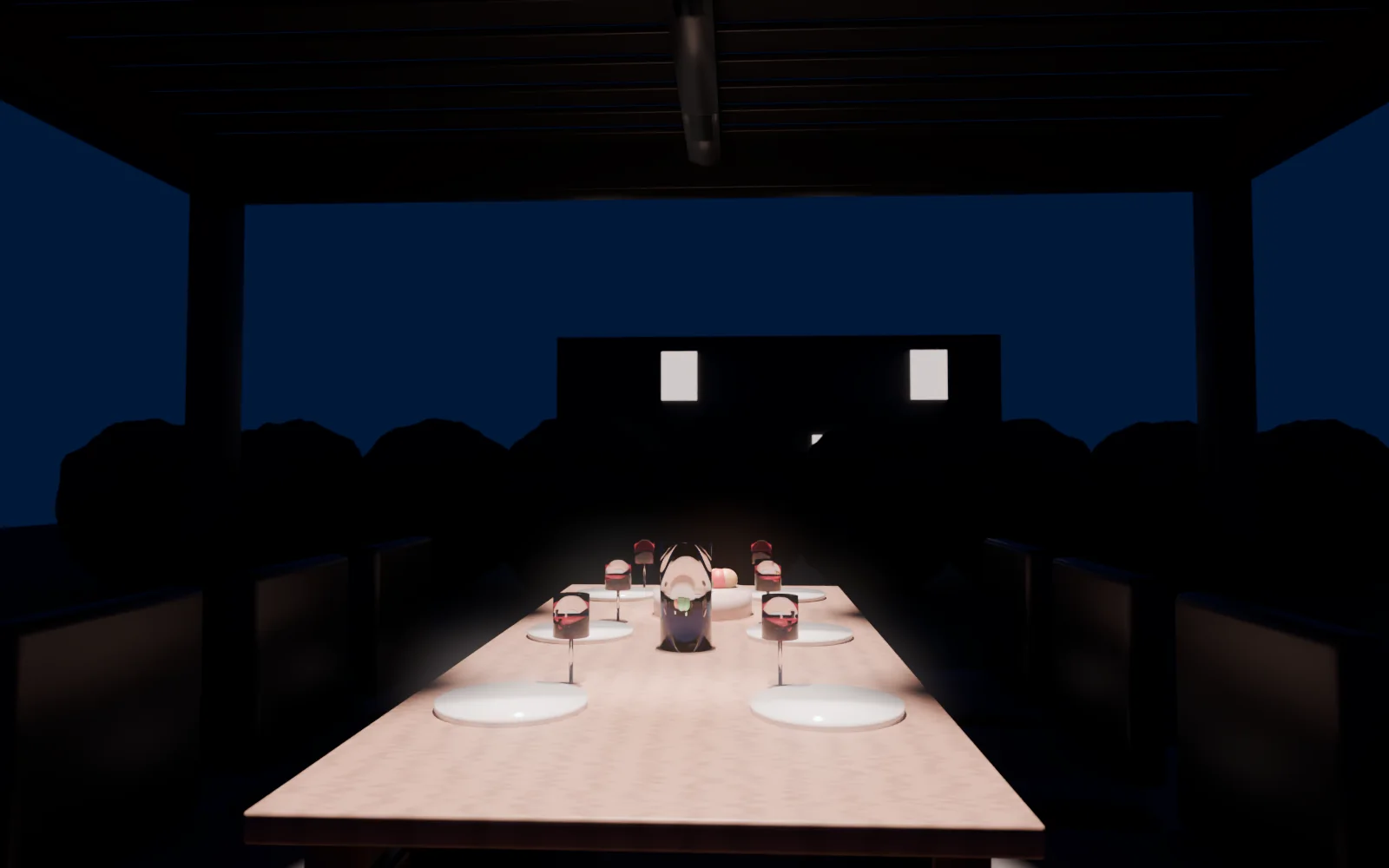
An opal line without optics easily goes above 28. A line with the source set back in the profile, like the one in our acoustic booths, does not dazzle.
How much light
each place needs.
The EN 12464-1 standard gives three numbers for every task: how much light (lux), the maximum glare (UGR) and the minimum colour fidelity (Ra).
Selected values from EN 12464-1, in short. Lux is the minimum the luminaires must give for the whole working time. The standard is the lower limit: in a store, goods usually need more light. In the design we calculate everything for your place in DIALux.
You cannot see it.
But you feel it.
A luminaire with a poor driver dims and brightens as much as 100 times a second. The eye does not see it, but the retina and the brain register the changes.
That is how often a luminaire with a poor driver flickers.
A moving drill looks as if it is standing still. In a hall, that is dangerous.
The brain registers a stimulus you cannot see. For some people that means headaches and tired eyes.
Since 2021: limits on flicker (Pst LM) and on the stroboscopic effect (SVM).
In the design we check flicker together with the driver and the controls, including when dimming.
Winter sun.
Indoors?
Vitamin D is produced in the skin under the influence of UV-B rays from the sun. From October to March the sun in Poland is too low for the skin to produce enough of it.
The invisible part of sunlight. It is what triggers vitamin D in the skin.
White LEDs, including those in FREI luminaires, do not emit UV-B. On their own they will not give you vitamin D.
A new direction: a small, calculated dose of UV-B where people spend the winter indoors.
Too much UV-B burns the skin and harms the eyes. The dose has to be safe, and supplementation is a decision for a doctor.
True colours.
No glare.
No flicker.
Ask before you buy.
Tell us what you are lighting. We will give you the CRI, UGR, lux and flicker for your place before the first luminaire goes up.