Lighting basics: CRI, UGR and flickerLight
without secrets.
Three things you see straight away: colours, glare and flicker. Short and in plain words.
We live in light.
All the time.
We spend about 90% of our lives indoors. For most of the day luminaires replace the sun, so they decide how you see, how you feel and how you sleep afterwards. That is why light deserves the same care as air and water.
Good light all day longHow light acts on the eye and the body clock
Colours do not lie.
Or do they?
CRI tells you how faithfully a luminaire shows colours compared with daylight. The scale ends at 100. The higher, the closer to the truth.
Slide.
See the red.
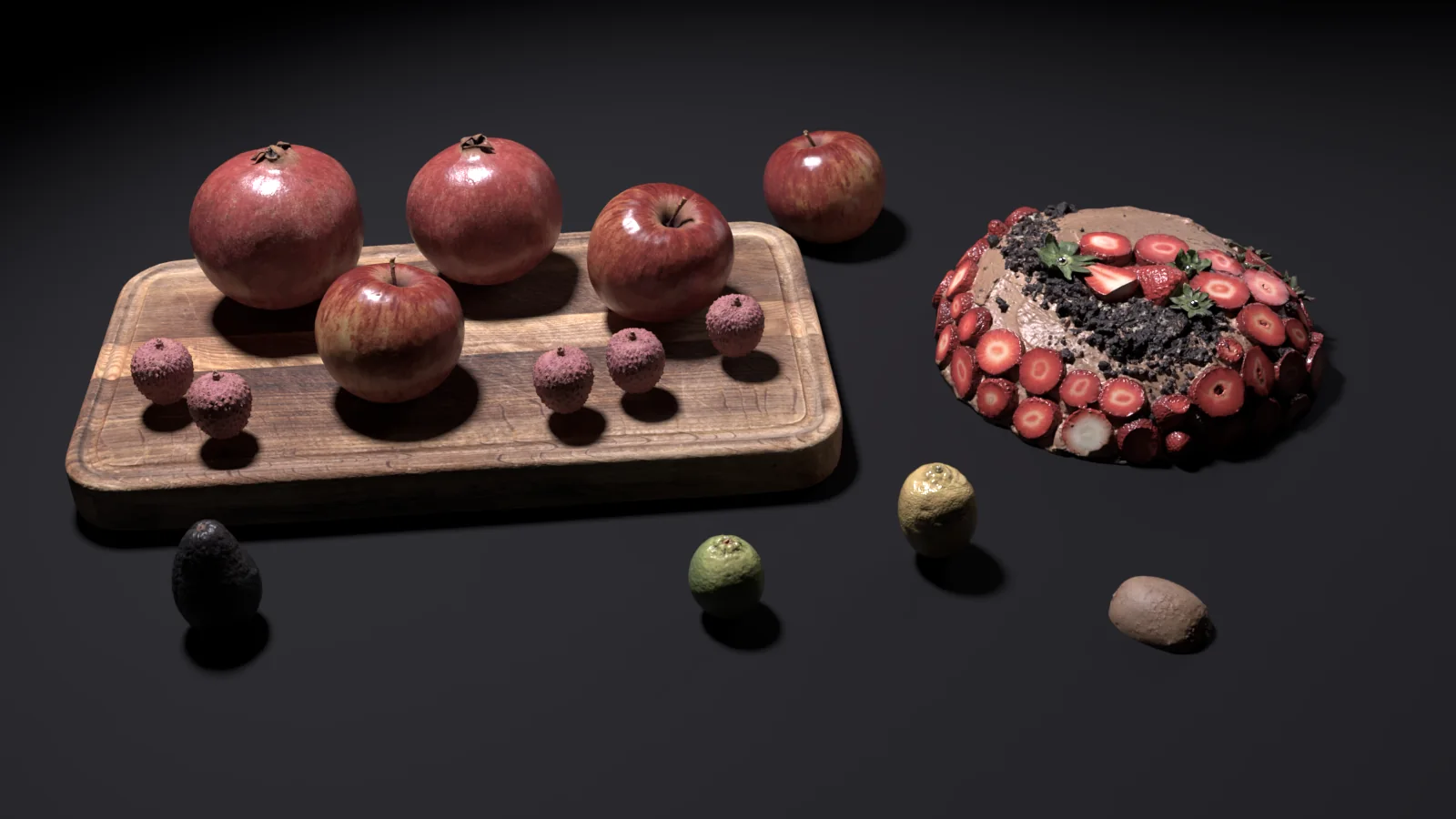
The same table, the same brightness and the same 3000 K colour. Only the spectrum of the lamp changes.
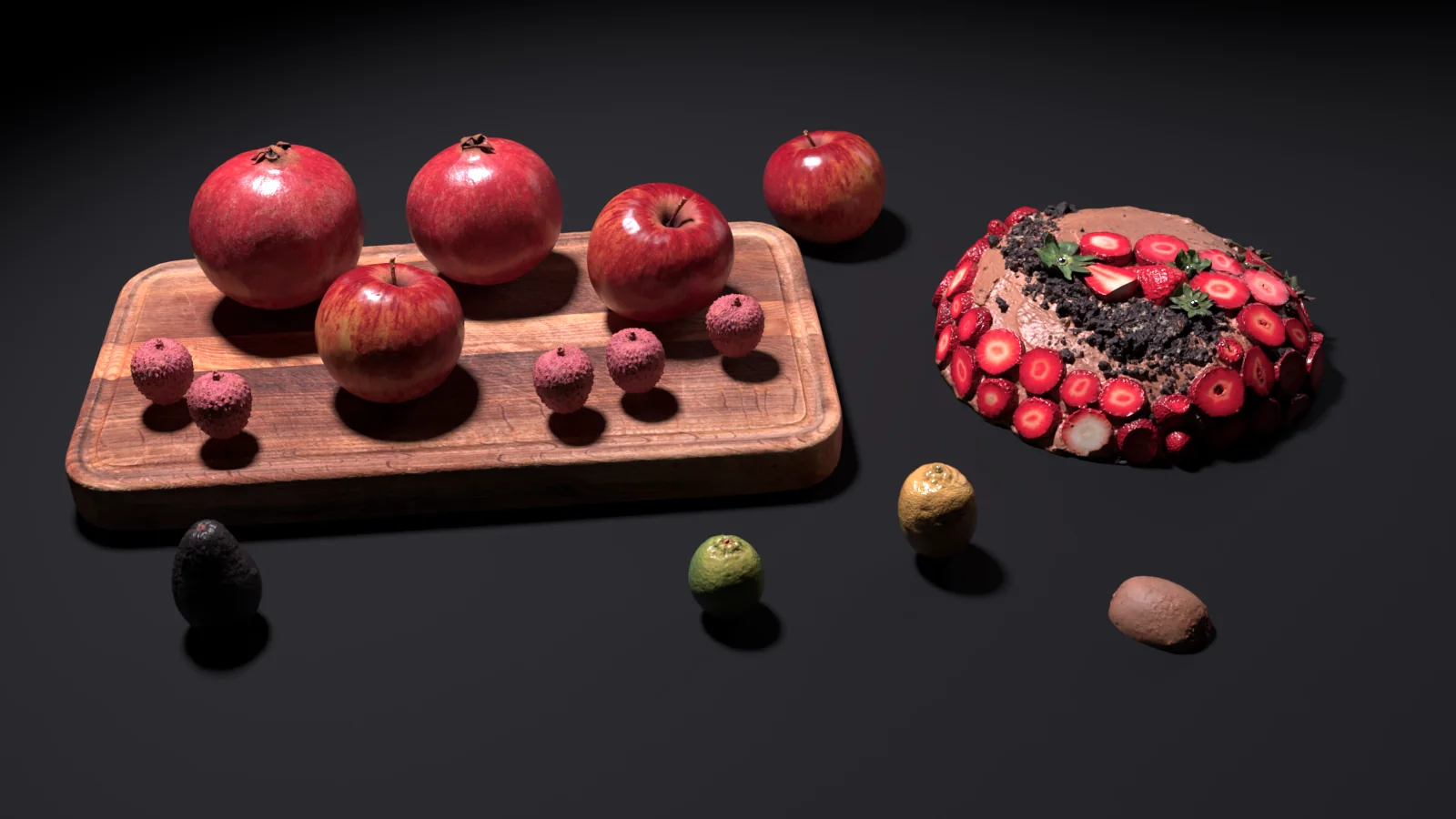 CRI 80CRI 98
The minimum in an office and a store according to the standard.
Where colour matters: clothing, cosmetics, food.
The hardest for LEDs. It decides how meat, fruit and skin look.
That is what FREI luminaires have.
A luminaire should shine.
Not dazzle.
UGR tells you how much luminaires dazzle. Here it is the opposite of CRI: the lower, the better.
Same table.
Change the luminaire.
In every shot the table gets the same amount of light. Only what the eye sees is different.
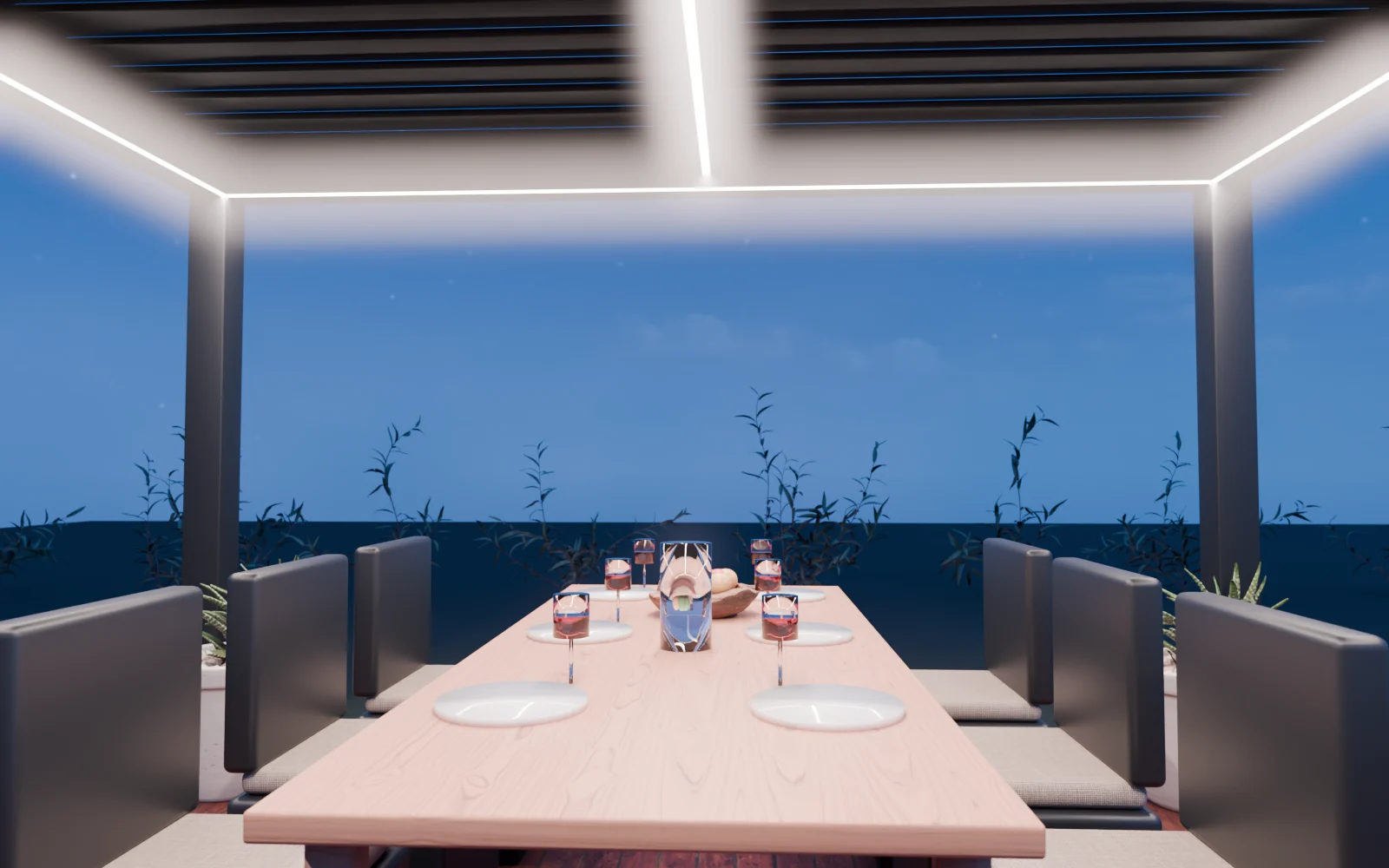
FREI render: each light calculated separately. We added the glow around the bright lines the way the eye sees it.
The same board.
A different UGR.
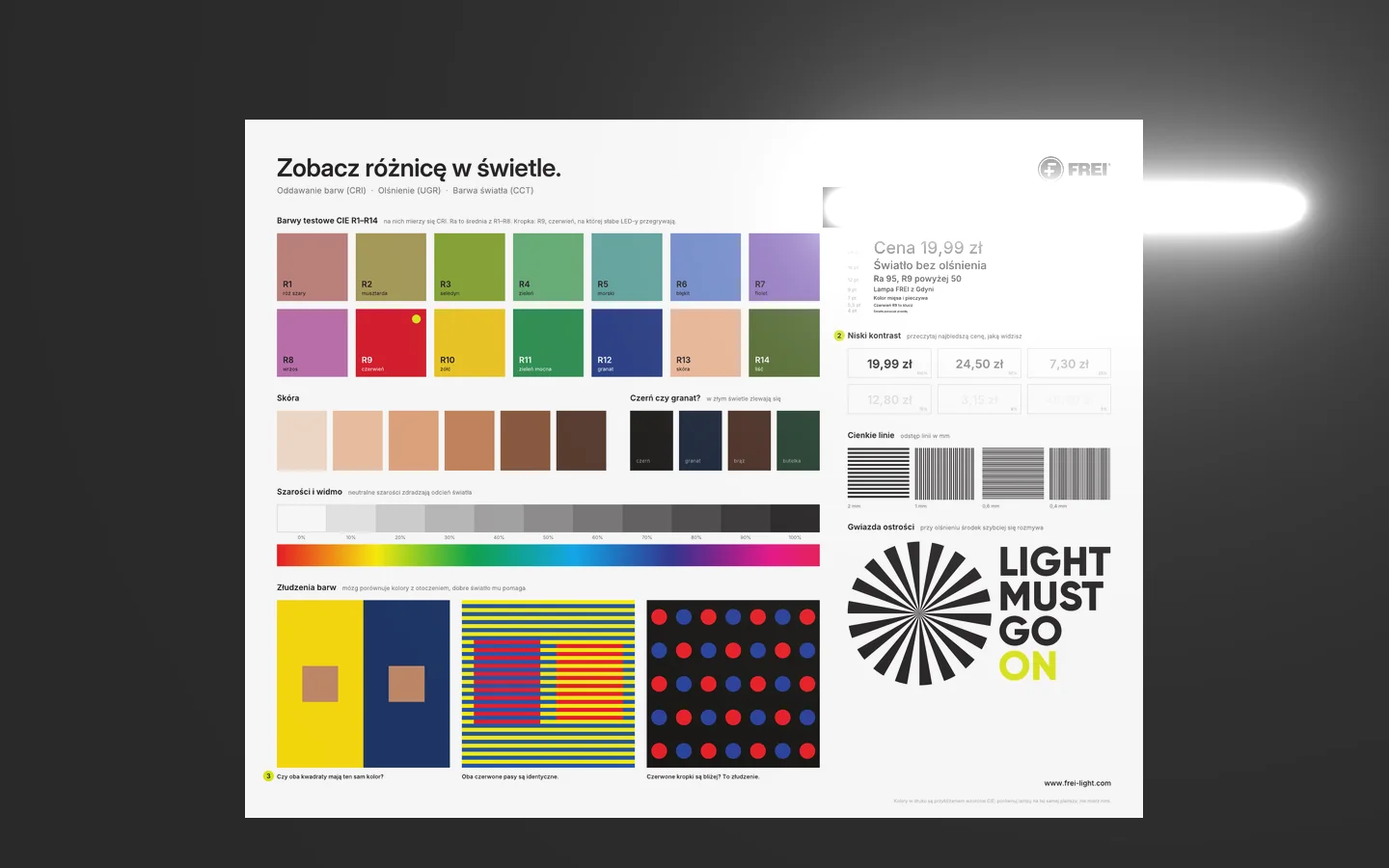
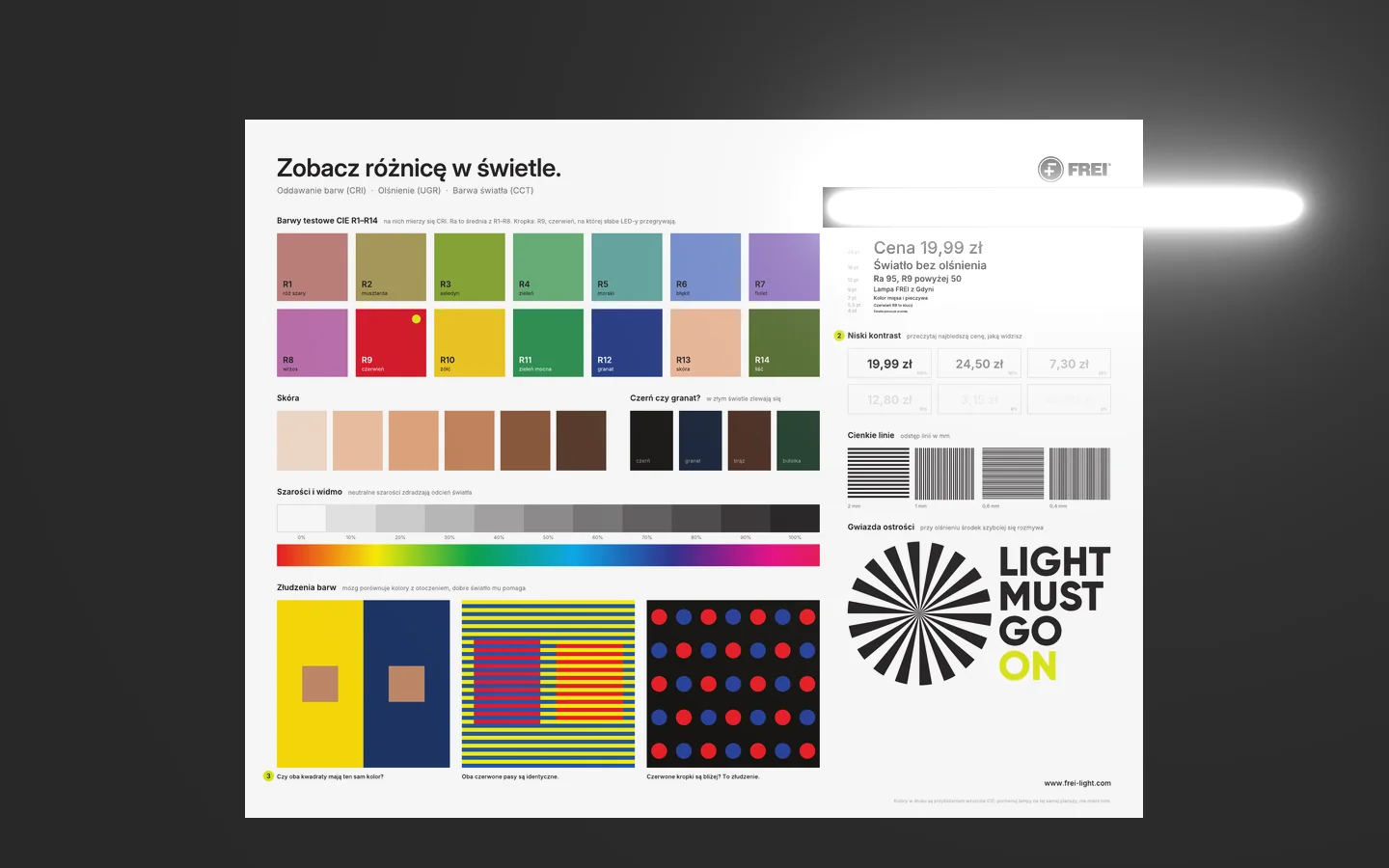
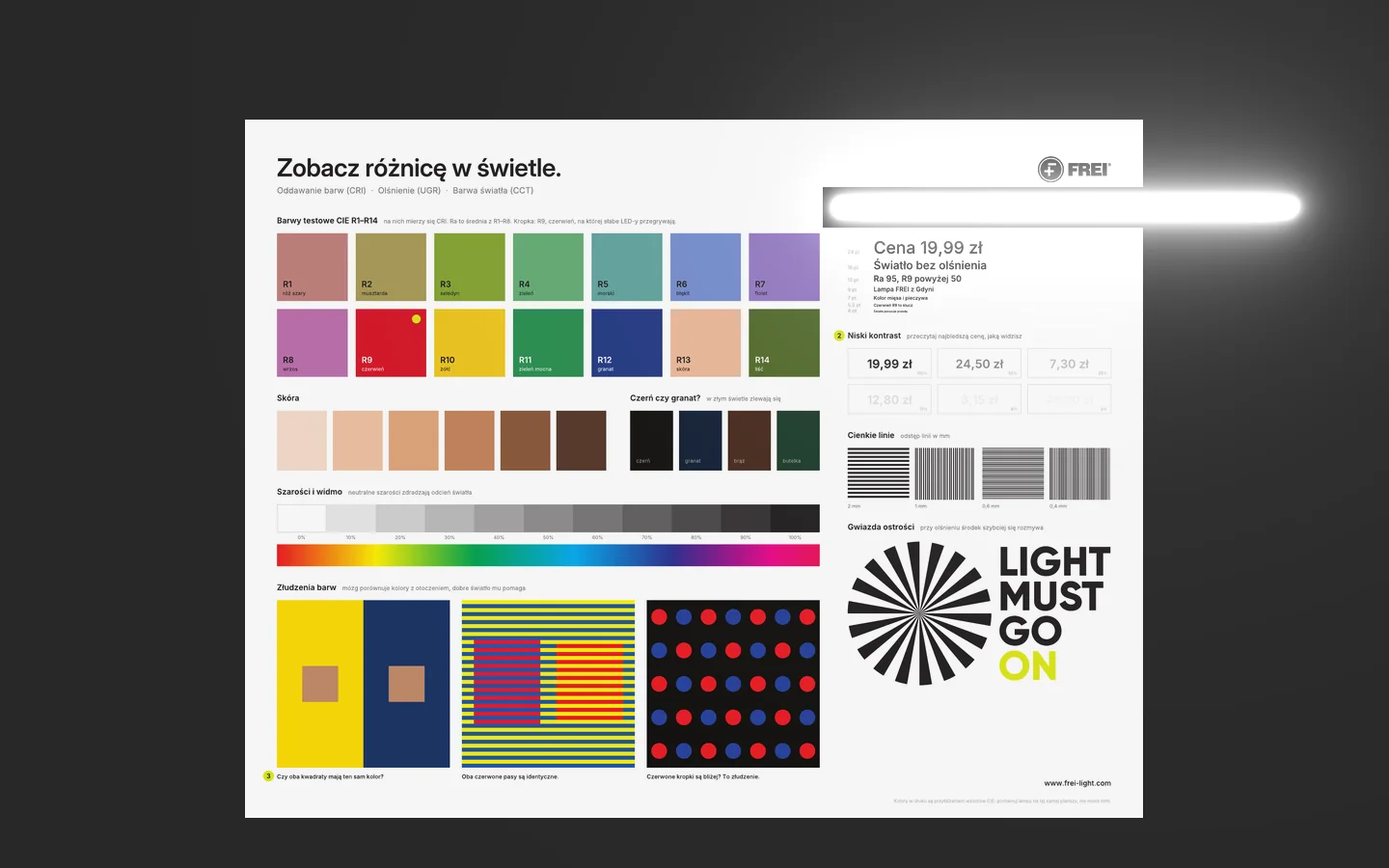
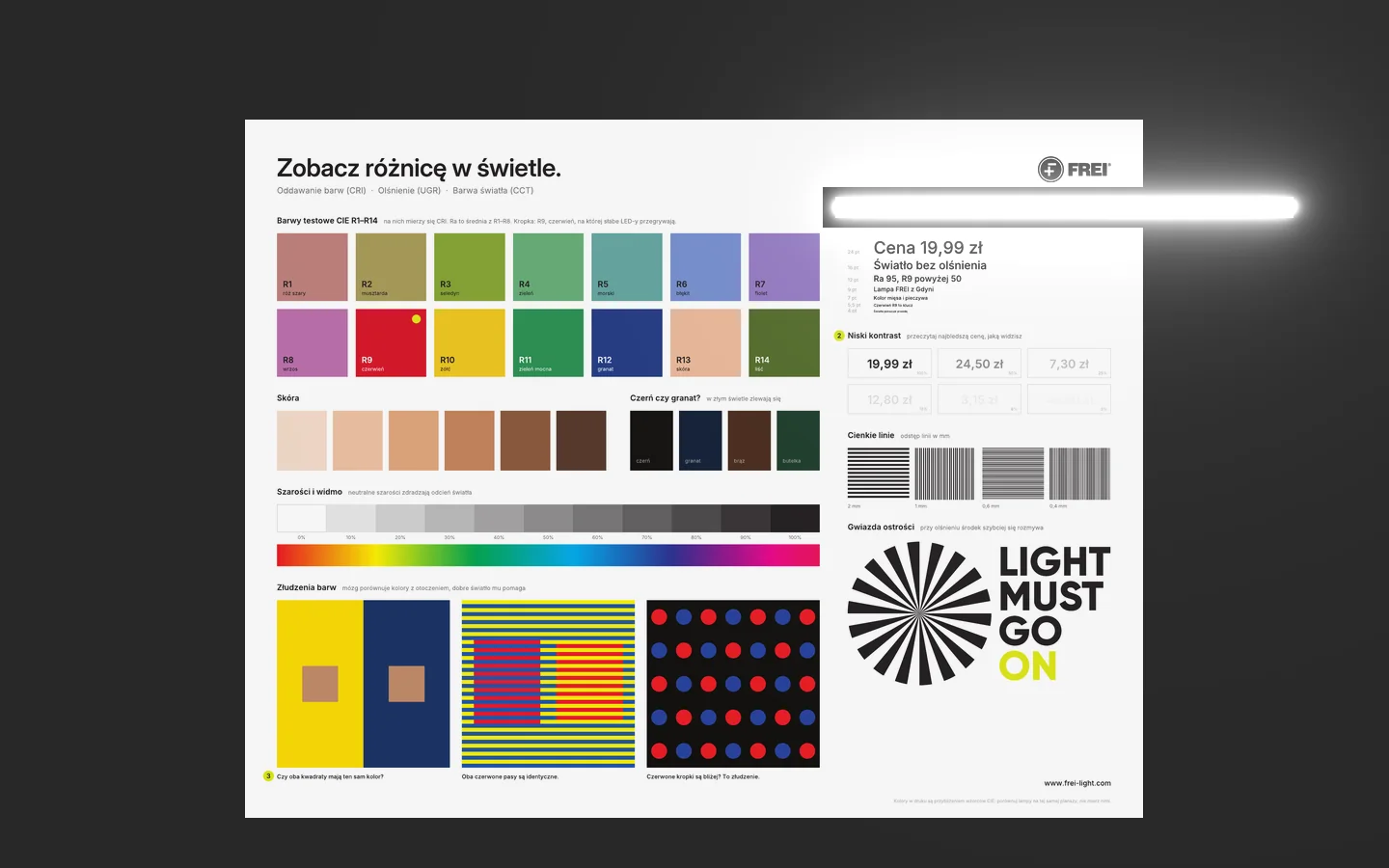
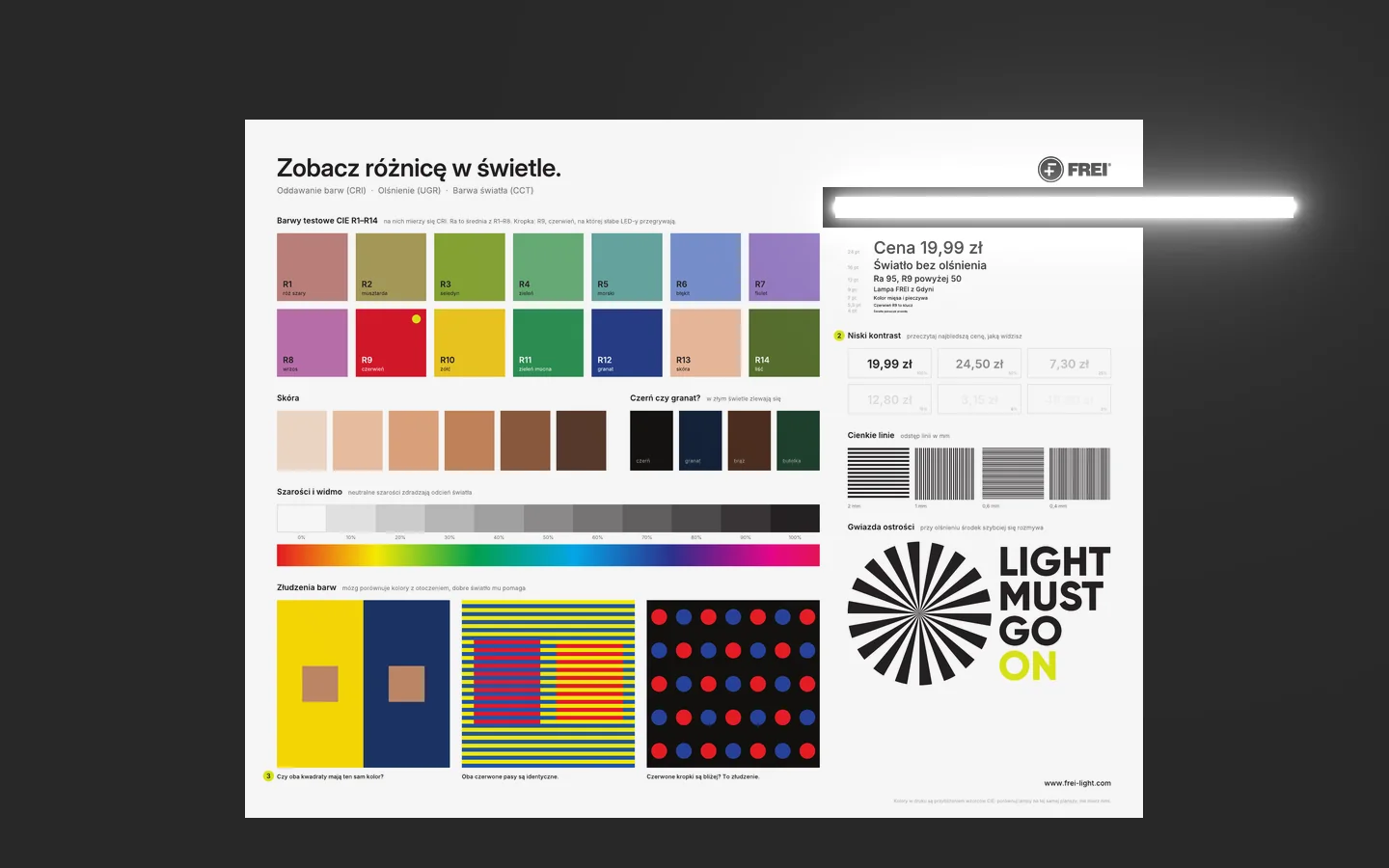
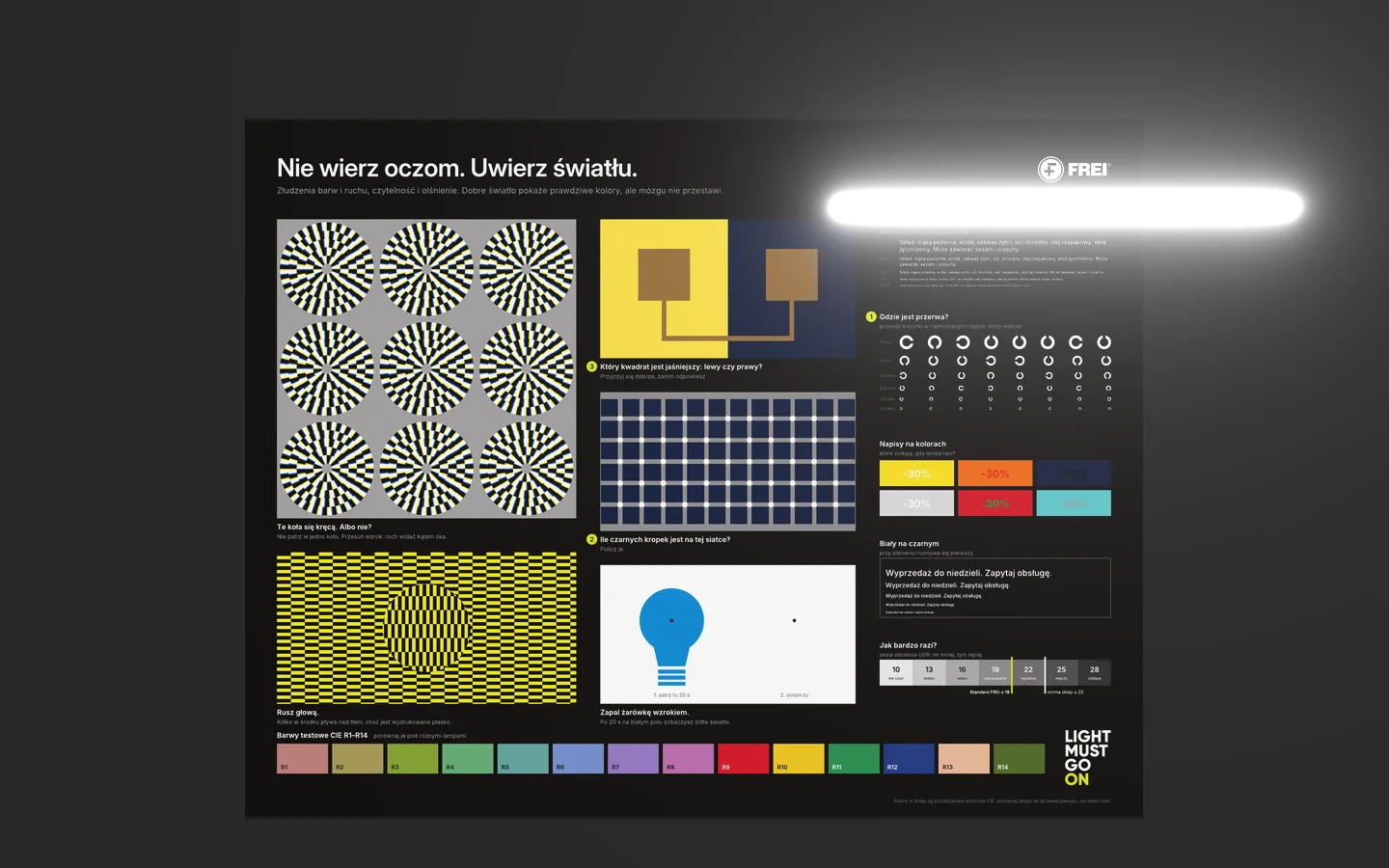
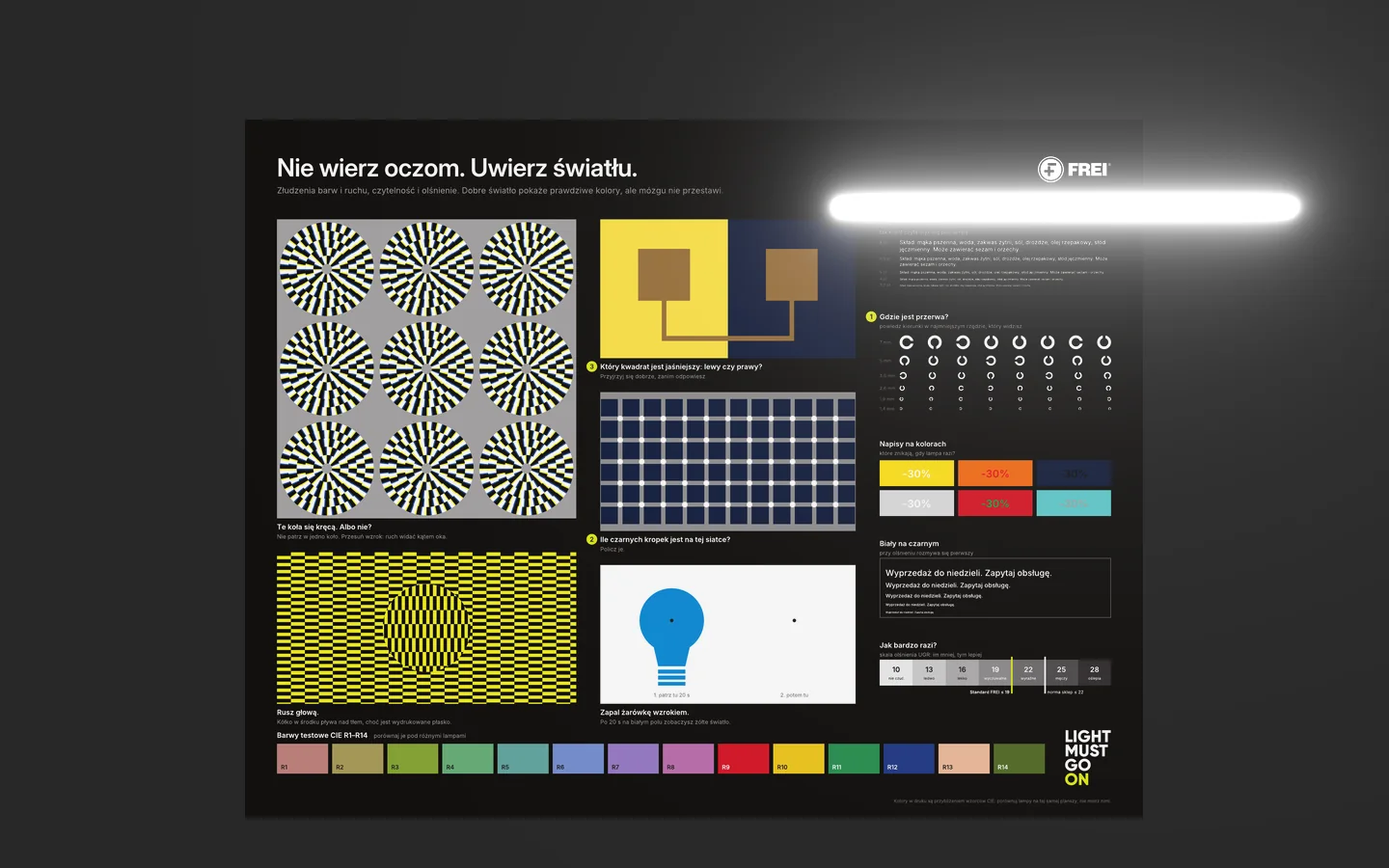
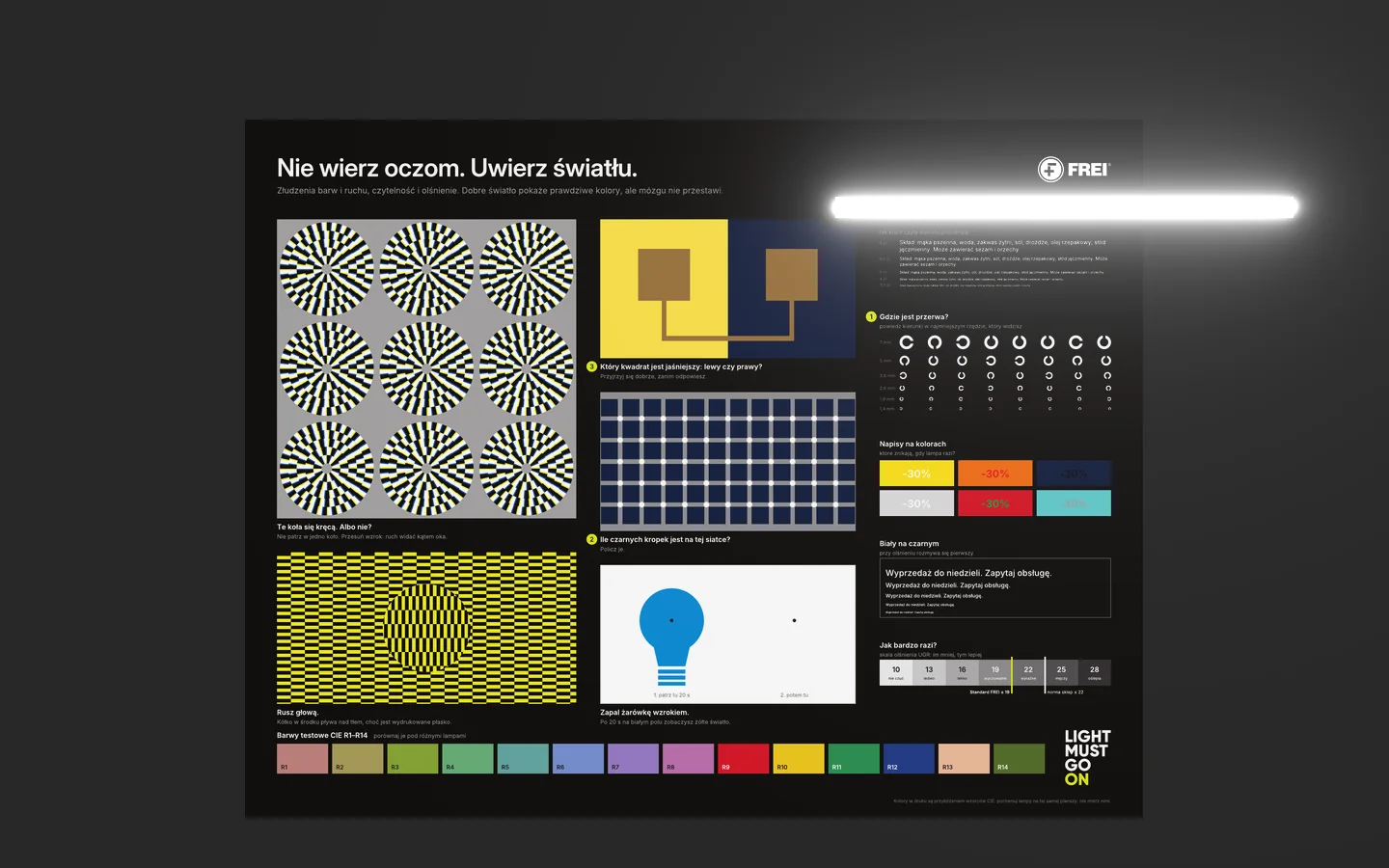
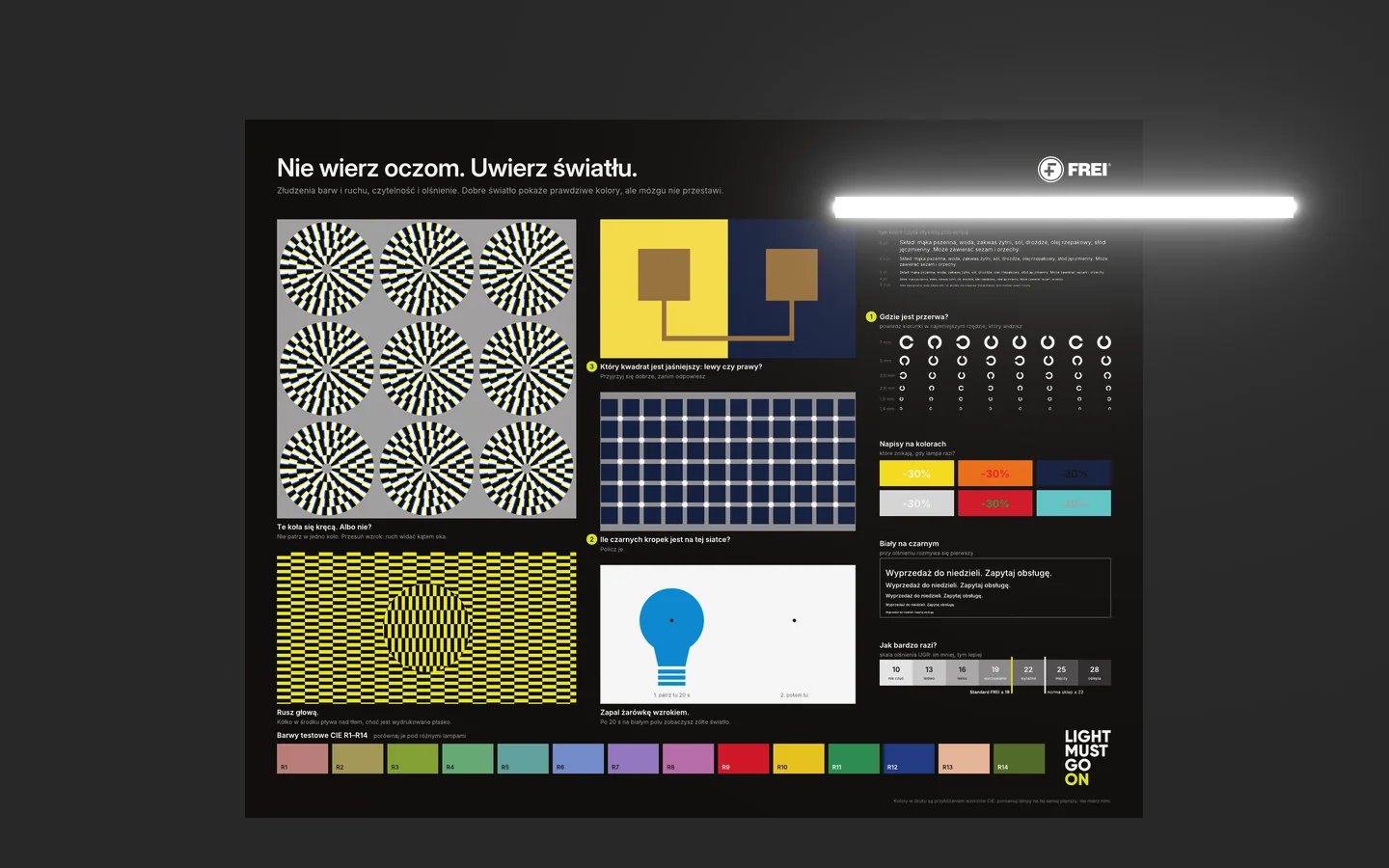
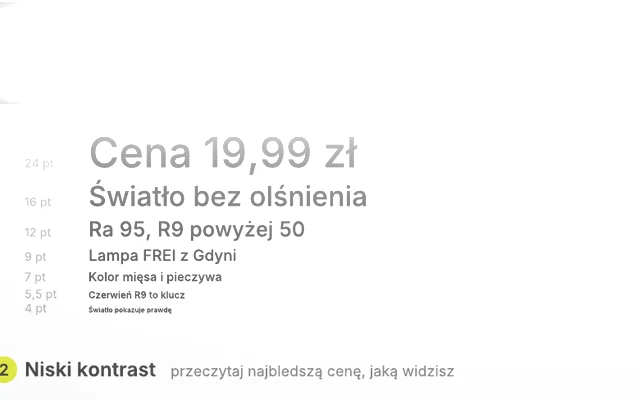
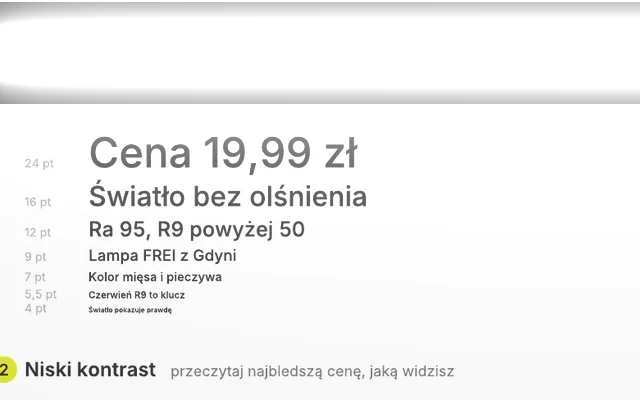
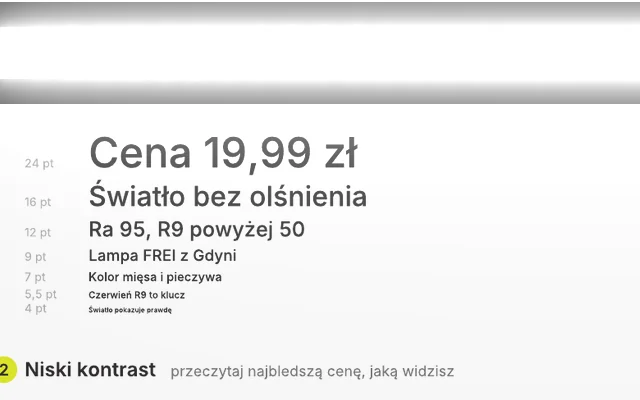
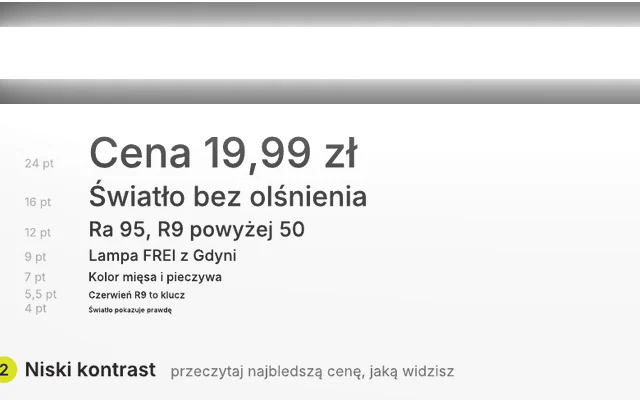
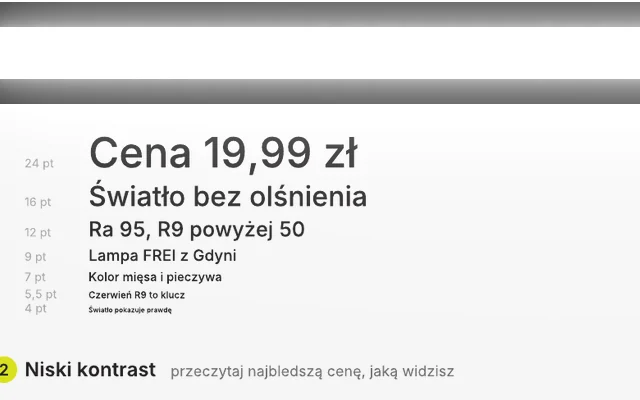
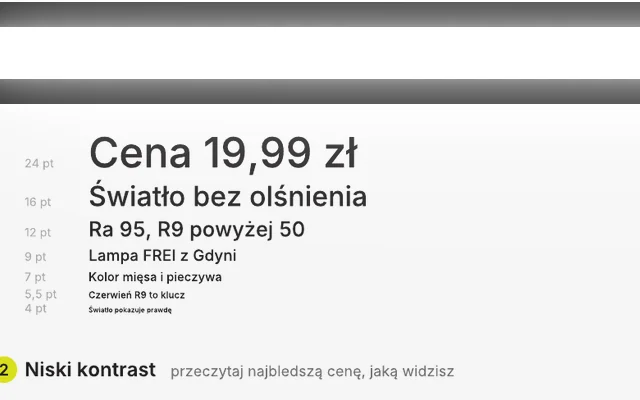
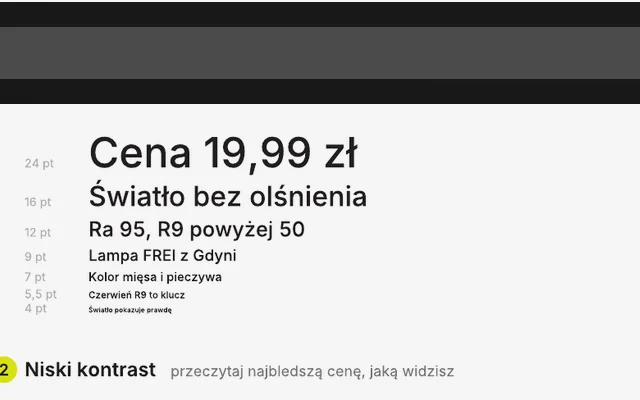
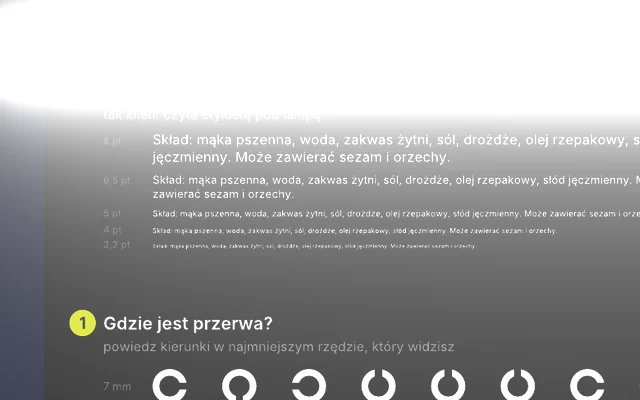
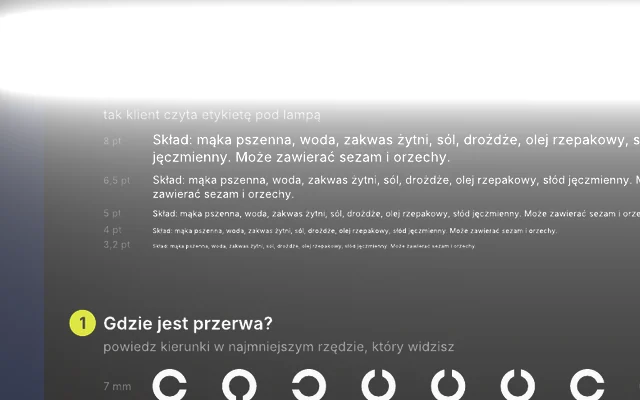
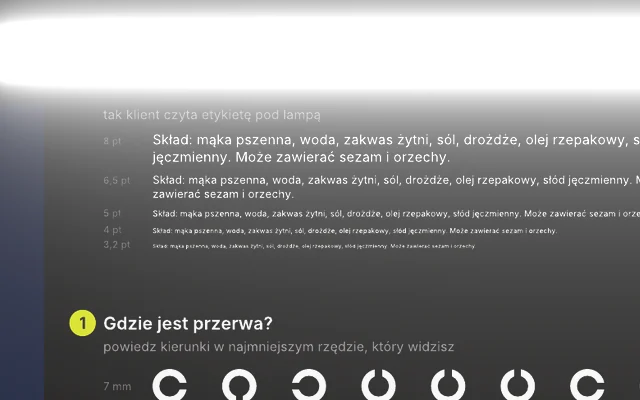
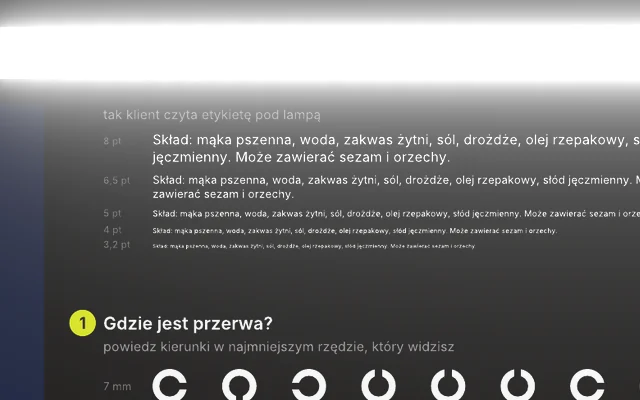
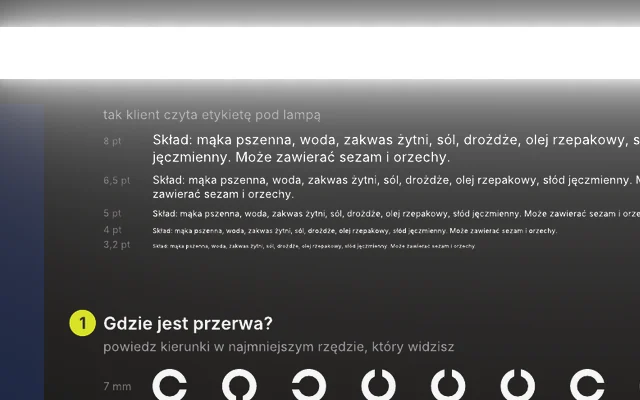
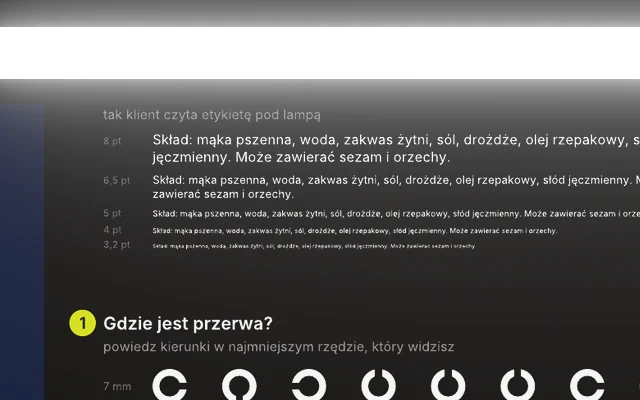
At the fair we had a dark box with windows. Each held the same board, with a luminaire of a different UGR above it. In window 4 the source sits deep in the profile and you can hardly see the luminaire. Pick a window or move the slider and see how the haze eats up the text.
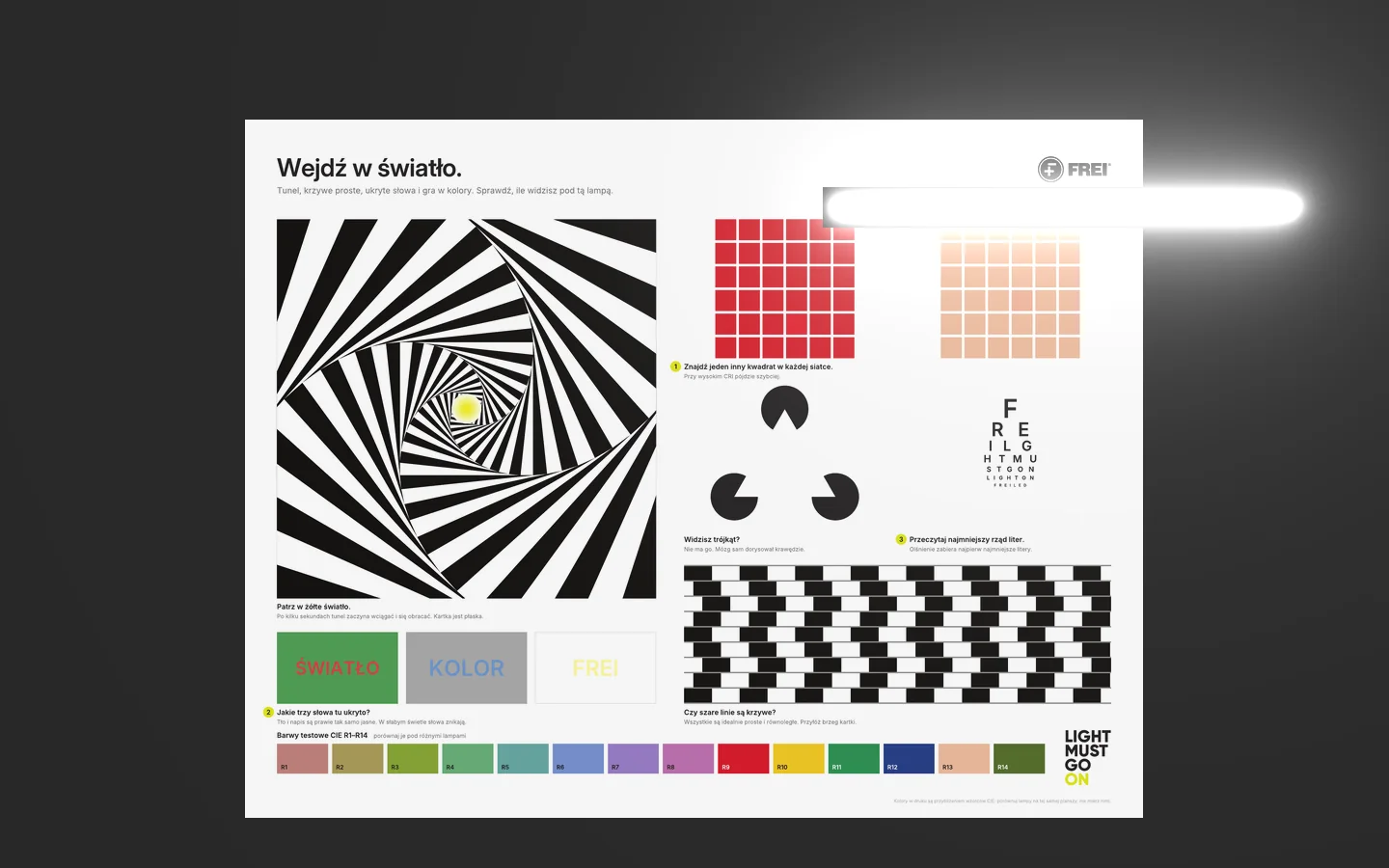
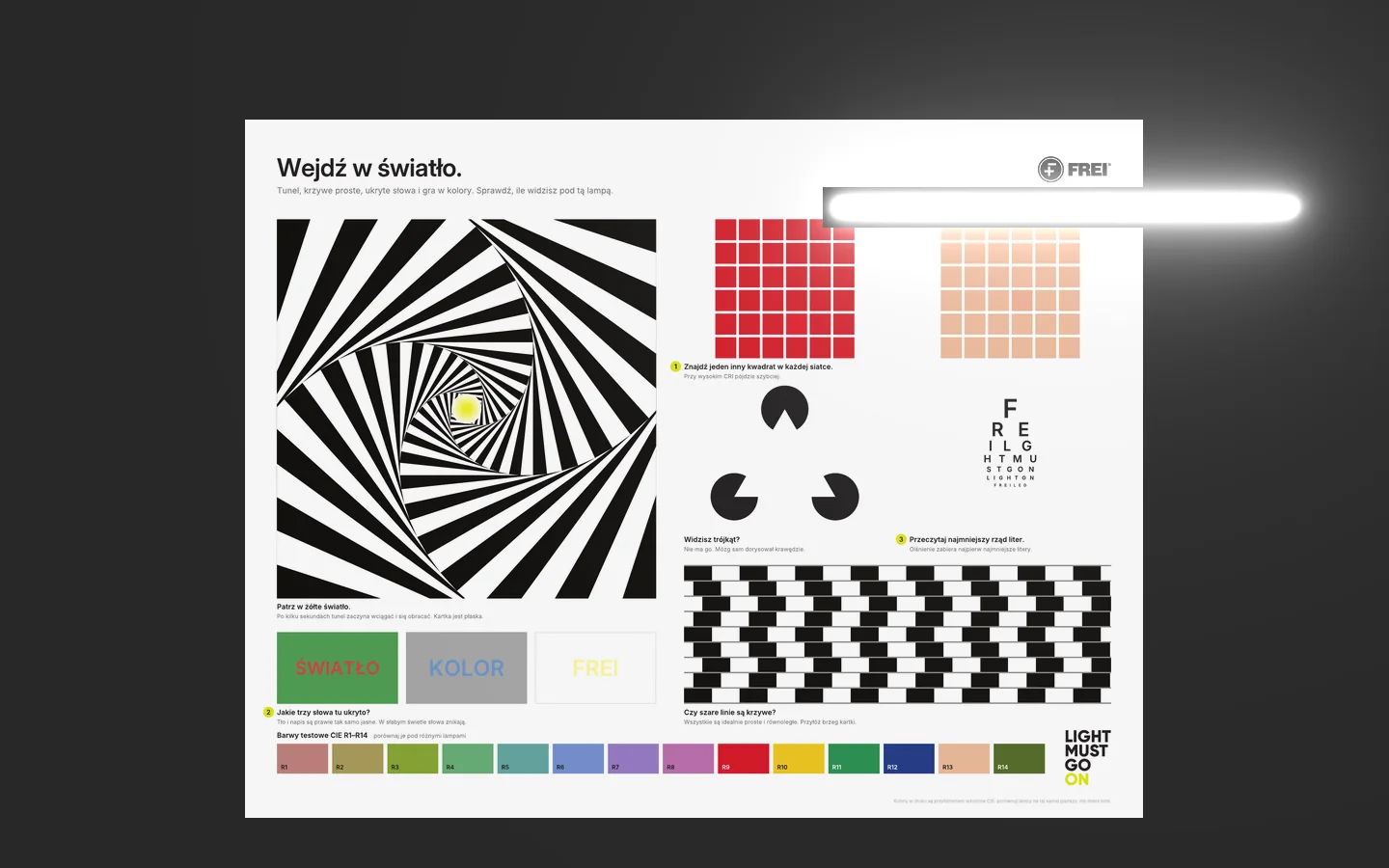
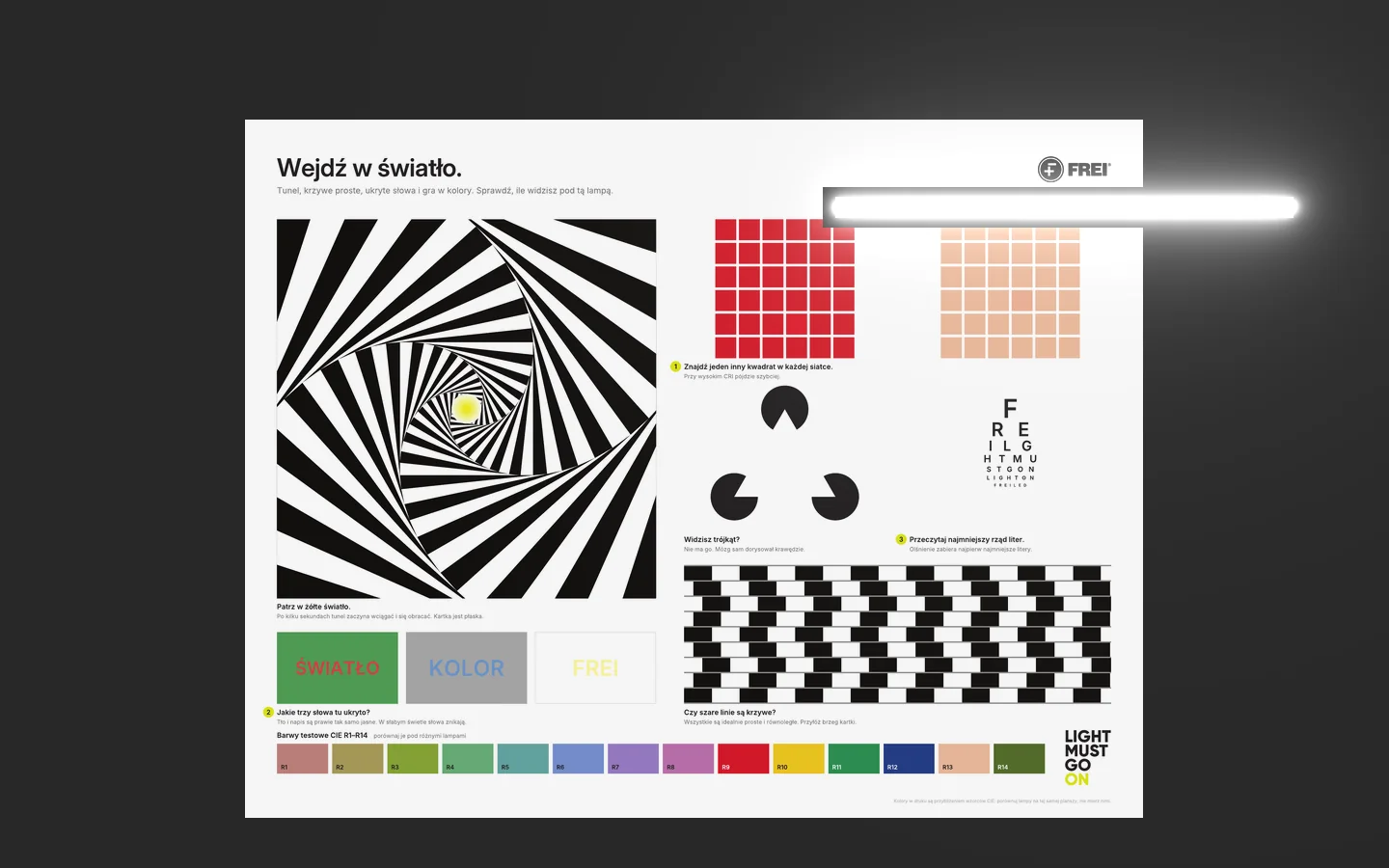
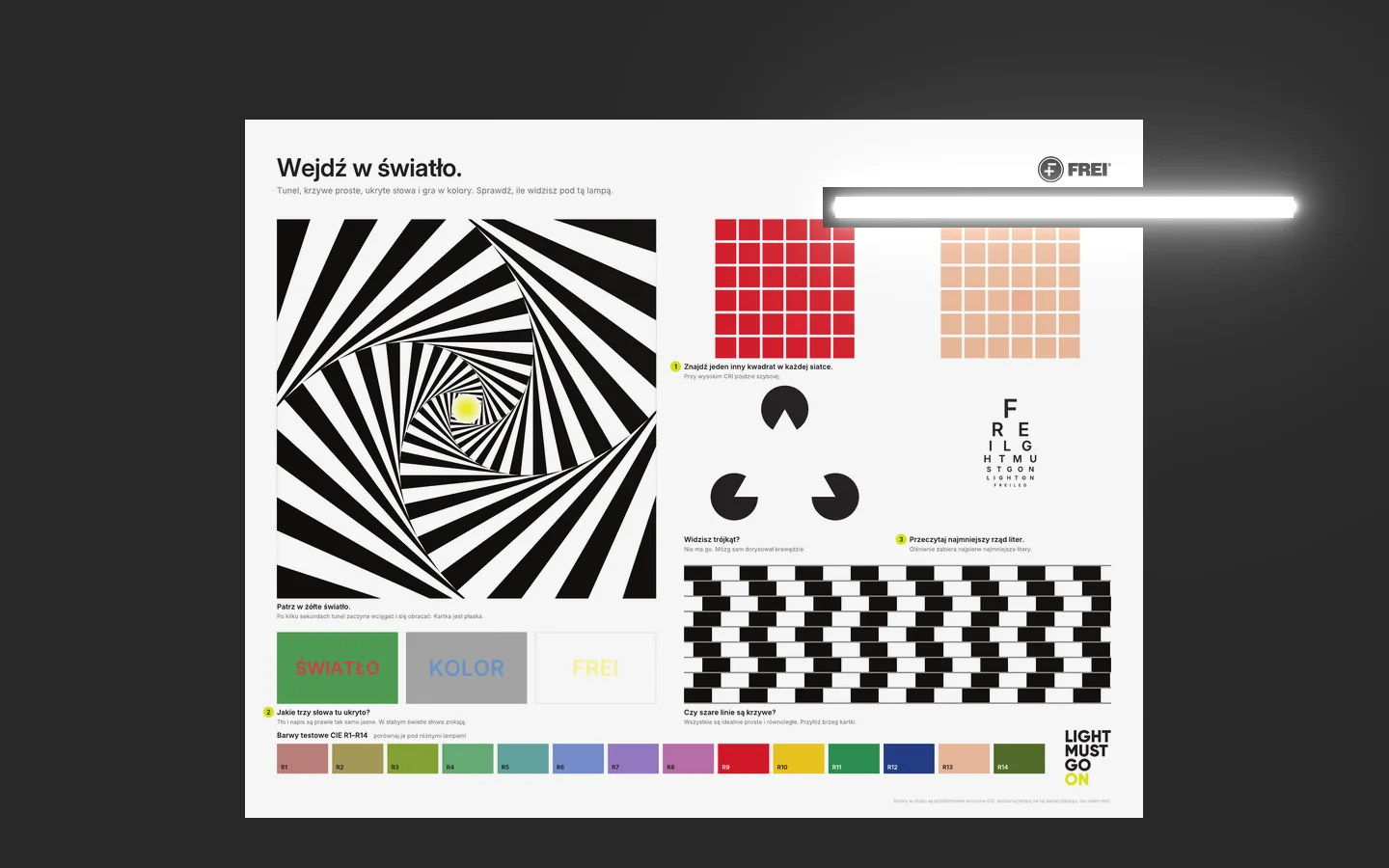
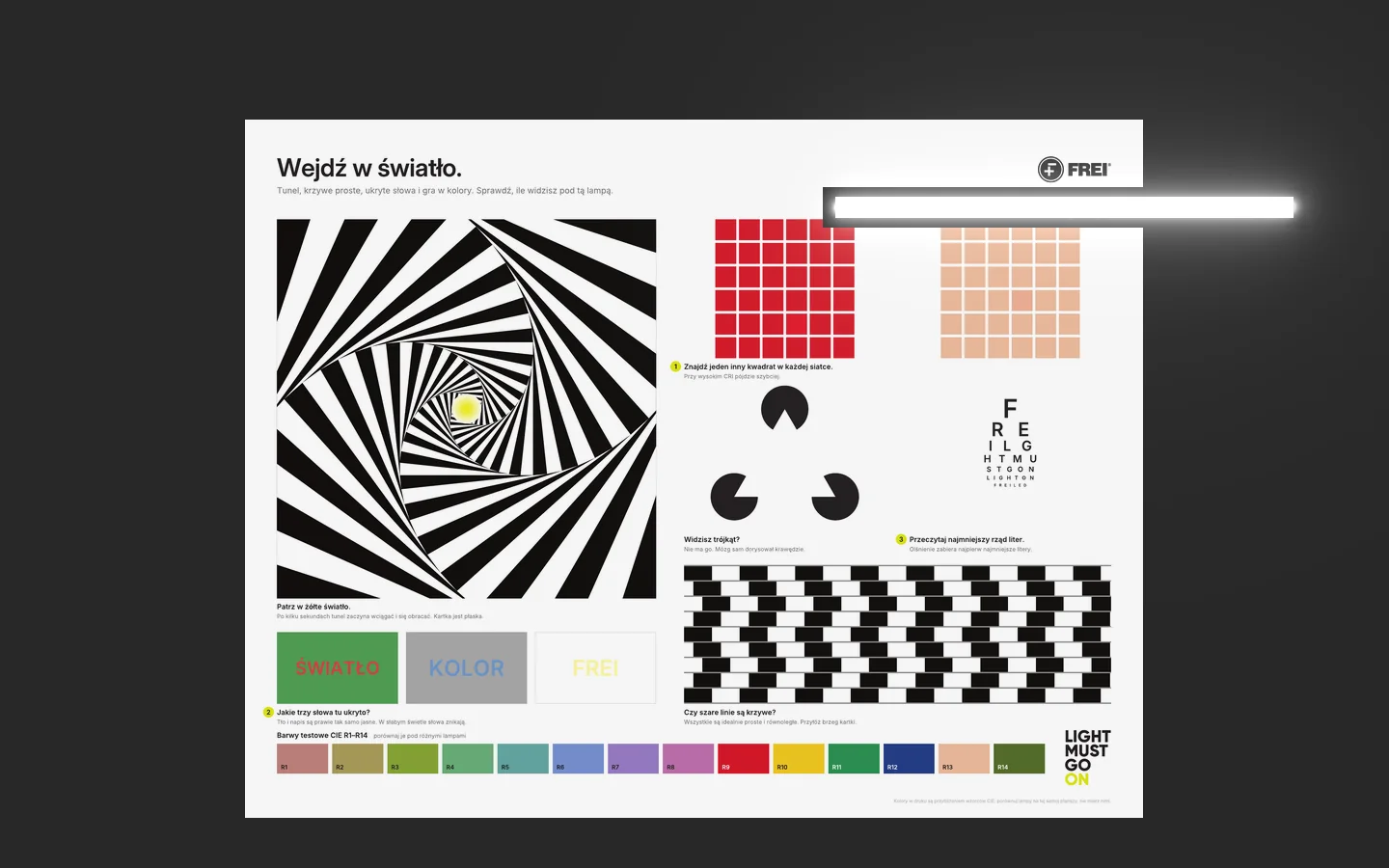
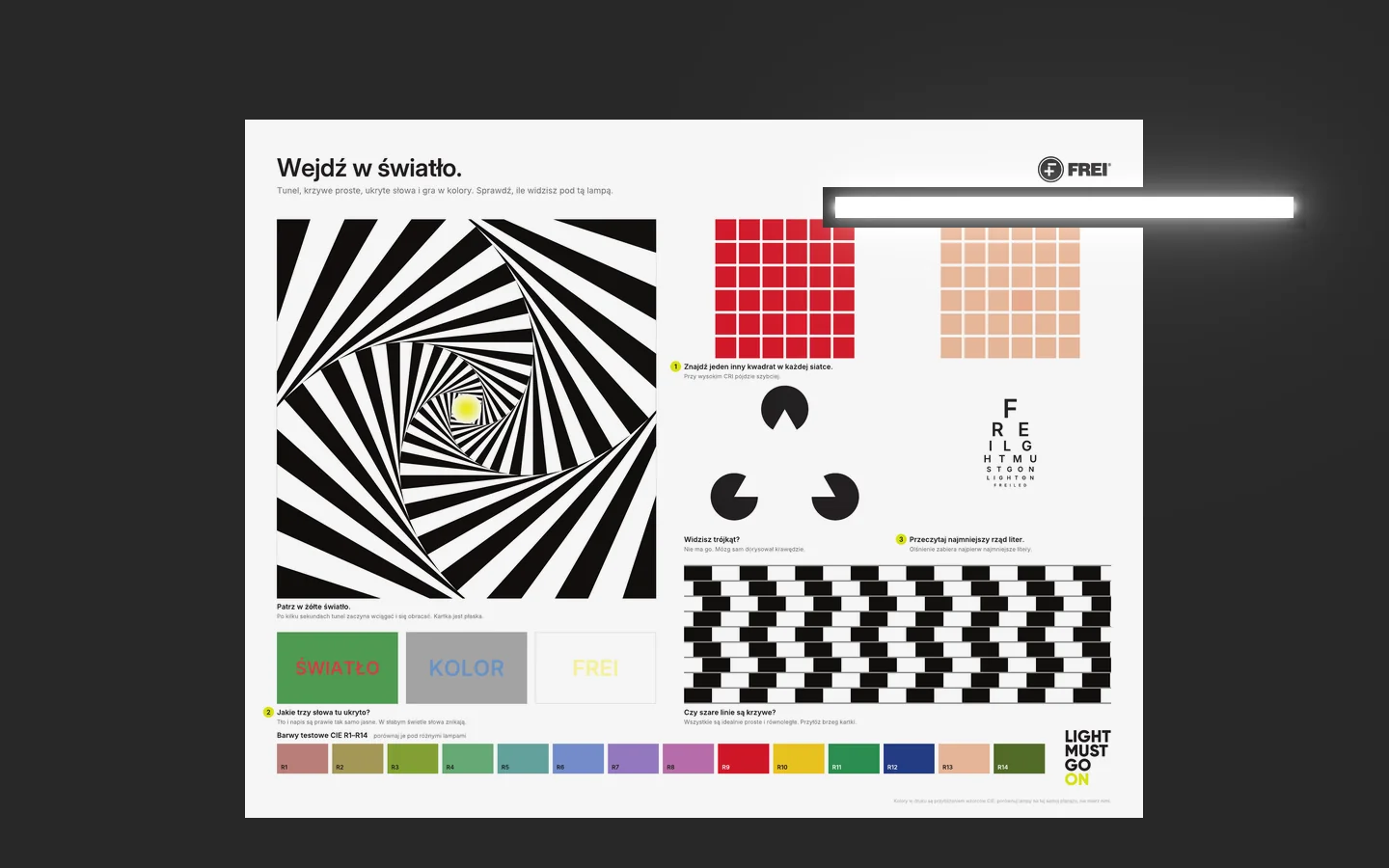
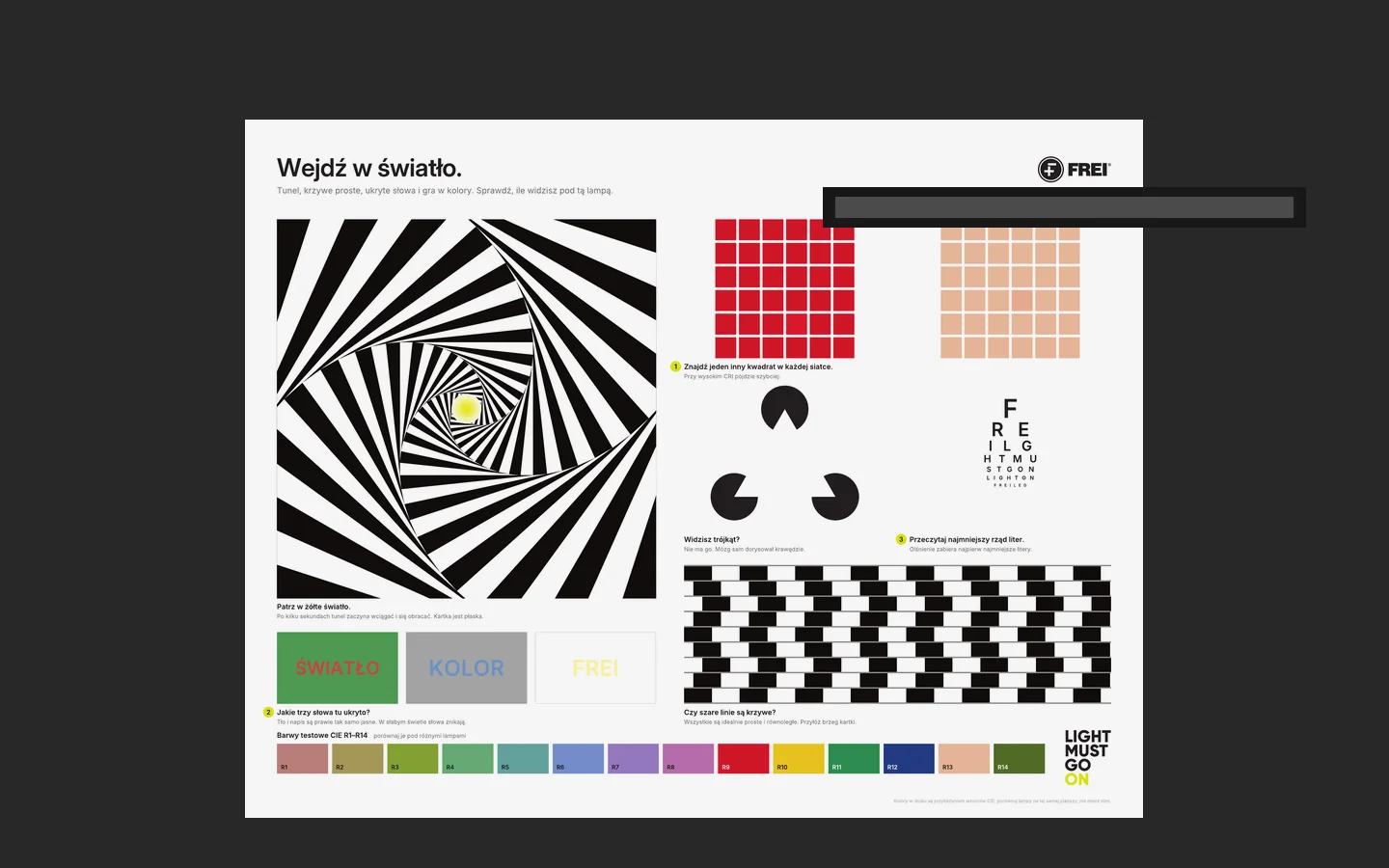
 Text under the luminaire

 Text under the luminaire
 Text under the luminaire
Your eyes are at rest
You notice the luminaire
You start to squint
Your eyes get tired
Irritation builds
Headache and irritation
- 28UGR in this windowstandard for shops: up to 22standard for shops: up to 22standard for shops: up to 22
- 100%brightness of the luminaire in your eyes
- 25%haze on the text under the luminaire
- 80%text contrast that remains
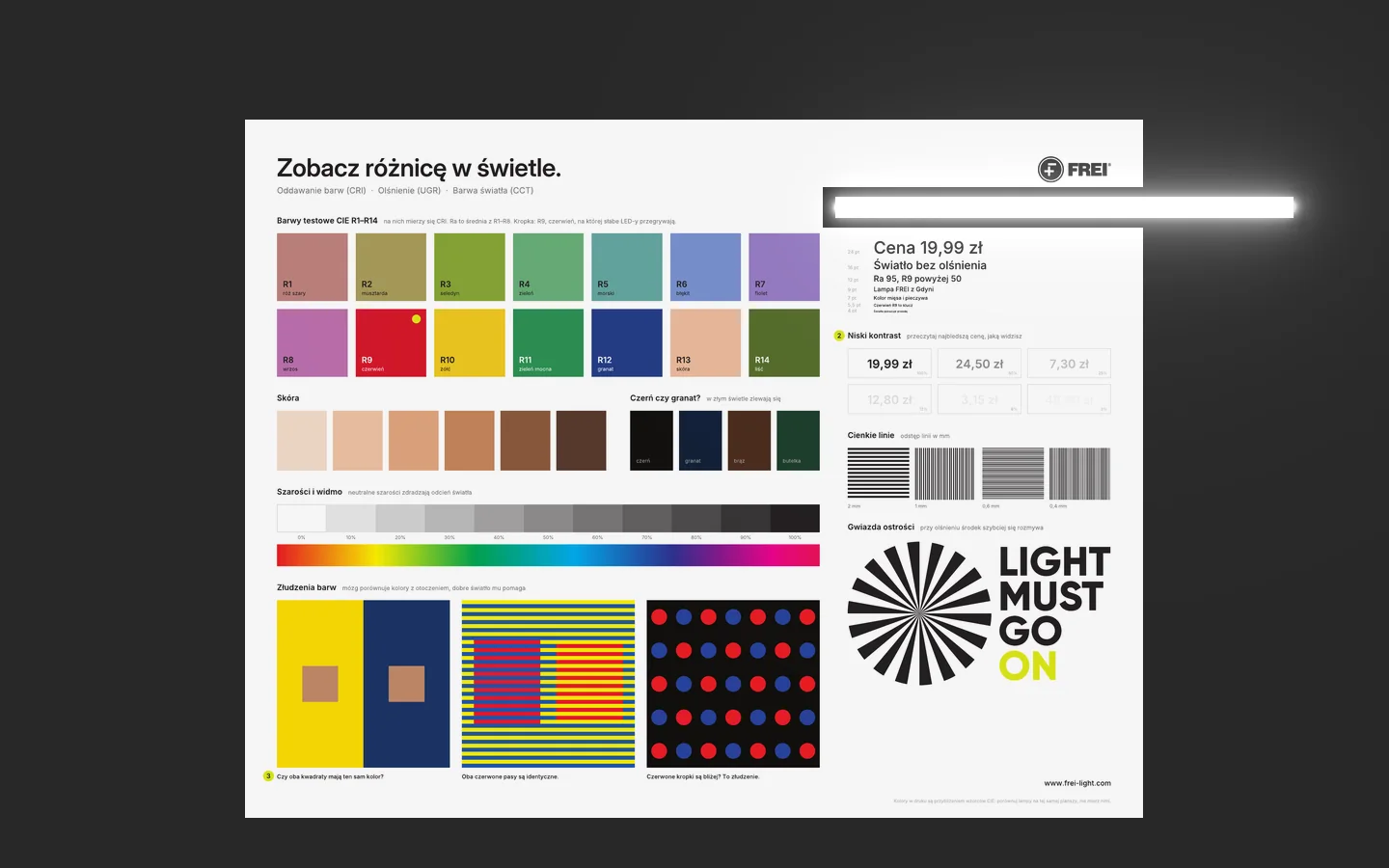
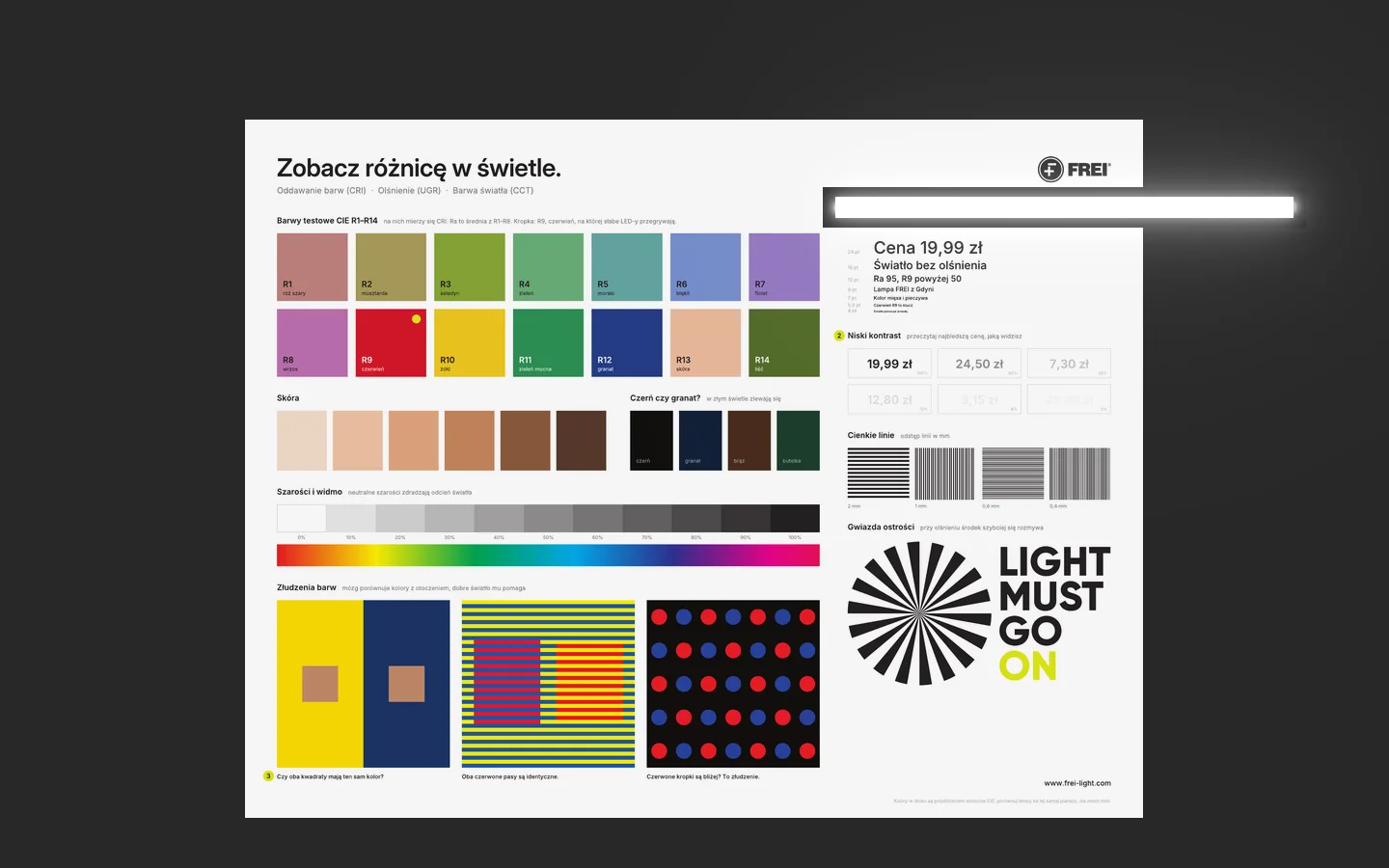
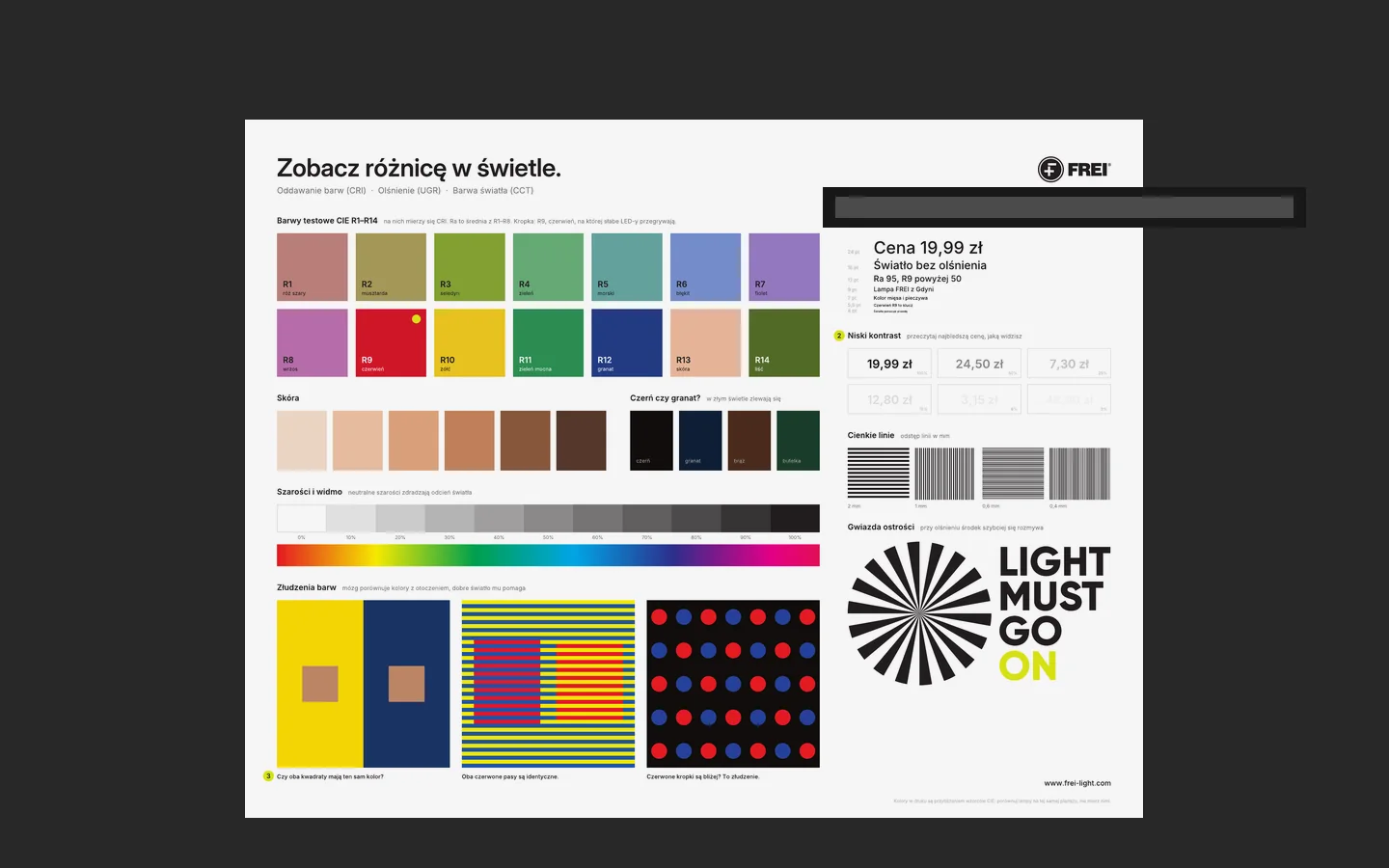
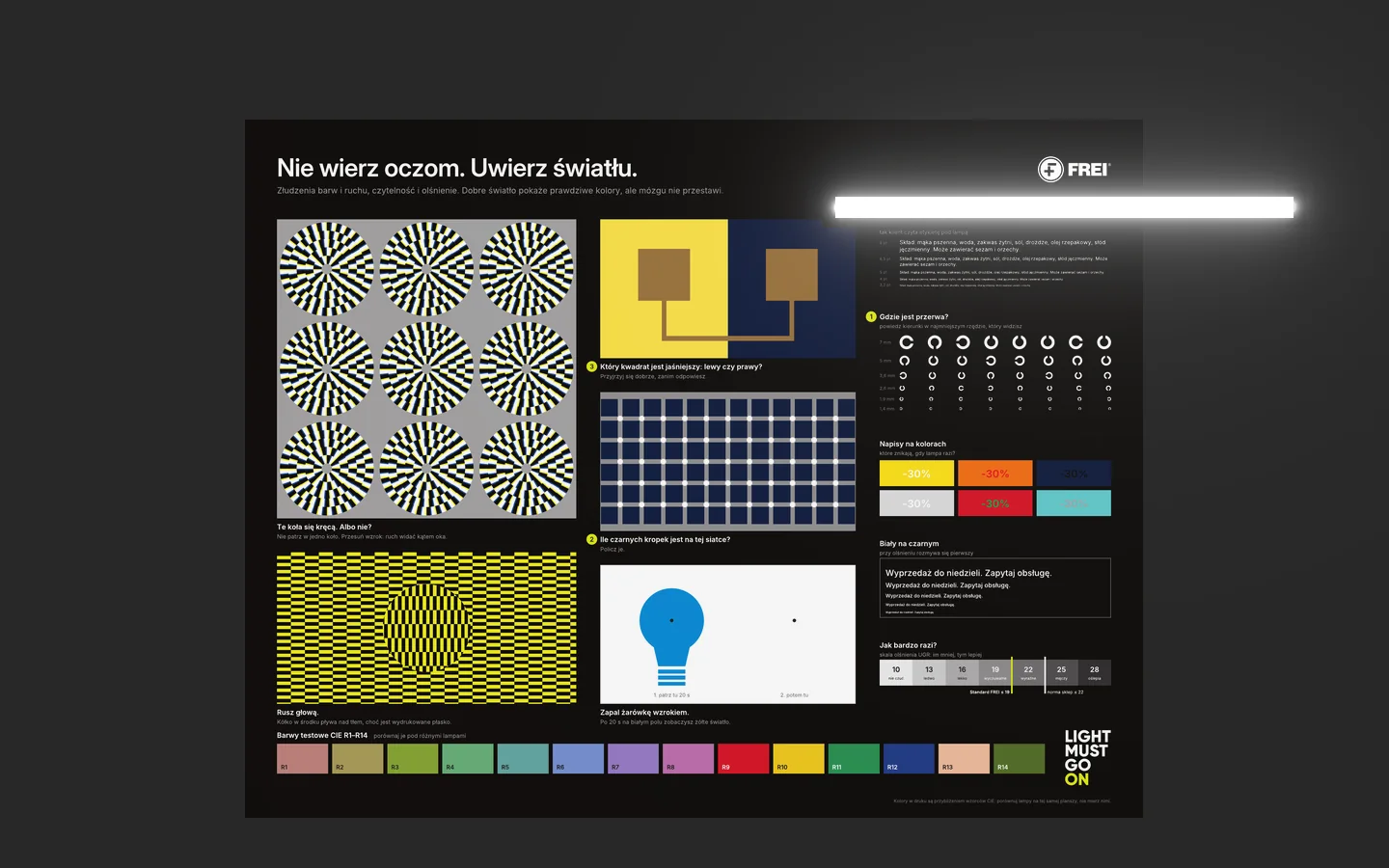
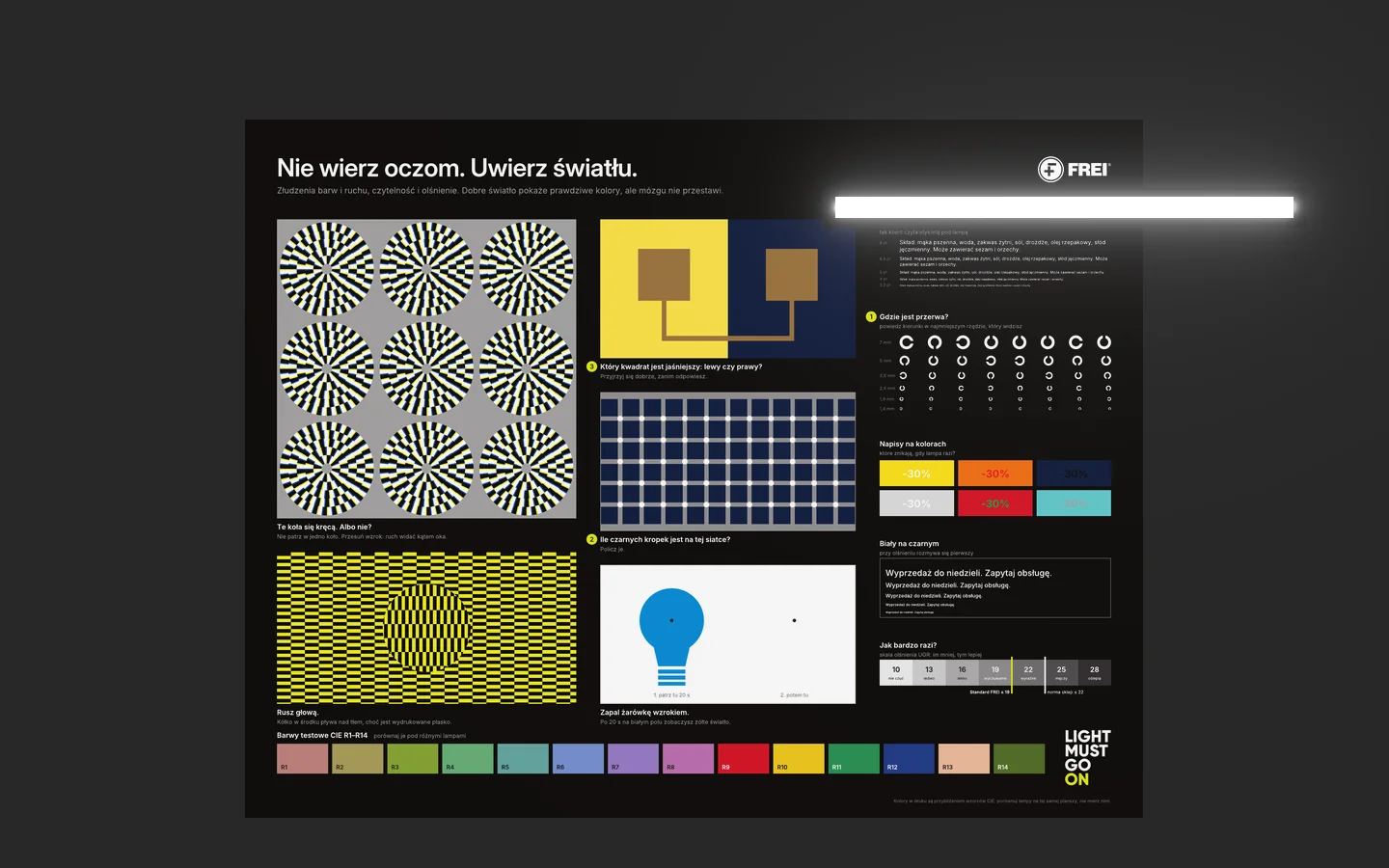
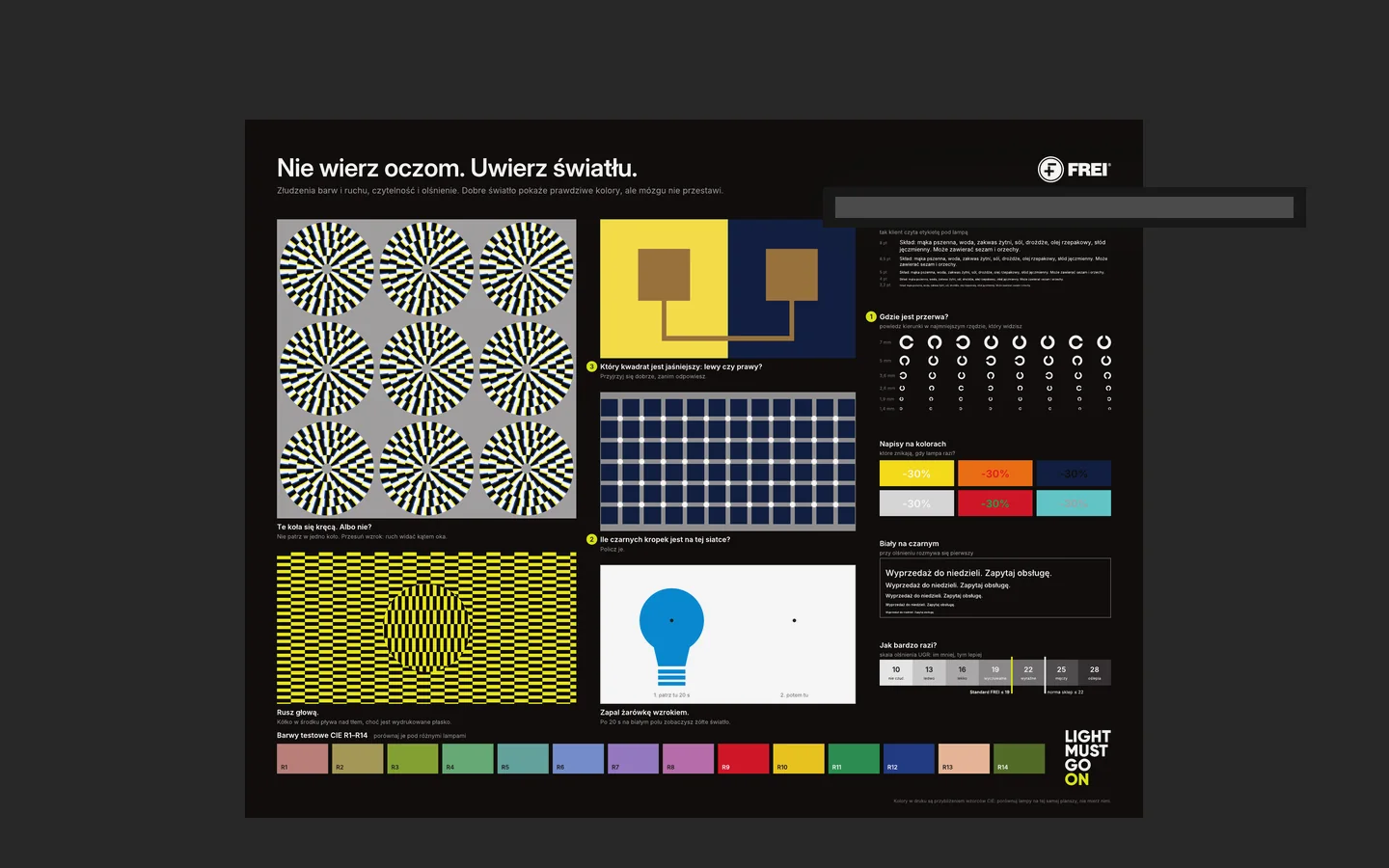
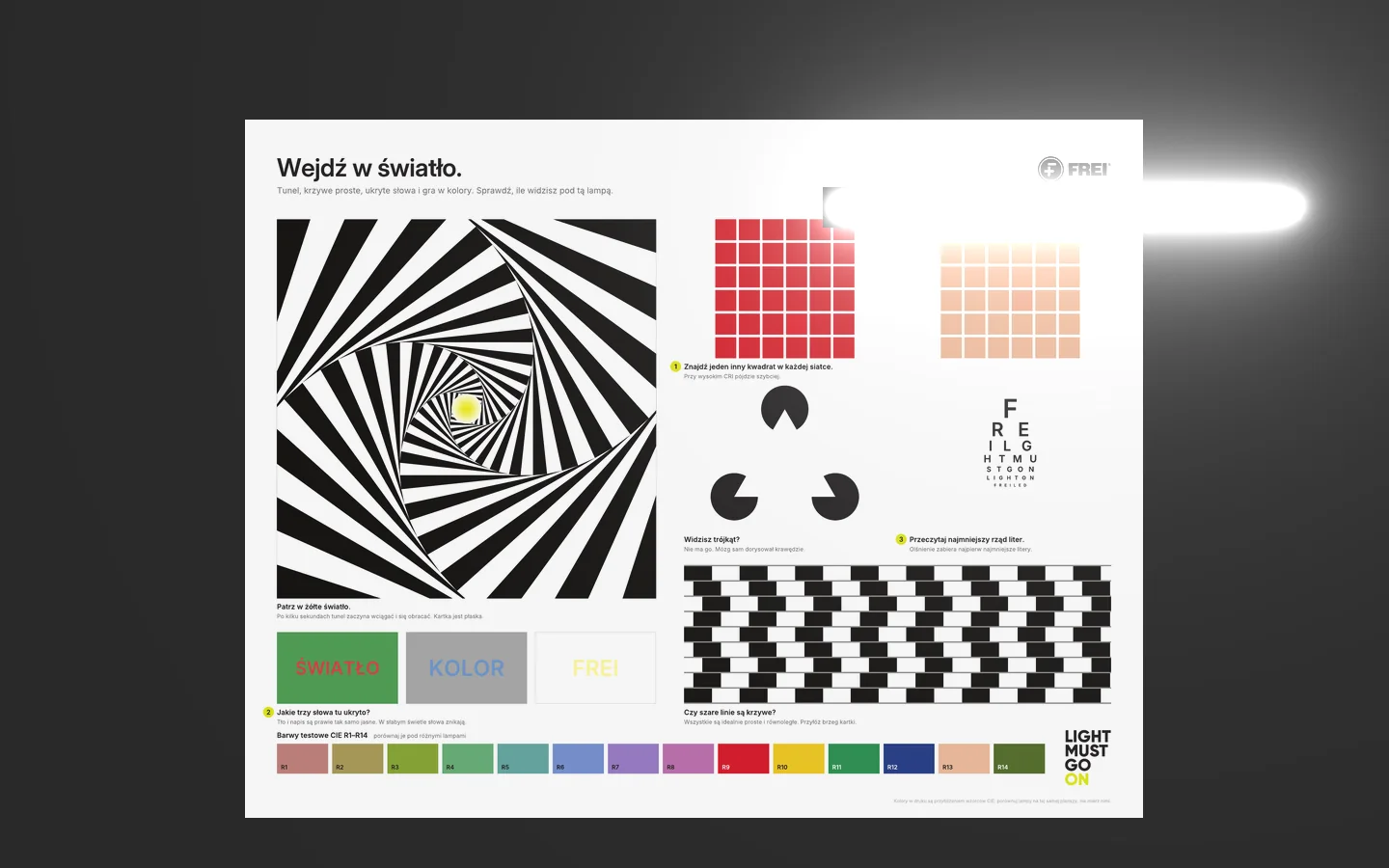
See the difference: text under the luminaire. The luminaire hangs just above the “Legibility” column. At UGR 28 the smallest lines and the palest prices disappear in the haze. At UGR 10 you read to the end.
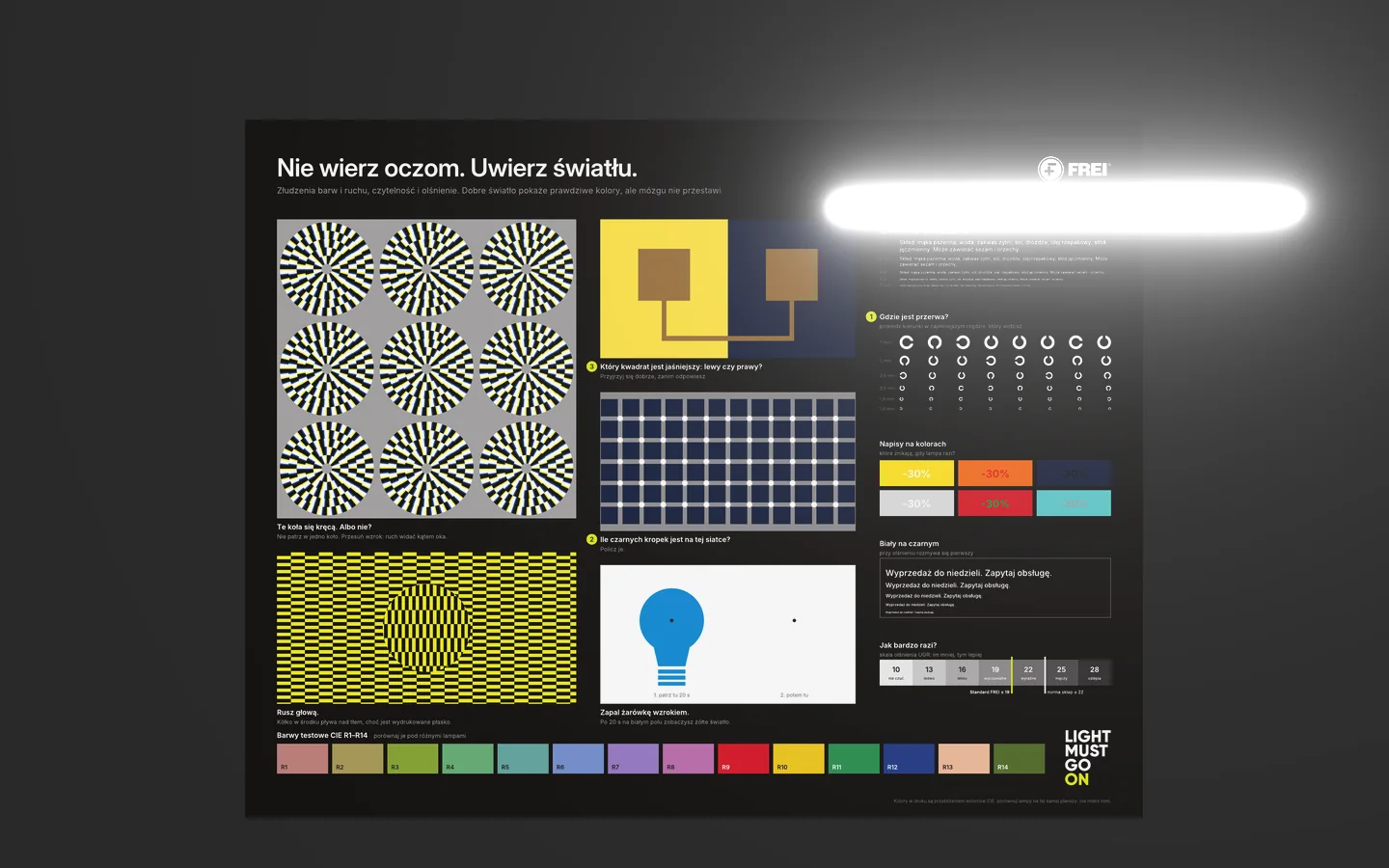
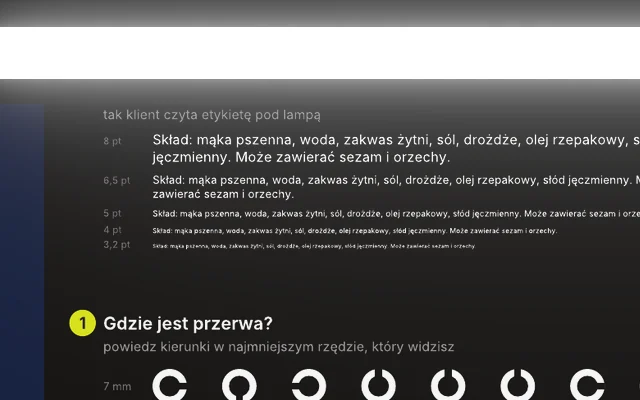
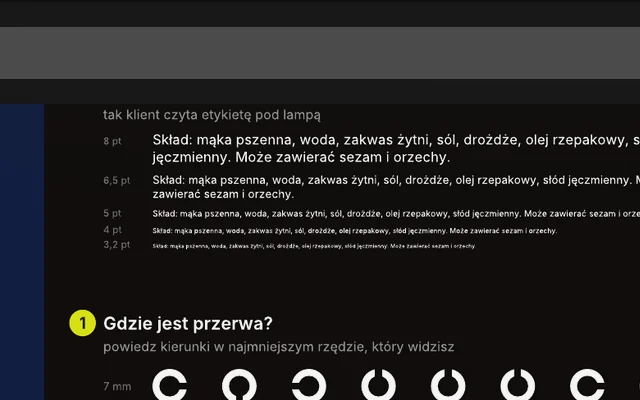
Don’t trust your eyes: dark background. Haze shows best on black. Black turns grey, and the ingredients on the label and the rings with a gap lose contrast. This is what a shelf looks like under a glaring luminaire.
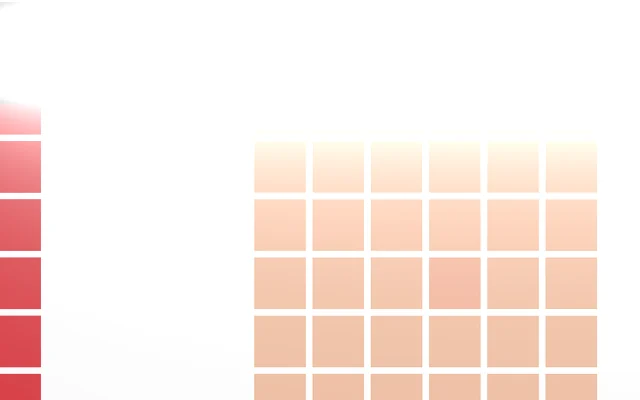
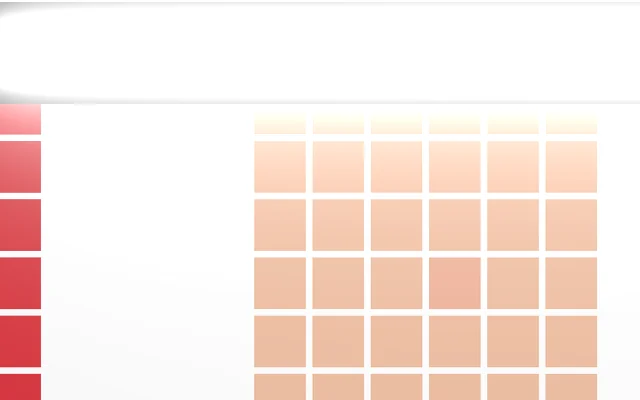
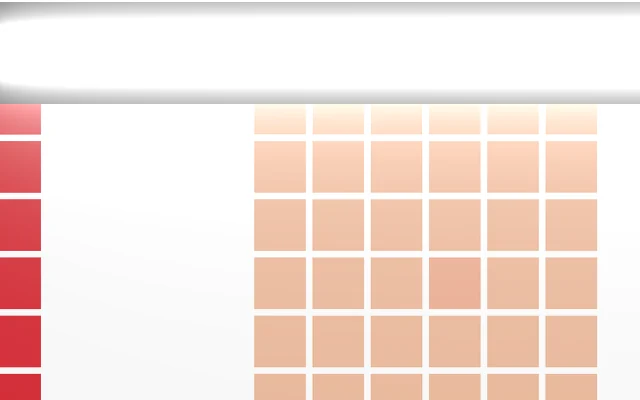
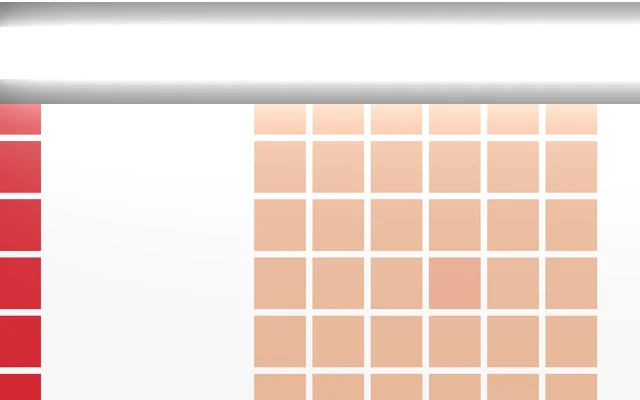
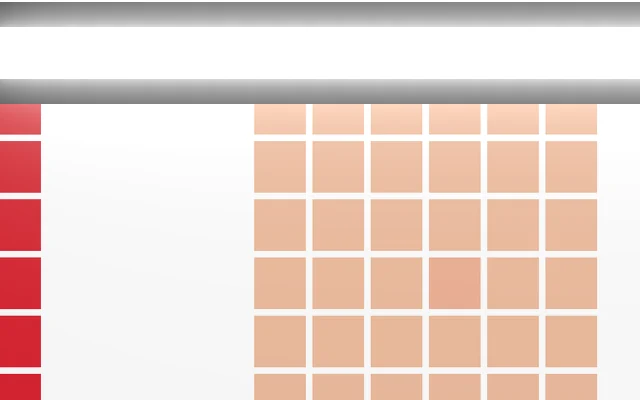
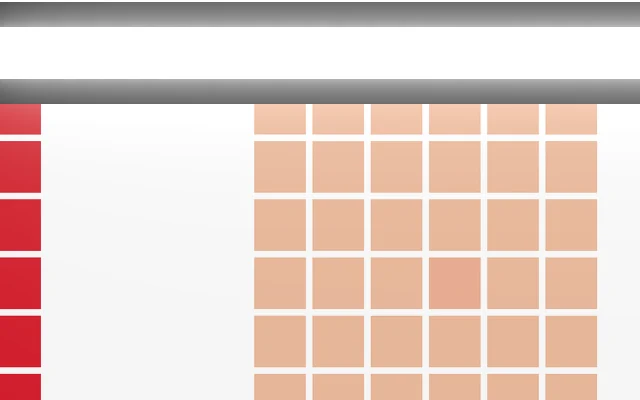
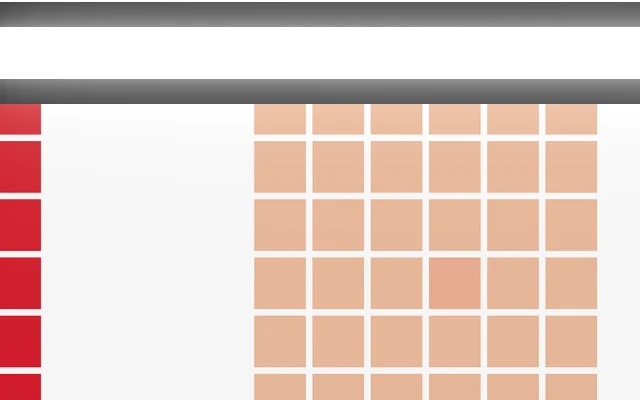
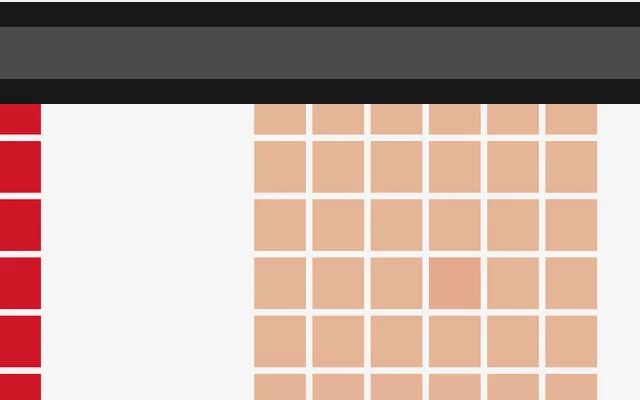
Step into the light: colours in the grid. One square in the grid has a different shade. At UGR 28 the haze flattens the colours and the difference is harder to find. At UGR 10 you see it straight away.
FREI model: the 45 × 35 cm board from the fair, seen from 60 cm, as in the box. The luminaire hangs 15 cm in front of the board, just above the text. In every window the board gets the same amount of light; only the brightness of the luminaire in your eyes changes: from about 15,500 cd/m² at UGR 28 to about 1,200 cd/m² at UGR 10. In window 4 the source is set back into the profile: from where you stand you see a dark slot with a luminance of about 10 cd/m², as much as in our shop renders with the source deep behind optics, so UGR drops below 10 and the haze disappears. UGR by the CIE 117 formula for a gaze at the centre of the board, with a background luminance of 40 cd/m². Haze is the veiling luminance from the CIE 146:2002 formula for the eye of a 40-year-old, calculated for every point of the board; the numbers under the window are for the centre of the “Legibility” column. A screen does not glare like a luminaire, so we added the haze to the image at the strength it has in the eye.
You see the goods,
not the luminaire.
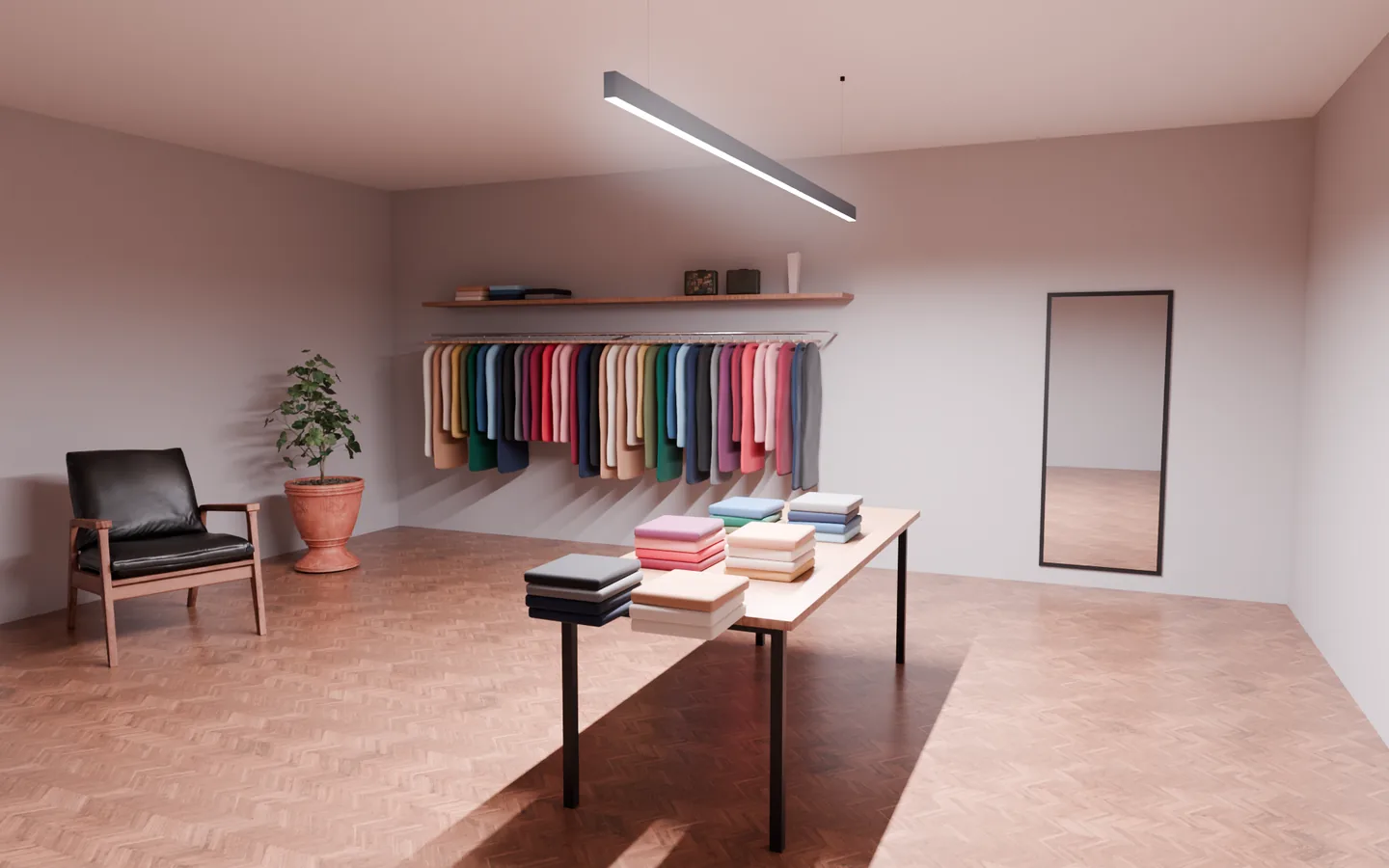
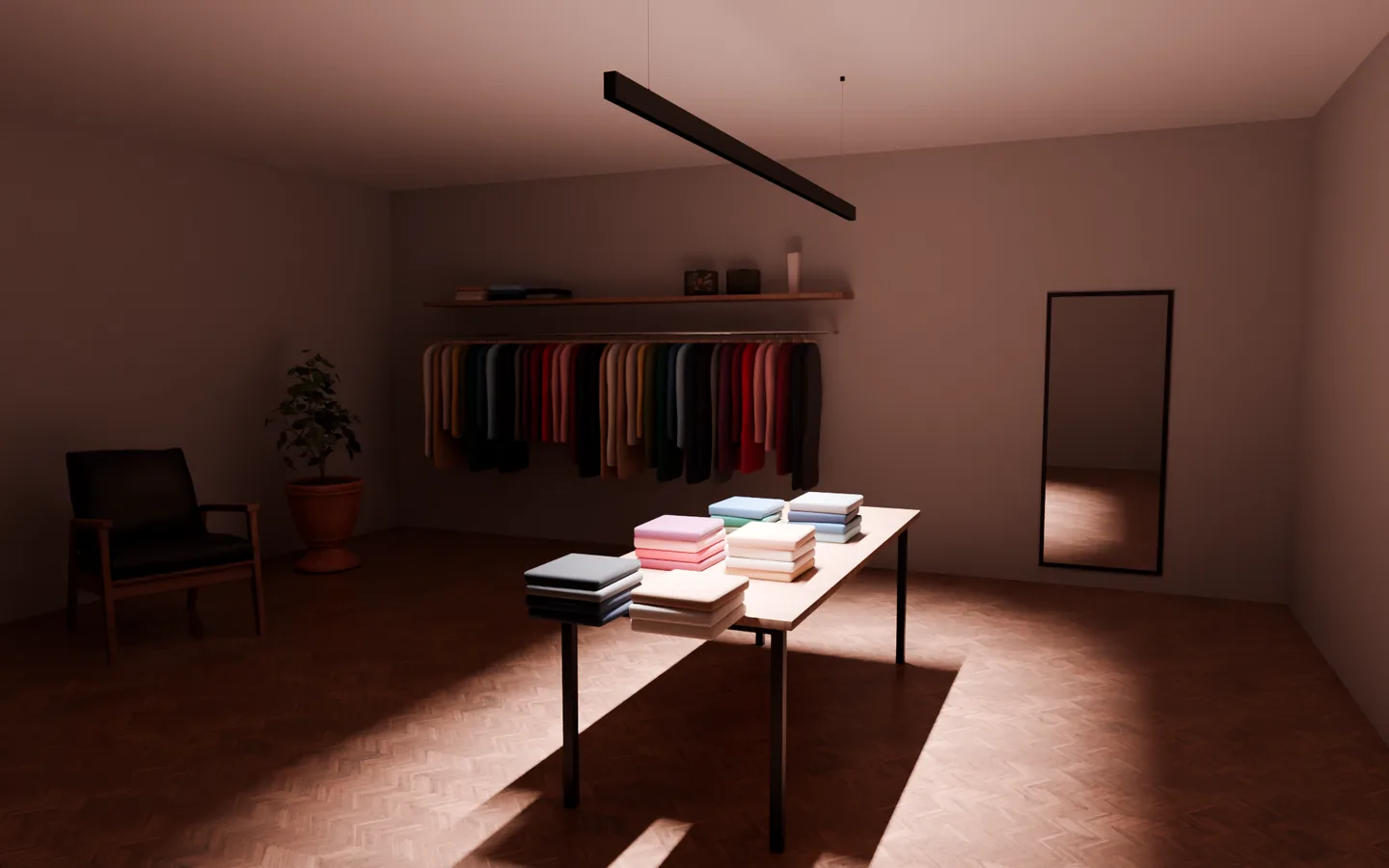
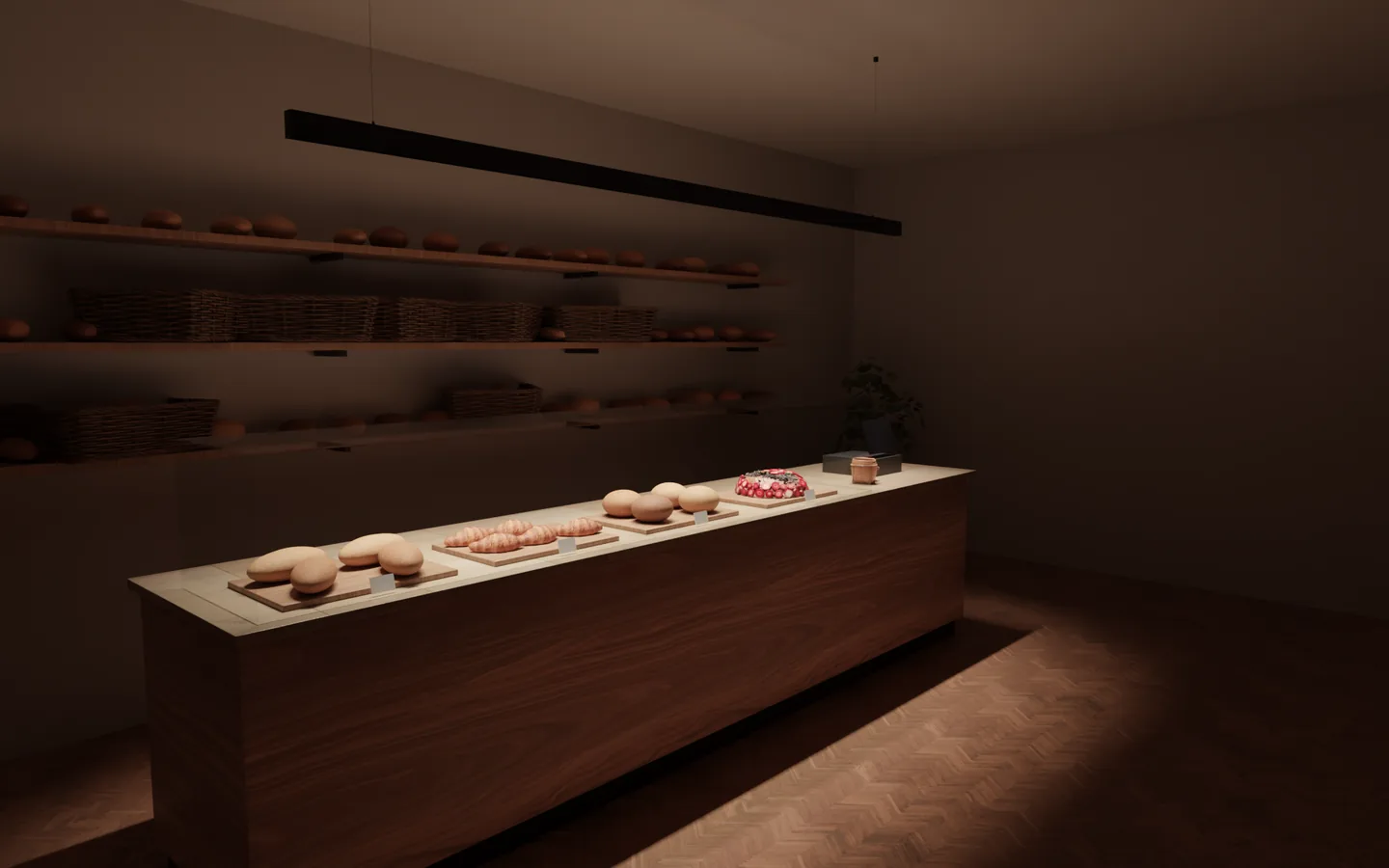
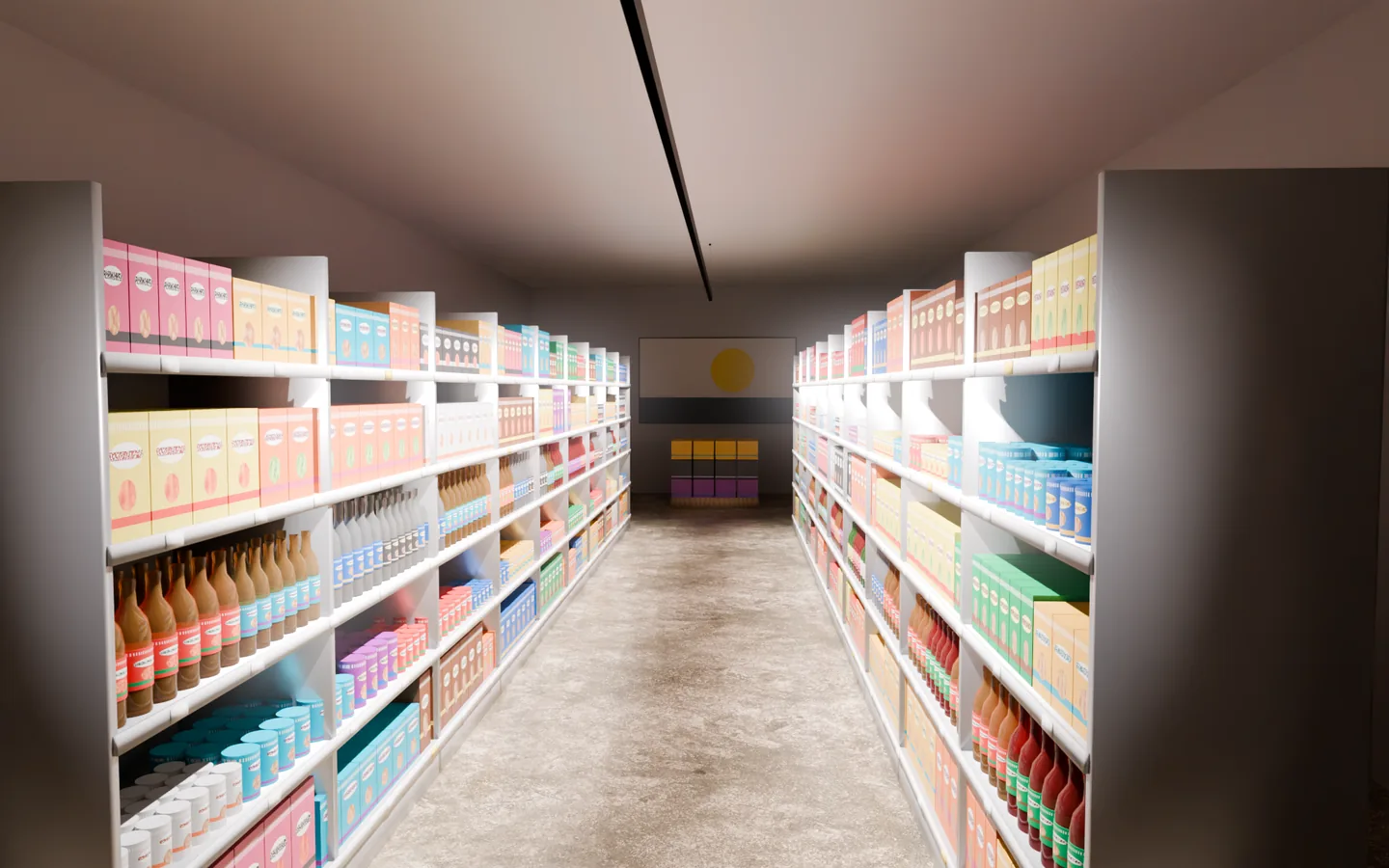
The same luminaire and the same power. Once an opal diffuser glows, once the source hides in optics. See where the customer looks first.
 The eye goes to the luminaireThe eye goes to the goods
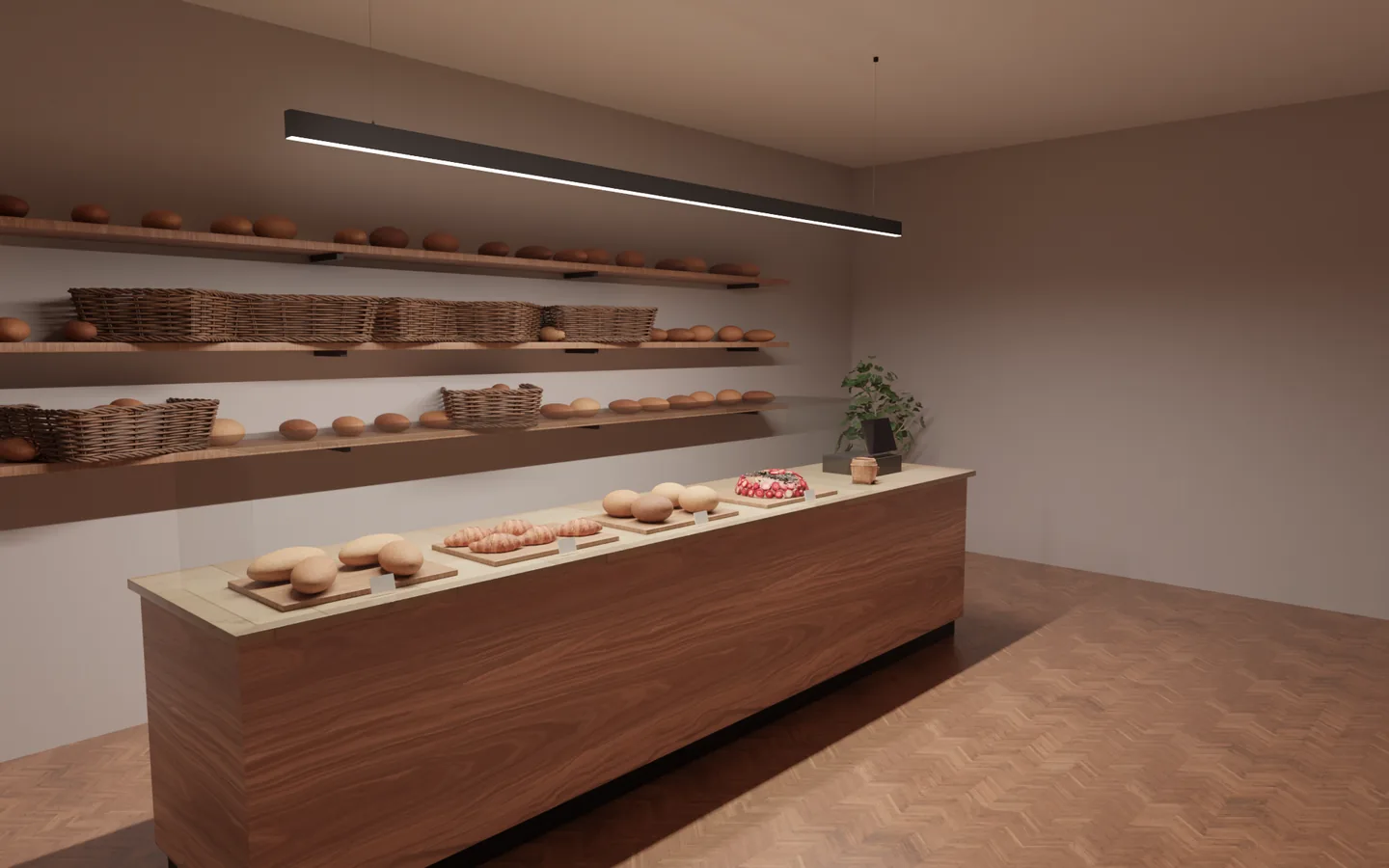 The eye goes to the luminaireThe eye goes to the goods
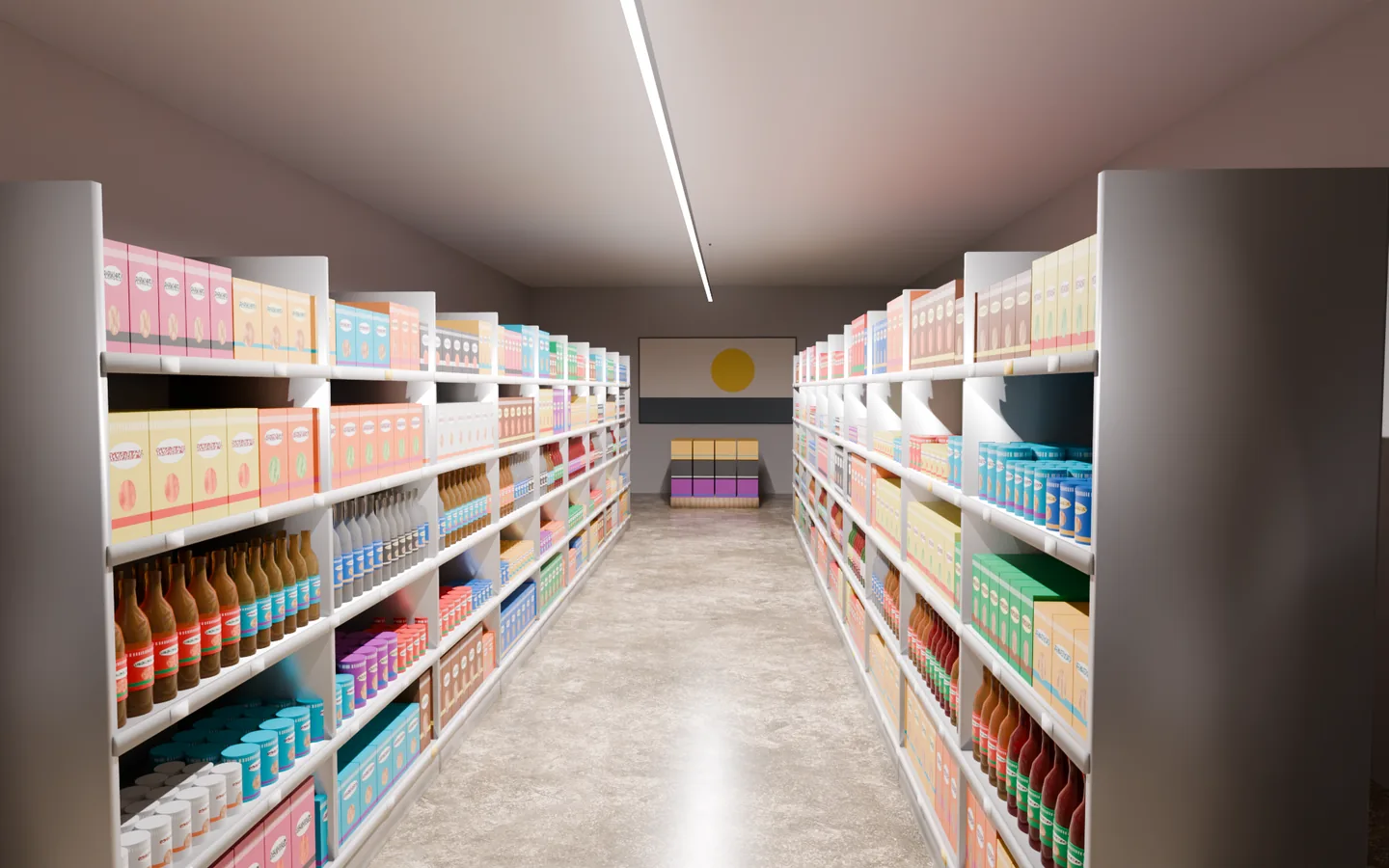 The eye goes to the luminaireThe eye goes to the goods
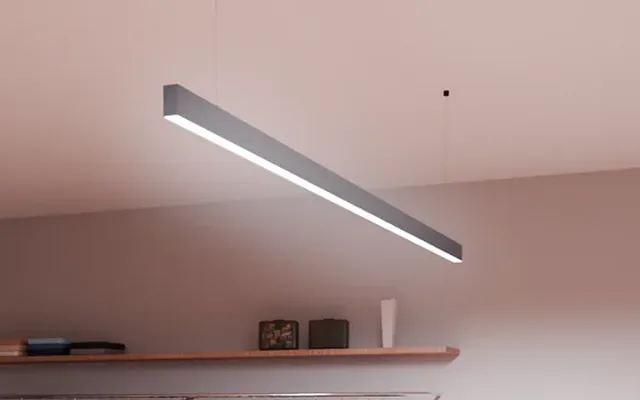 Luminaire up close
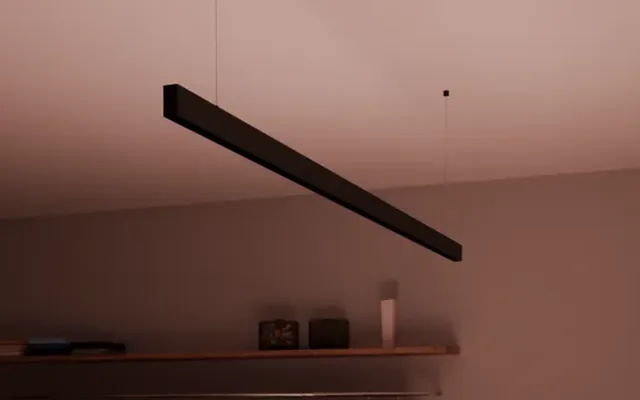
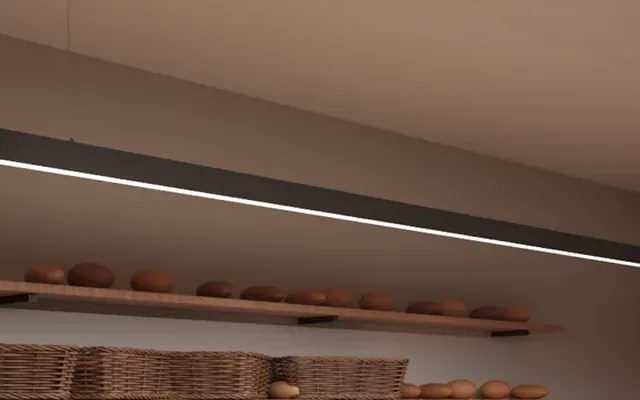 Luminaire up close
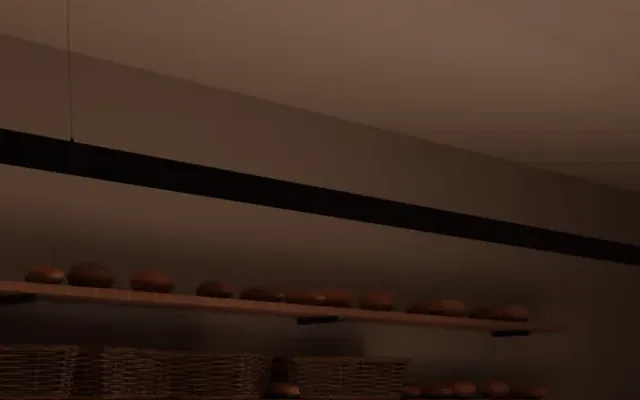
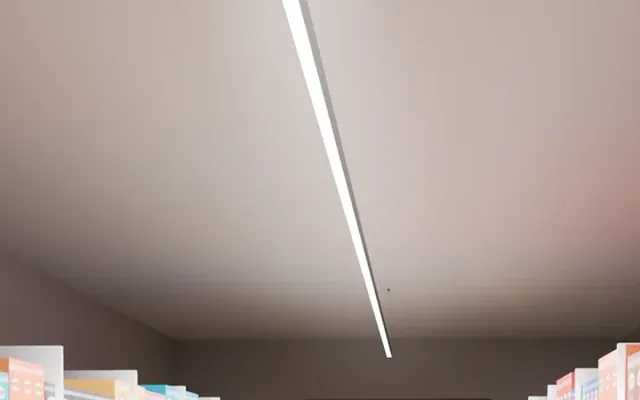 Luminaire up close
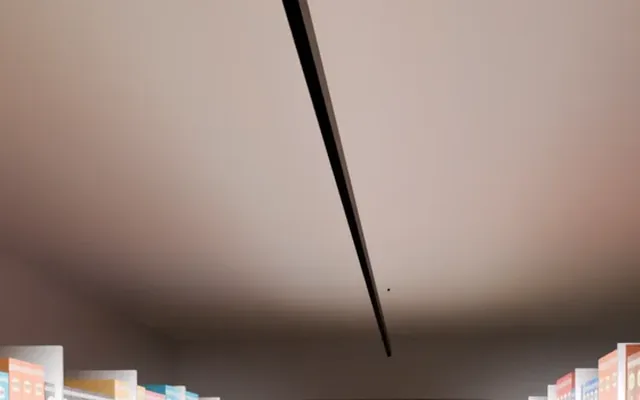
The eyes are at rest, looking at the goods
The luminaire starts to draw the eye
The eye drifts to the luminaire
The luminaire beats the goods
- 31UGR in this viewstandard for shops: up to 22standard for shops: up to 22standard for shops: up to 22
- 28 322cd/m²luminance of the luminaire in the customer’s eyes
- 25cd/m²luminance of the goods
Sales floor: the opal line is 1,133 times brighter than the goods. It is the brightest thing in the field of view, so the eye goes to it first. With 36° optics the luminaire is darker than the goods, and the first glance goes to the display.
Counter: the opal line is 490 times brighter than the goods. It is the brightest thing in the field of view, so the eye goes to it first. With 36° optics the luminaire is darker than the goods, and the first glance goes to the display.
Aisle: the opal line is 582 times brighter than the shelves. The shelf optic sends two beams onto the shelves on both sides, all the way to the top. Looking along the aisle, you see the luminaire at a luminance of only 4 cd/m², and the shelves are brighter than with the opal line.
FREI render: the same frame, the same power and the same light on the table, the counter and the aisle floor (300 lx, as for a sales area in EN 12464-1). Only the luminaire changes. We read the luminance of the luminaire and of the goods from the render scaled to that illuminance, and calculated UGR with the CIE 117 formula for this view. These are not catalogue data for the luminaire. 36° optics; in the aisle a shelf optic: two 36° beams tilted by 30° onto the shelves, so that the light reaches the top shelves. In the aisle the luminance of the goods is the average of the shelves on both sides. The circle shows what draws the eye first: the luminaire with the opal line, the goods with optics.
How bright the luminaire itself is when you look at it.
It is given for one direction. The same luminaire seen from the side and from below can have a completely different luminance.
A glare rating for the whole room.
It takes the luminance of all luminaires, their size, their place in the field of view and the brightness of the background. The standard gives a limit for each type of room.
The eye goes to the brightest spot.
When you can’t see the luminaire, the goods are the brightest thing. The customer looks at the shelf, not at the ceiling.
Sun in your eyes? You put on sunglasses.
Lamp in your eyes? You put in FREI luminaires.
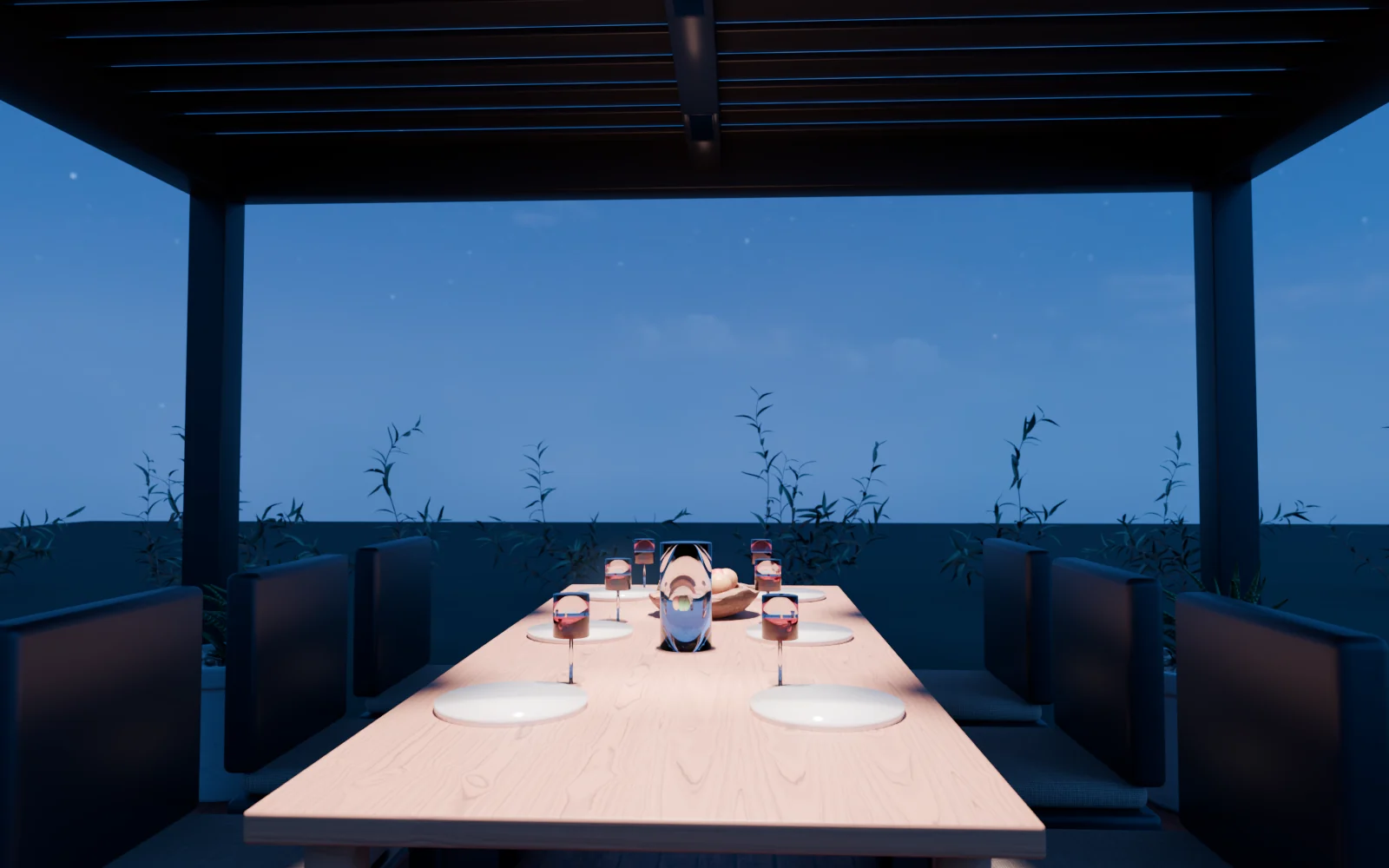
No sunglasses needed. We care about your comfort.
- The line glaresthe eye sees the lamp, not the table
- Sunglassesdark everywhere, the table too
- FREIno sunglasses, only the lamp is dark
FREI luminaires have the sunglasses built in: the LED sits deep in the optic and lights only where it should. There is one difference. Sunglasses darken the whole world, while a FREI luminaire takes away only the glare. The table stays bright, your eyes stay calm.
You cannot see it.
But you feel it.
A luminaire with a poor driver dims and brightens as much as 100 times a second. The eye does not see it, but the retina and the brain register the changes.
The same luminaire.
Two drivers.
A good driver gives steady light. A poor one switches the lamp off 100 times a second.
That is how often a luminaire with a poor driver flickers.
A moving drill looks as if it is standing still. In a hall, that is dangerous.
The brain registers a stimulus you cannot see. For some people that means headaches and tired eyes.
Since 2021: limits on flicker (Pst LM) and on the stroboscopic effect (SVM).
In the design we check flicker together with the driver and the controls, including when dimming.
True colours.
No glare.
No flicker.
Ask before you buy.
Tell us what you are lighting. We will give you the CRI, UGR, lux and flicker for your place before the first luminaire goes up.